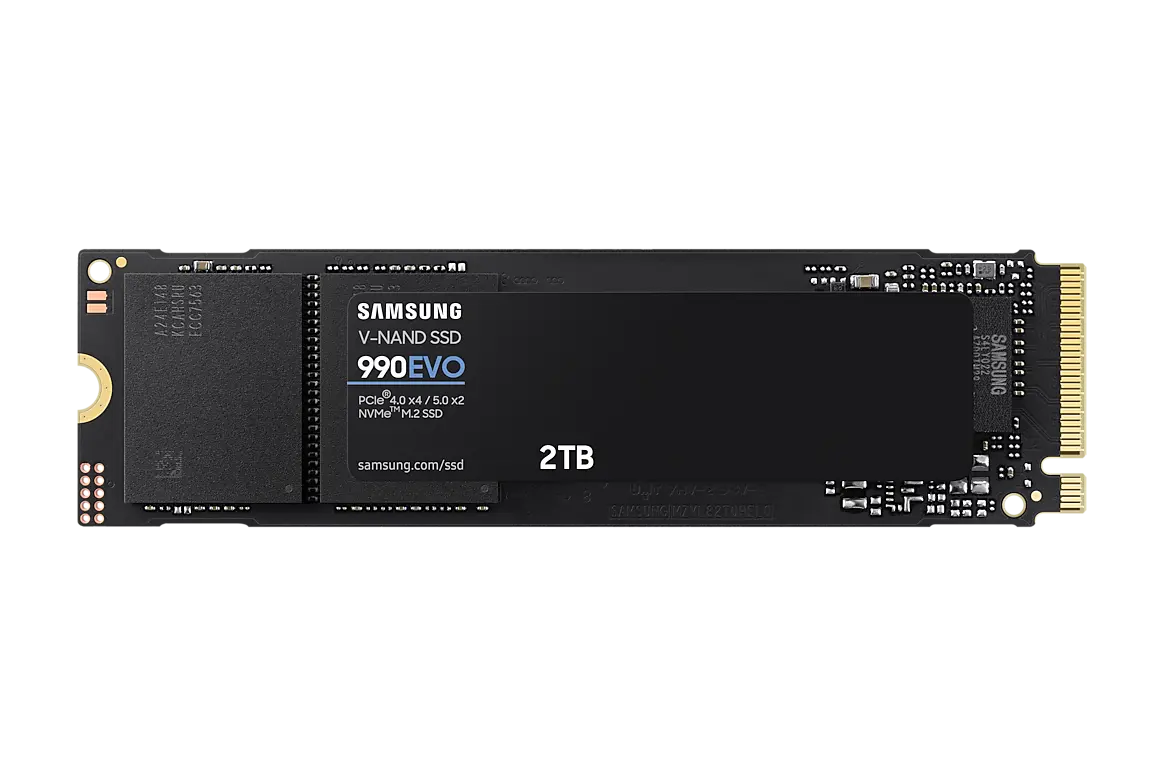
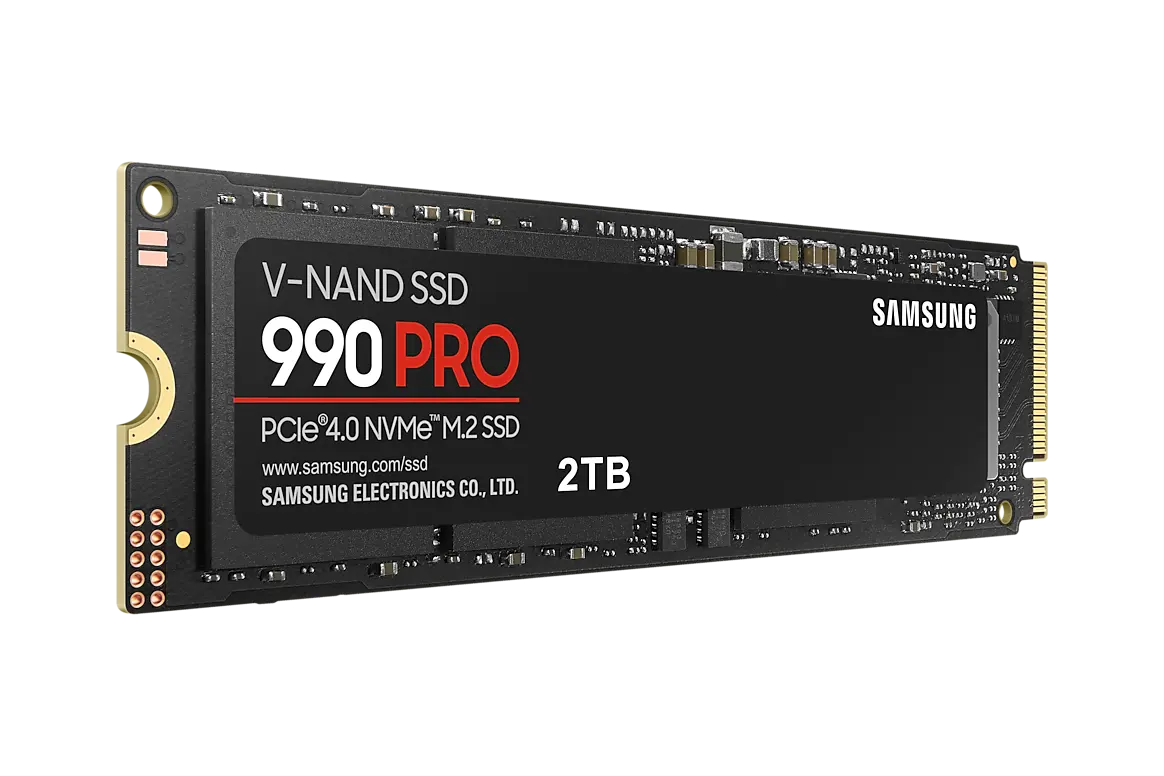
A 2 TB NVMe SSD rated up to 5,000 MB/s read and 4,200 MB/s write over PCIe 4.0 x4 or PCIe 5.0 x2, with TLC V-NAND and a 1,200 TB write rating. It has no factory heatsink.
Specifications checked 11 Sept 2026.
Amazon links open search results. Check the exact variant, current price and availability with the retailer.
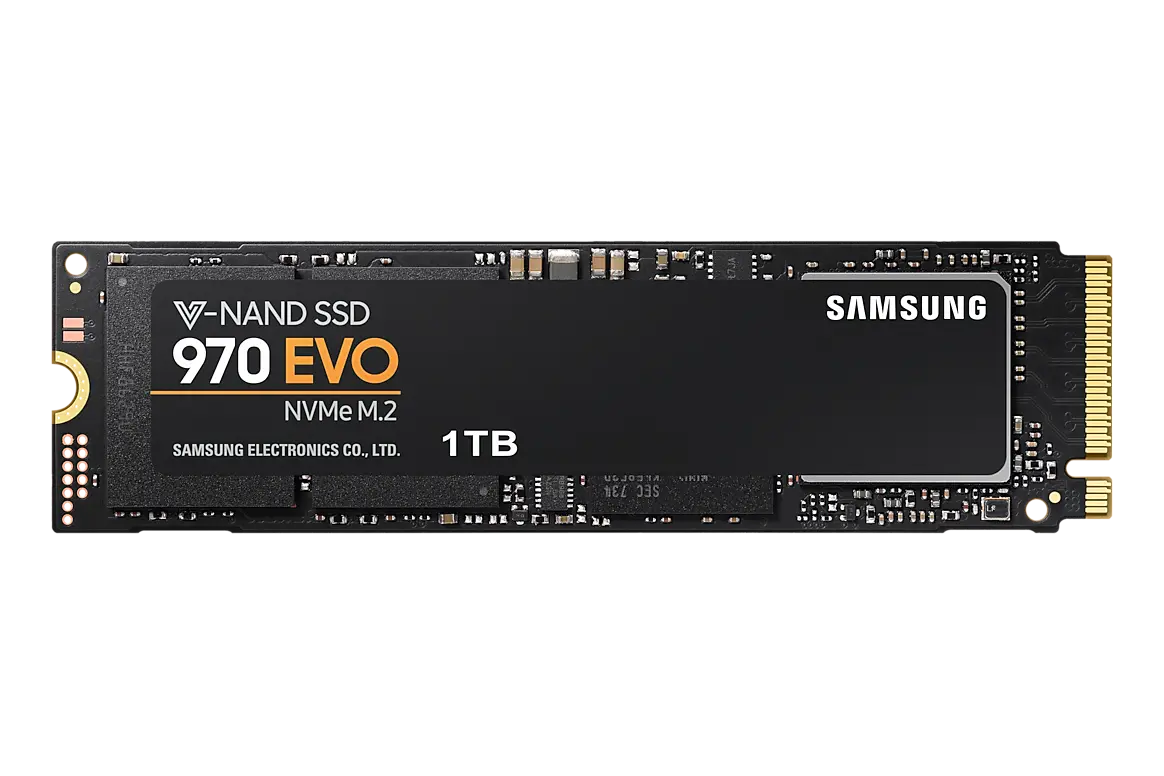
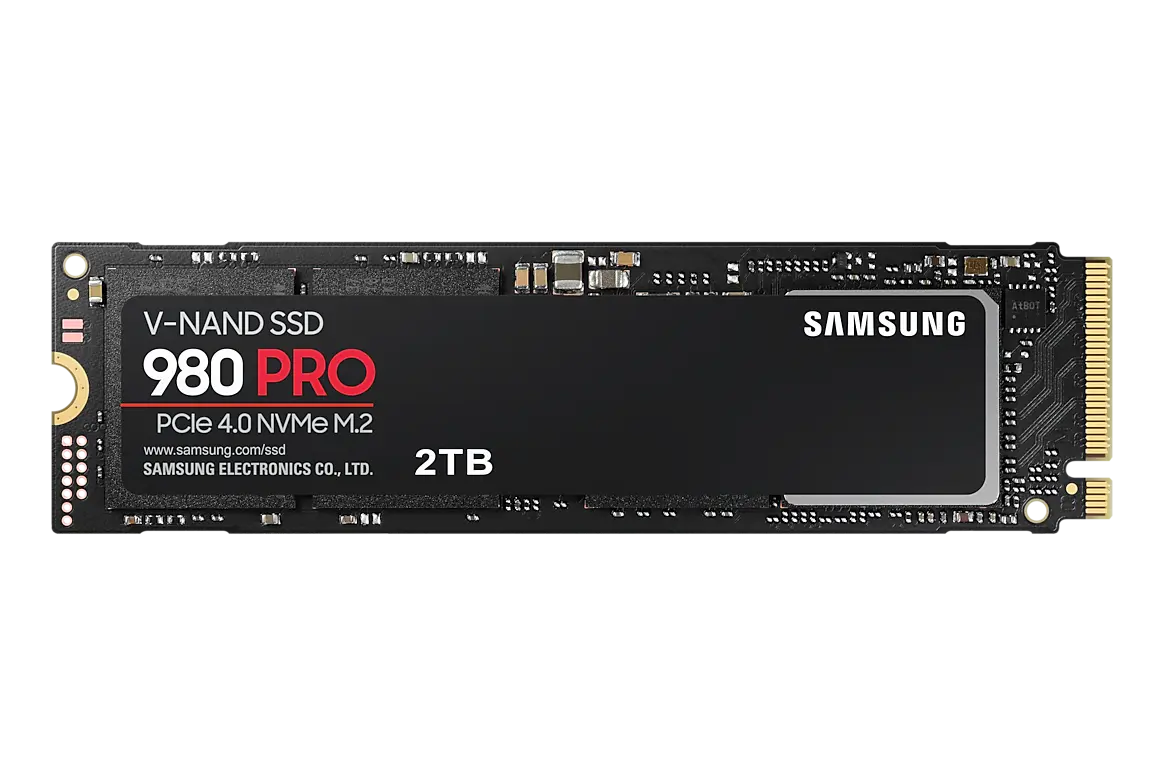
A 1 TB PCIe 3.0 NVMe SSD rated at about 3,400–3,500 MB/s read and up to 2,500 MB/s write (1,200 MB/s after its cache), with TLC V-NAND, 1 GB LPDDR4 cache and a 600 TB write rating.
Specifications checked 11 Sept 2026.
Amazon links open search results. Check the exact variant, current price and availability with the retailer.
Search links open retailer results, not a matched listing; eBay listings are checked daily. As an Amazon Associate I earn from qualifying purchases. As an eBay Partner, we may be compensated if you make a purchase.
THE DIFFERENCES, MADE VISIBLE
Visual facts
Differences first. Select a topic for its graphic, sources and conditions.
How to read this comparison
Manufacturer facts for the exact models shown. Not a quality rating or a test result.
“Different” means the known values differ, not that one is better.
Missing or conflicting evidence is marked and never counts as a difference. Source chips hold each fact’s sources and conditions.
SPECIFICATIONS SIDE BY SIDE8 topics
SELECTED TOPIC
01 / 08
Storage capacity
Decimal storage capacity: 1 TB = 1,000 GB. Formatting and system use reduce available space.
Samsung 990 EVO2 TB
Manufacturer specification · Decimal capacity; formatting and system use reduce available space.
Check the connection before the capacity. M.2 NVMe modules and 2.5-inch SATA drives are not interchangeable. Check the host’s protocol, slot or bay, power connection and clearance. Rated speeds use different test systems; we do not turn them into a speed score or overall winner.
Compare the exact DRAM capacity and cache configuration. Onboard DRAM is a separate specification from a write buffer; neither is a measured performance or reliability rating.
Manufacturer specification · The UK feature page advertises data migration through Samsung Magician. Check software version, operating-system support and migration requirements.
Manufacturer specification · The 2018 manufacturer datasheet lists Data Migration and its Custom Cloning capability. Check current download availability, operating-system support and migration requirements.
Check the software, operating-system and licence requirements. An available feature does not establish a measured speed improvement or support on every host.
Samsung 990 EVOUp to 5000 MB/s sequential read; up to 4200 MB/s cached sequential write
Samsung 970 EVOUp to 2500 MB/s cached sequential write; 1200 MB/s after TurboWrite
Sources
Samsung 990 EVO
Manufacturer specification · Manufacturer up-to claims measured with IOmeter 1.1.0, Ryzen 9 7950X, ASRock X670E Taichi, 32 GB DDR5-4800 and Windows 11 Pro. Secondary drive in a fan-cooled desktop; writes use Intelligent TurboWrite within its buffer. Firmware, host and workload affect results; Samsung does not list a post-cache write speed.
Manufacturer peak claims depend on cache state, host and workload. Queue depth and test systems must match before performance can be compared; these figures do not establish a faster everyday drive.
Rated random read, QD1
Samsung 990 EVO20000 IOPS
Samsung 970 EVO15000 IOPS
Sources
Samsung 990 EVO
Manufacturer specification · Manufacturer QD1 / one-thread 20000 IOPS under the same IOmeter/Ryzen/Windows setup, not measured application latency.
Manufacturer peak claims depend on cache state, host and workload. Queue depth and test systems must match before performance can be compared; these figures do not establish a faster everyday drive.
Rated random write, QD1
Samsung 990 EVO90000 IOPS
Samsung 970 EVO50000 IOPS
Sources
Samsung 990 EVO
Manufacturer specification · Manufacturer QD1 / one-thread 90000 IOPS under the same IOmeter/Ryzen/Windows setup with TurboWrite active.
Manufacturer peak claims depend on cache state, host and workload. Queue depth and test systems must match before performance can be compared; these figures do not establish a faster everyday drive.
Warranty terms and endurance if applicable
Samsung 990 EVO5 years or 1200 TB written, whichever comes first; limited-warranty terms apply
Samsung 970 EVO5 years or 600 TB written, whichever comes first; limited-warranty terms apply
Sources
Samsung 990 EVO
Manufacturer specification · Manufacturer coverage is subject to purchase eligibility and applicable terms. A used drive may have less coverage left.
Check the exact configuration and source conditions for your use.
Published power conditions
Samsung 990 EVO5.5 W active read; 4.7 W active write; 60 mW PS3 idle; 5 mW PS4 sleep
Samsung 970 EVO6 W active read; 6 W active write; 30 mW idle; 5 mW L1.2 sleep
Sources
Samsung 990 EVO
Manufacturer specification · 2 TB column. IOmeter 1.1.0, Ryzen 9 7950X / X670E Taichi, 32 GB DDR5-4800, Windows 11 Pro. Idle requires APST and sleep is L1.2. These are not a constant everyday load.
Manufacturer specification · Official feature block lists the label and thermal management. Samsung's 70% efficiency example uses 1 TB models, not this 2 TB drive.
A size or weight trade-off; it does not establish the better product.
Missing or non-comparable evidence (11)
DRAM cache present
Samsung 990 EVONot verified
Samsung 970 EVOYes
Sources
Samsung 990 EVO
Samsung does not state this for this model. · Manufacturer specification · Samsung's tables specify HMB and do not state whether onboard DRAM is present. Host memory buffering is not onboard DRAM.
Evidence is missing or conflicting on at least one side. This is not a verified difference.
DRAM cache capacity
Samsung 990 EVONot verified
Samsung 970 EVO1 GB
Sources
Samsung 990 EVO
Samsung does not state this for this model. · Manufacturer specification · Samsung does not list an onboard DRAM capacity. Host-memory use and TurboWrite buffer are distinct.
One source states less detail or a rounded figure. This is not a verified difference; check the exact configuration.
Rated sequential read
Samsung 990 EVO5000 MB/s
Samsung 970 EVOConflicting evidence
Sources
Samsung 990 EVO
Manufacturer specification · Manufacturer up-to claims measured with IOmeter 1.1.0, Ryzen 9 7950X, ASRock X670E Taichi, 32 GB DDR5-4800 and Windows 11 Pro. Secondary drive in a fan-cooled desktop; writes use Intelligent TurboWrite within its buffer. Firmware, host and workload affect results; Samsung does not list a post-cache write speed.
Samsung's sources disagree: the Australian 1 TB page states up to 3500 MB/s; the Rev. 1.0 PDF 1 TB table states 3400 MB/s. Check the listing before relying on either figure. · Manufacturer specification
Evidence is missing or conflicting on at least one side. This is not a verified difference.
Rated write after TurboWrite
Samsung 990 EVONot verified
Samsung 970 EVO1200 MB/s
Sources
Samsung 990 EVO
No source recorded for this side.
Samsung 970 EVO
Manufacturer specification · Samsung's PDF footnote and Australian page give 1200 MB/s for 1 TB after TurboWrite. Same manufacturer system limitations apply.
Evidence is missing or conflicting on at least one side. This is not a verified difference.
Published system-level power
Samsung 990 EVONot verified
Samsung 970 EVO6 W average; 10 W maximum in burst mode
Sources
Samsung 990 EVO
No source recorded for this side.
Samsung 970 EVO
Manufacturer specification · The regional page labels a system-level average and a burst maximum. Hardware/configuration affect consumption. These are distinct from active read/write and idle/sleep states and are not a constant everyday load.
Samsung specifies Host Memory Buffer caching and lists no onboard DRAM for this drive. Peak write speed relies on the TurboWrite cache, and Samsung does not list a post-cache write speed for this model.
It is limited to PCIe 3.0 x4, so it cannot use the extra bandwidth of a PCIe 4.0 or 5.0 M.2 slot, and writes drop from 2,500 MB/s to 1,200 MB/s once the TurboWrite cache fills.
Samsung lists these as maximum dimensions. This version has no factory heatsink. · Manufacturer specification · Datasheet maximum envelope; the product page's 80 × 22 mm figures are not labelled as maximum tolerances.
Samsung lists these as maximum dimensions. This version has no factory heatsink. · Manufacturer specification · Manufacturer dimensions; confirm installation clearance.
Manufacturer specification · Official feature block lists the label and thermal management. Samsung's 70% efficiency example uses 1 TB models, not this 2 TB drive.
Manufacturer specification · Manufacturer up-to claims measured with IOmeter 1.1.0, Ryzen 9 7950X, ASRock X670E Taichi, 32 GB DDR5-4800 and Windows 11 Pro. Secondary drive in a fan-cooled desktop; writes use Intelligent TurboWrite within its buffer. Firmware, host and workload affect results; Samsung does not list a post-cache write speed.
Up to 5000 MB/s sequential read; up to 4200 MB/s cached sequential write
Up to 2500 MB/s cached sequential write; 1200 MB/s after TurboWrite
Rated sequential readSources
Samsung 990 EVO
Manufacturer specification · Manufacturer up-to claims measured with IOmeter 1.1.0, Ryzen 9 7950X, ASRock X670E Taichi, 32 GB DDR5-4800 and Windows 11 Pro. Secondary drive in a fan-cooled desktop; writes use Intelligent TurboWrite within its buffer. Firmware, host and workload affect results; Samsung does not list a post-cache write speed.
Samsung's sources disagree: the Australian 1 TB page states up to 3500 MB/s; the Rev. 1.0 PDF 1 TB table states 3400 MB/s. Check the listing before relying on either figure. · Manufacturer specification
Manufacturer specification · Manufacturer up-to claims measured with IOmeter 1.1.0, Ryzen 9 7950X, ASRock X670E Taichi, 32 GB DDR5-4800 and Windows 11 Pro. Secondary drive in a fan-cooled desktop; writes use Intelligent TurboWrite within its buffer. Firmware, host and workload affect results; Samsung does not list a post-cache write speed.
Manufacturer specification · Samsung's PDF footnote and Australian page give 1200 MB/s for 1 TB after TurboWrite. Same manufacturer system limitations apply.
Manufacturer specification · Manufacturer wording is 3-bit MLC, meaning three bits per cell (TLC), not two-bit MLC. Samsung does not give the layer count or hardware revision.
Samsung does not state this for this model. · Manufacturer specification · Samsung's tables specify HMB and do not state whether onboard DRAM is present. Host memory buffering is not onboard DRAM.
Samsung does not state this for this model. · Manufacturer specification · Samsung does not list an onboard DRAM capacity. Host-memory use and TurboWrite buffer are distinct.
Manufacturer specification · Manufacturer write caching is active for peak claims. Samsung does not list the buffer capacity or post-cache write speed for this 2 TB model.
Manufacturer specification · Current feature block lists migration, drive health and firmware updates. Check the current software version and its requirements.
Manufacturer specification · Official feature block describes health monitoring and updates; current OS/version prerequisites require separate checking.
Manufacturer specification · The UK page supports device sleep. Host support is required; device sleep is not the same as Modern Standby and gives no battery-life figure.
Manufacturer specification · The regional page supports device sleep. Host support is required; the separately published L1.2 power state is not measured laptop battery life.
Manufacturer specification · The UK feature page advertises data migration through Samsung Magician. Check software version, operating-system support and migration requirements.
Manufacturer specification · The 2018 manufacturer datasheet lists Data Migration and its Custom Cloning capability. Check current download availability, operating-system support and migration requirements.
Manufacturer specification · 2 TB column. IOmeter 1.1.0, Ryzen 9 7950X / X670E Taichi, 32 GB DDR5-4800, Windows 11 Pro. Idle requires APST and sleep is L1.2. These are not a constant everyday load.
Manufacturer specification · The regional page labels a system-level average and a burst maximum. Hardware/configuration affect consumption. These are distinct from active read/write and idle/sleep states and are not a constant everyday load.
Each record represents an explicitly checked model and configuration. Original import: 5 Sept 2026; this is not its verification date. This is not a list of current offers or a popularity ranking.