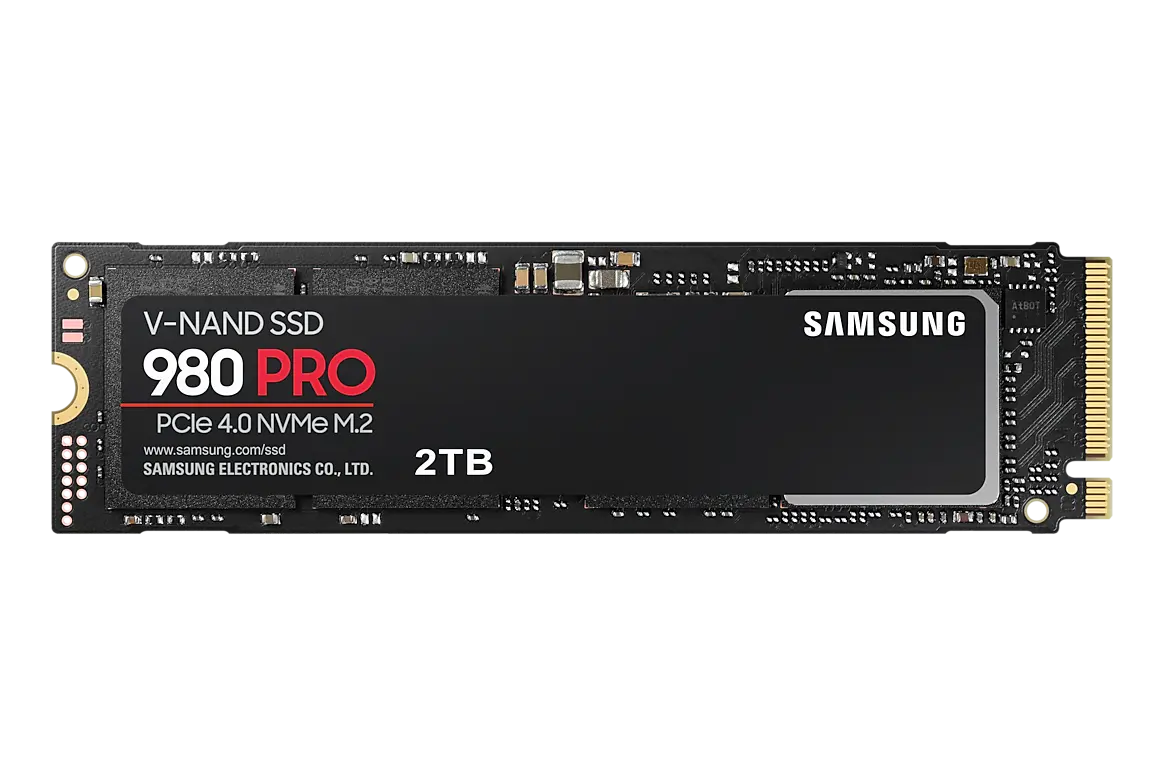
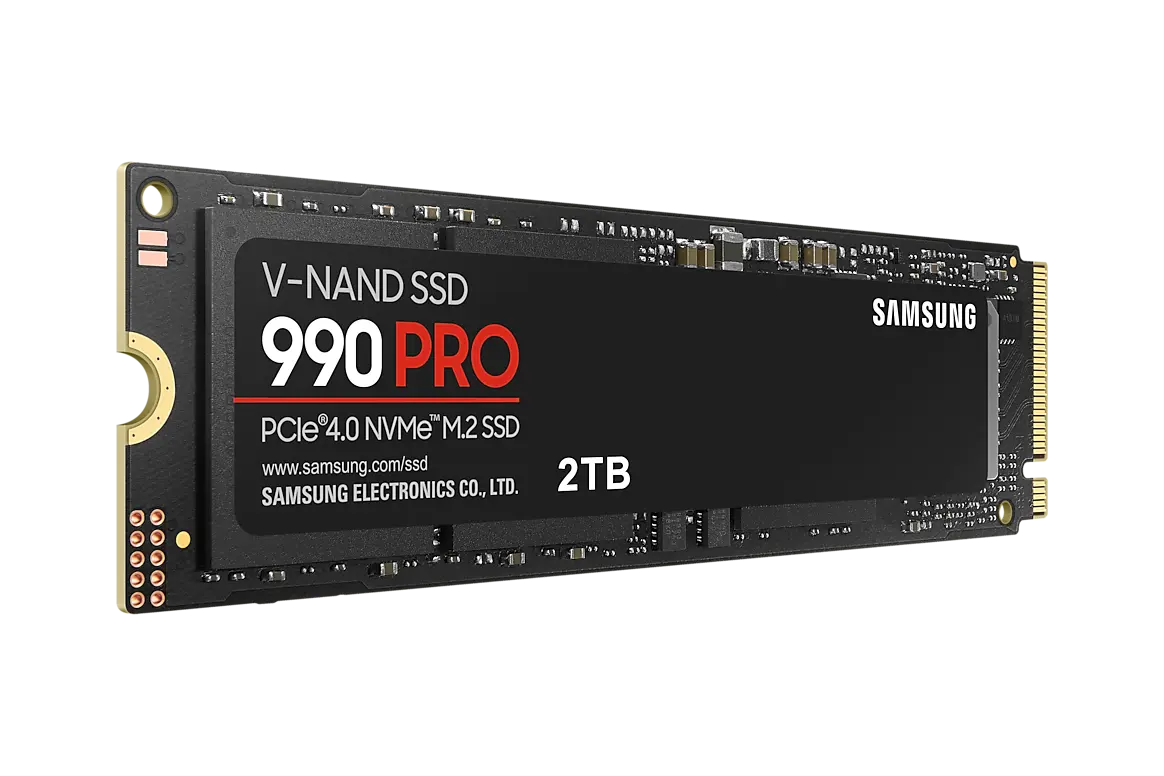
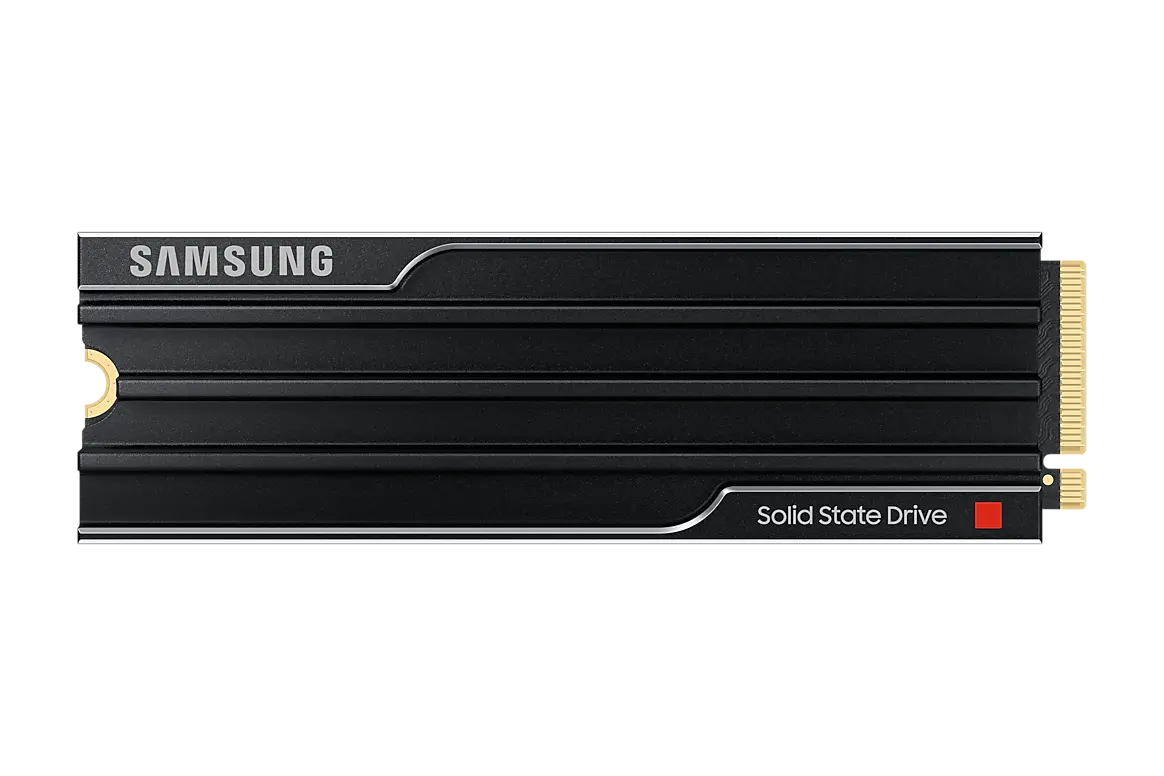
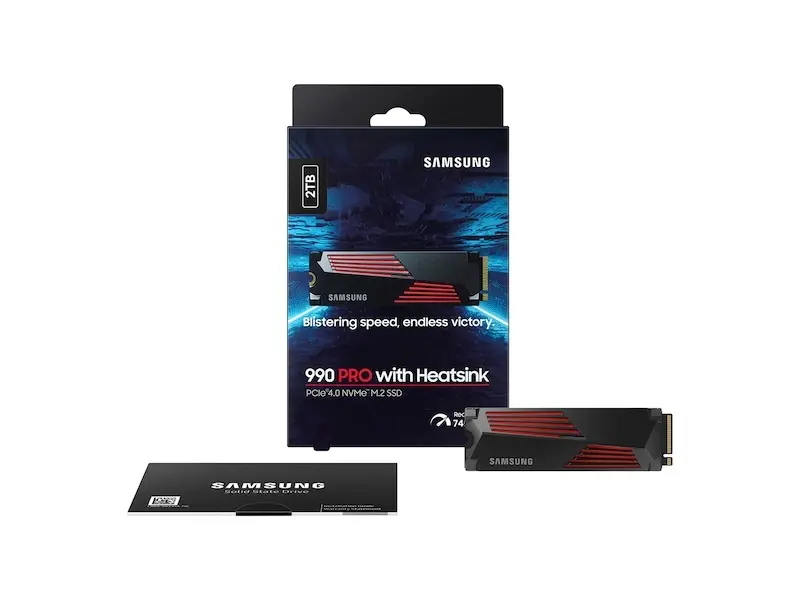
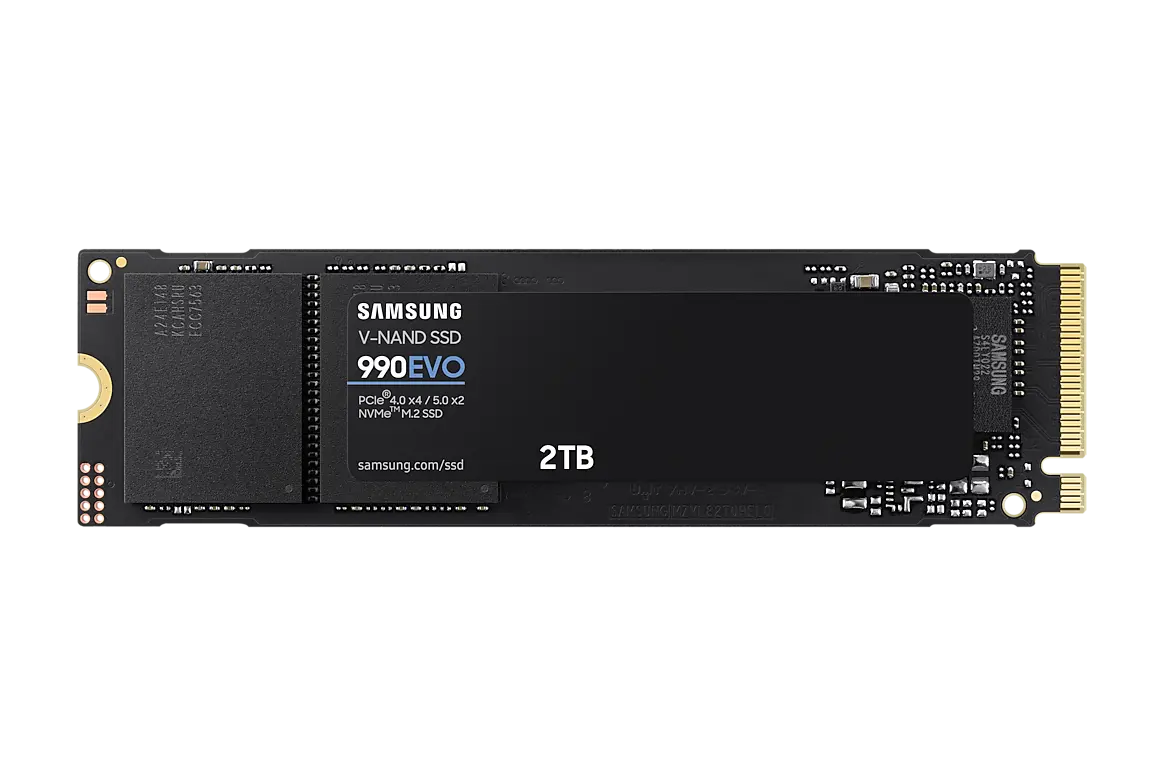
A 2 TB PCIe 4.0 NVMe SSD rated up to 7,000 MB/s read and 5,100 MB/s write, with TLC V-NAND, 2 GB LPDDR4 cache and a 1,200 TB write rating. It has no factory heatsink.
Specifications checked 11 Sept 2026.
Amazon links open search results. Check the exact variant, current price and availability with the retailer.
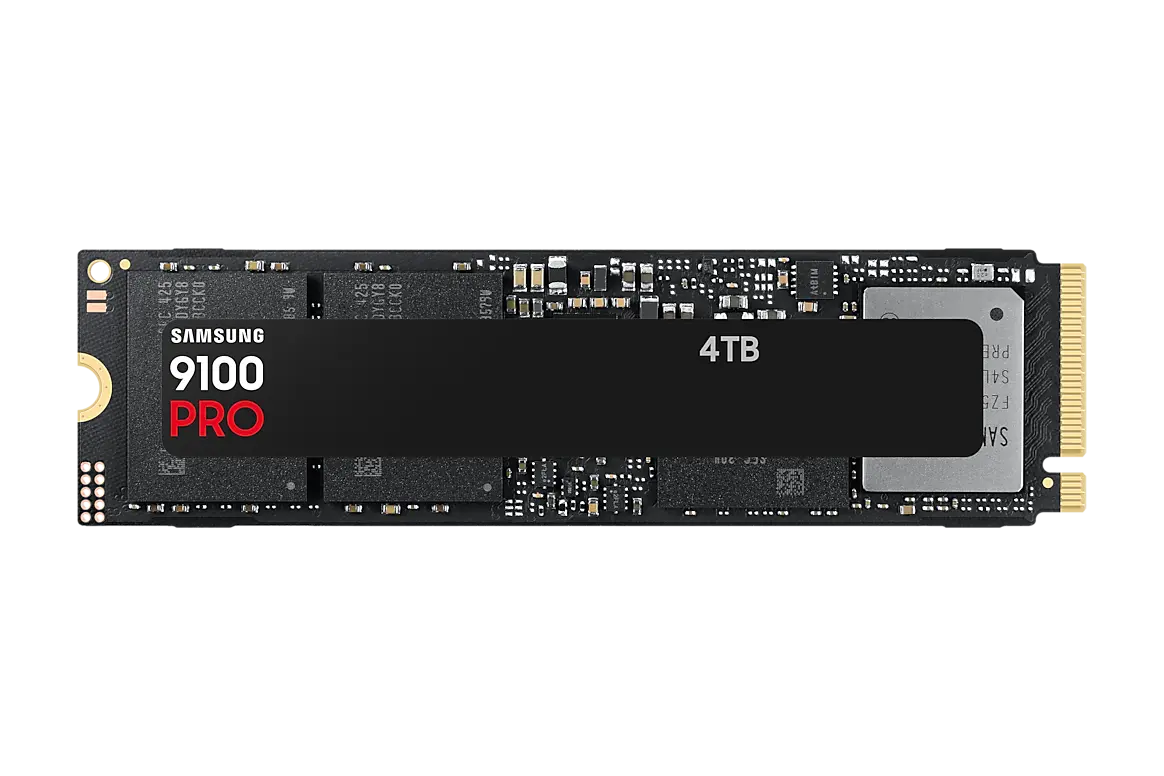
A 4 TB PCIe 5.0 NVMe SSD rated up to 14,800 MB/s read and 13,400 MB/s write, with TLC V-NAND, 4 GB LPDDR4X cache and a 2,400 TB write rating. This version has no factory heatsink.
Specifications checked 11 Sept 2026.
Amazon links open search results. Check the exact variant, current price and availability with the retailer.
Search links open retailer results, not a matched listing; eBay listings are checked daily. As an Amazon Associate I earn from qualifying purchases. As an eBay Partner, we may be compensated if you make a purchase.
THE DIFFERENCES, MADE VISIBLE
Visual facts
Differences first. Select a topic for its graphic, sources and conditions.
How to read this comparison
Manufacturer facts for the exact models shown. Not a quality rating or a test result.
“Different” means the known values differ, not that one is better.
Missing or conflicting evidence is marked and never counts as a difference. Source chips hold each fact’s sources and conditions.
SPECIFICATIONS SIDE BY SIDE8 topics
SELECTED TOPIC
01 / 08
Storage capacity
Decimal storage capacity: 1 TB = 1,000 GB. Formatting and system use reduce available space.
Samsung 980 PRO2 TB
Manufacturer specification · Decimal capacity; formatting and system use reduce available space.
Check the connection before the capacity. M.2 NVMe modules and 2.5-inch SATA drives are not interchangeable. Check the host’s protocol, slot or bay, power connection and clearance. Rated speeds use different test systems; we do not turn them into a speed score or overall winner.
Compare the exact DRAM capacity and cache configuration. Onboard DRAM is a separate specification from a write buffer; neither is a measured performance or reliability rating.
Samsung 980 PROUp to 7000 MB/s sequential read; up to 5100 MB/s cached sequential write
Samsung 9100 PROUp to 14800 MB/s sequential read; up to 13400 MB/s cached sequential write
Sources
Samsung 980 PRO
Manufacturer specification · Samsung IOmeter 1.1.0 claims: Ryzen 9 3900X, ASUS X570 ROG Crosshair VIII Formula, Windows 10 Pro; secondary drive. The datasheet lists additional BIOS, memory and CPU settings used for the test. Writes use Intelligent TurboWrite; peak rates depend on firmware, host, workload and cache state.
Manufacturer peak claims depend on cache state, host and workload. Queue depth and test systems must match before performance can be compared; these figures do not establish a faster everyday drive.
Rated random read
Samsung 980 PRO1000000 IOPS
Samsung 9100 PRO2200000 IOPS
Sources
Samsung 980 PRO
Manufacturer specification · Up to, 4 KB QD32 / 16 threads; IOmeter 1.1.0, Ryzen 9 3900X / ASUS X570 Crosshair VIII Formula, Windows 10 Pro, secondary drive. PDF lists altered BIOS, memory and CPU settings; writes require TurboWrite. Not directly comparable to a four-thread Intel test.
Manufacturer specification · Manufacturer up-to claim at QD256 / 32 threads using FIO 3.33, Ryzen 9 7950X / ASRock X670E Taichi, 32 GB DDR5-4800 and Ubuntu 22.04.2. Secondary drive in a fan-cooled desktop; write tests use Intelligent TurboWrite. Measured at high queue depth and thread count, not single-thread desktop performance.
Manufacturer peak claims depend on cache state, host and workload. Queue depth and test systems must match before performance can be compared; these figures do not establish a faster everyday drive.
Rated random write
Samsung 980 PRO1000000 IOPS
Samsung 9100 PRO2600000 IOPS
Sources
Samsung 980 PRO
Manufacturer specification · Up to, 4 KB QD32 / 16 threads; IOmeter 1.1.0, Ryzen 9 3900X / ASUS X570 Crosshair VIII Formula, Windows 10 Pro, secondary drive. PDF lists altered BIOS, memory and CPU settings; writes require TurboWrite. Not directly comparable to a four-thread Intel test.
Manufacturer specification · Manufacturer up-to claim at QD256 / 32 threads using FIO 3.33, Ryzen 9 7950X / ASRock X670E Taichi, 32 GB DDR5-4800 and Ubuntu 22.04.2. Secondary drive in a fan-cooled desktop; write tests use Intelligent TurboWrite. Measured at high queue depth and thread count, not single-thread desktop performance.
Manufacturer peak claims depend on cache state, host and workload. Queue depth and test systems must match before performance can be compared; these figures do not establish a faster everyday drive.
Warranty terms and endurance if applicable
Samsung 980 PRO5 years or 1200 TB written, whichever comes first; limited-warranty terms apply
Samsung 9100 PRO5 years or 2400 TB written, whichever comes first; limited-warranty terms apply
Sources
Samsung 980 PRO
Manufacturer specification · Manufacturer coverage is subject to purchase eligibility and applicable terms. A used drive may have less coverage left.
Manufacturer specification · Backward compatibility. Host protocol, lane availability and cooling remain required; Gen 5 headline speeds are not available on every older host.
Manufacturer specification · 4 TB column. Active power uses FIO 3.33 on Ryzen 5 7600, ASUS ProArt X670E-CREATOR WIFI STCOM, 32 GB DDR5-4800 and Ubuntu 22.04.3 LTS, distinct from the performance host. Idle requires APST; sleep is L1.2. These are not constant household-use loads.
Check the exact configuration and source conditions for your use.
Missing or non-comparable evidence (9)
Controller
Samsung 980 PROSamsung Elpis
Samsung 9100 PROSamsung in-house controller
Sources
Samsung 980 PRO
Named Elpis on Samsung's UK technical page; the current PDF revision describes it only as a Samsung in-house controller. · Manufacturer specification · UK technical page names Elpis. The current PDF revision (2.1) describes it only as a Samsung in-house controller.
One source states less detail or a rounded figure. This is not a verified difference; check the exact configuration.
Included cloning software
Samsung 980 PRONot verified
Samsung 9100 PROSamsung Magician data migration
Sources
Samsung 980 PRO
Samsung does not state this for this model. · Manufacturer specification · Samsung does not list a bundled cloning tool for this model. Magician health monitoring and firmware updates alone do not confirm migration support.
Manufacturer specification · The UK feature page advertises data migration through Samsung Magician. Check software version, operating-system support and migration requirements.
Evidence is missing or conflicting on at least one side. This is not a verified difference.
Rated random read, QD1
Samsung 980 PRO22000 IOPS
Samsung 9100 PRONot verified
Sources
Samsung 980 PRO
Manufacturer specification · Up-to QD1 / one-thread value for this capacity under the manufacturer performance test setup. Not measured application latency.
Samsung does not state this for this model. · Manufacturer specification · Samsung does not list a QD1 result for the 4 TB model. Its QD256 figures are a different measure.
Evidence is missing or conflicting on at least one side. This is not a verified difference.
Rated random write, QD1
Samsung 980 PRO60000 IOPS
Samsung 9100 PRONot verified
Sources
Samsung 980 PRO
Manufacturer specification · Up-to QD1 / one-thread 60000 IOPS for this 2 TB capacity with Intelligent TurboWrite under the stated modified Ryzen/ASUS test setup. Not application latency.
Samsung does not state this for this model. · Manufacturer specification · Samsung does not list a QD1 result for the 4 TB model. Its QD256 figures are a different measure.
Evidence is missing or conflicting on at least one side. This is not a verified difference.
Advertised controller process
Samsung 980 PRONot verified
Samsung 9100 PRO5 nm
Sources
Samsung 980 PRO
No source recorded for this side.
Samsung 9100 PRO
Manufacturer specification · Current feature block describes a 5 nm controller architecture. Samsung's up-to-49% efficiency claim was tested on 2 TB models, not this 4 TB drive.
Evidence is missing or conflicting on at least one side. This is not a verified difference.
Rated performance on PCIe 3.0
Samsung 980 PROUp to 3500/3470 MB/s sequential read/write; 680000/630000 IOPS random read/write
Samsung 9100 PRONot verified
Sources
Samsung 980 PRO
Manufacturer specification · 2 TB backward-compatible mode in PDF footnote 2. Not the PCIe 4.0 peak figures or the 1 TB/250 GB values. Same manufacturer TurboWrite/test qualifications; actual host may differ.
Evidence is missing or conflicting on at least one side. This is not a verified difference.
Published system-level power
Samsung 980 PRO6.1 W average; 7.2 W maximum in burst mode
Samsung 9100 PRONot verified
Sources
Samsung 980 PRO
Manufacturer specification · The UK page labels a system-level average and a burst maximum. Hardware/configuration affect consumption. These are distinct from datasheet active read/write and idle/sleep states and are not a constant everyday load.
Rated up to 14,800 MB/s sequential read and 13,400 MB/s sequential write over PCIe 5.0 x4, with up to 2.2 million random read and 2.6 million random write IOPS.
No factory heatsink, so plan for motherboard or case cooling. Peak write speed relies on the TurboWrite cache, and Samsung does not list a post-cache write speed for this model.
Samsung lists these as maximum dimensions. This version has no factory heatsink. · Manufacturer specification · Manufacturer dimensions; confirm installation clearance.
Manufacturer specification · UK 4 TB page gives this maximum, not a measured sample or package mass. Do not use the bare-board value for the heatsink version.
Manufacturer specification · Backward compatibility. Host protocol, lane availability and cooling remain required; Gen 5 headline speeds are not available on every older host.
Manufacturer specification · Samsung IOmeter 1.1.0 claims: Ryzen 9 3900X, ASUS X570 ROG Crosshair VIII Formula, Windows 10 Pro; secondary drive. The datasheet lists additional BIOS, memory and CPU settings used for the test. Writes use Intelligent TurboWrite; peak rates depend on firmware, host, workload and cache state.
Up to 7000 MB/s sequential read; up to 5100 MB/s cached sequential write
Up to 14800 MB/s sequential read; up to 13400 MB/s cached sequential write
Rated sequential readDifferentSources
Samsung 980 PRO
Manufacturer specification · Samsung IOmeter 1.1.0 claims: Ryzen 9 3900X, ASUS X570 ROG Crosshair VIII Formula, Windows 10 Pro; secondary drive. The datasheet lists additional BIOS, memory and CPU settings used for the test. Writes use Intelligent TurboWrite; peak rates depend on firmware, host, workload and cache state.
Manufacturer specification · Up to, 4 KB QD32 / 16 threads; IOmeter 1.1.0, Ryzen 9 3900X / ASUS X570 Crosshair VIII Formula, Windows 10 Pro, secondary drive. PDF lists altered BIOS, memory and CPU settings; writes require TurboWrite. Not directly comparable to a four-thread Intel test.
Manufacturer specification · Manufacturer up-to claim at QD256 / 32 threads using FIO 3.33, Ryzen 9 7950X / ASRock X670E Taichi, 32 GB DDR5-4800 and Ubuntu 22.04.2. Secondary drive in a fan-cooled desktop; write tests use Intelligent TurboWrite. Measured at high queue depth and thread count, not single-thread desktop performance.
Manufacturer specification · Up-to QD1 / one-thread value for this capacity under the manufacturer performance test setup. Not measured application latency.
Samsung does not state this for this model. · Manufacturer specification · Samsung does not list a QD1 result for the 4 TB model. Its QD256 figures are a different measure.
Manufacturer specification · Up-to QD1 / one-thread 60000 IOPS for this 2 TB capacity with Intelligent TurboWrite under the stated modified Ryzen/ASUS test setup. Not application latency.
Samsung does not state this for this model. · Manufacturer specification · Samsung does not list a QD1 result for the 4 TB model. Its QD256 figures are a different measure.
Manufacturer specification · 2 TB backward-compatible mode in PDF footnote 2. Not the PCIe 4.0 peak figures or the 1 TB/250 GB values. Same manufacturer TurboWrite/test qualifications; actual host may differ.
Named Elpis on Samsung's UK technical page; the current PDF revision describes it only as a Samsung in-house controller. · Manufacturer specification · UK technical page names Elpis. The current PDF revision (2.1) describes it only as a Samsung in-house controller.
Manufacturer specification · Manufacturer write caching is active for peak write claims and only operates within a specific transfer size. Samsung does not list the buffer capacity or post-cache write speed for this 4 TB model.
Manufacturer specification · Current feature block describes a 5 nm controller architecture. Samsung's up-to-49% efficiency claim was tested on 2 TB models, not this 4 TB drive.
Manufacturer specification · Manufacturer feature block lists monitoring and software/firmware updates. OS/version support and feature prerequisites require separate checking.
Manufacturer specification · Current manufacturer feature block lists data migration, drive-health monitoring and firmware updates. Check the software version, operating-system support and feature requirements.
Manufacturer specification · The UK page supports device sleep. Host support is required; device sleep is not the same as Modern Standby and gives no battery-life figure.
Samsung does not state this for this model. · Manufacturer specification · Samsung does not list a bundled cloning tool for this model. Magician health monitoring and firmware updates alone do not confirm migration support.
Manufacturer specification · The UK feature page advertises data migration through Samsung Magician. Check software version, operating-system support and migration requirements.
Manufacturer specification · 4 TB column. Active power uses FIO 3.33 on Ryzen 5 7600, ASUS ProArt X670E-CREATOR WIFI STCOM, 32 GB DDR5-4800 and Ubuntu 22.04.3 LTS, distinct from the performance host. Idle requires APST; sleep is L1.2. These are not constant household-use loads.
Manufacturer specification · The UK page labels a system-level average and a burst maximum. Hardware/configuration affect consumption. These are distinct from datasheet active read/write and idle/sleep states and are not a constant everyday load.
Each record represents an explicitly checked model and configuration. Original import: 5 Sept 2026; this is not its verification date. This is not a list of current offers or a popularity ranking.