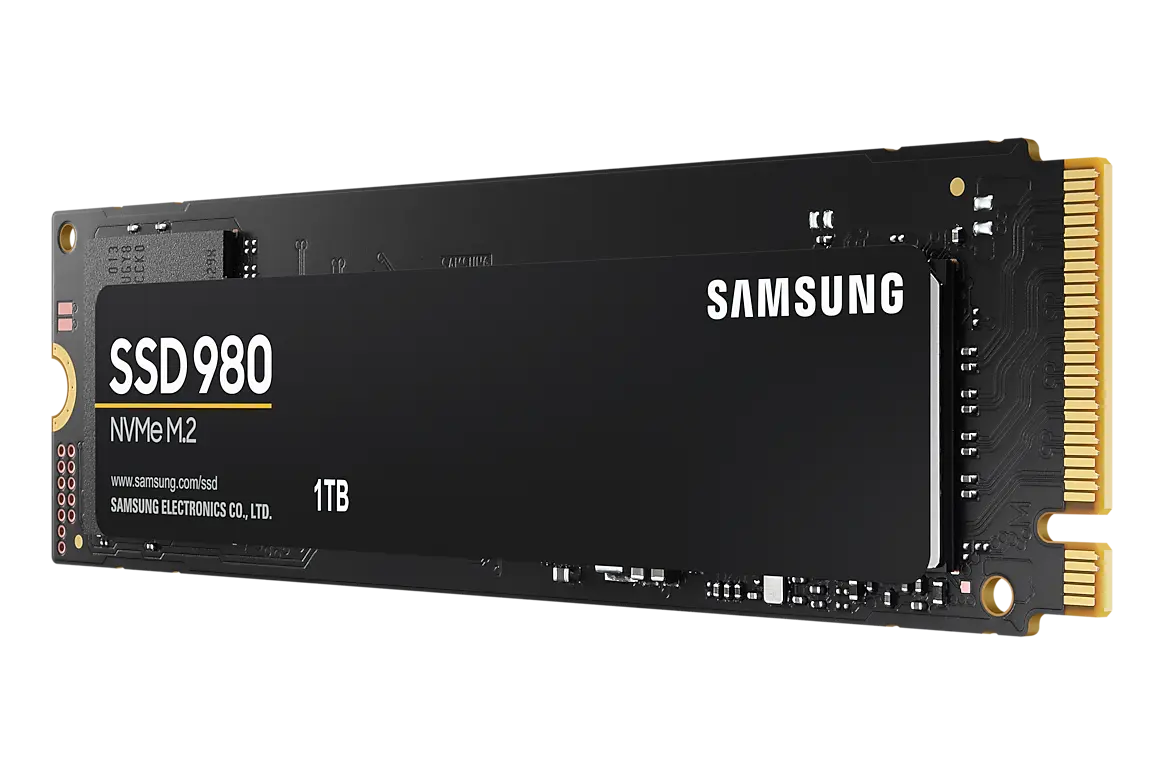
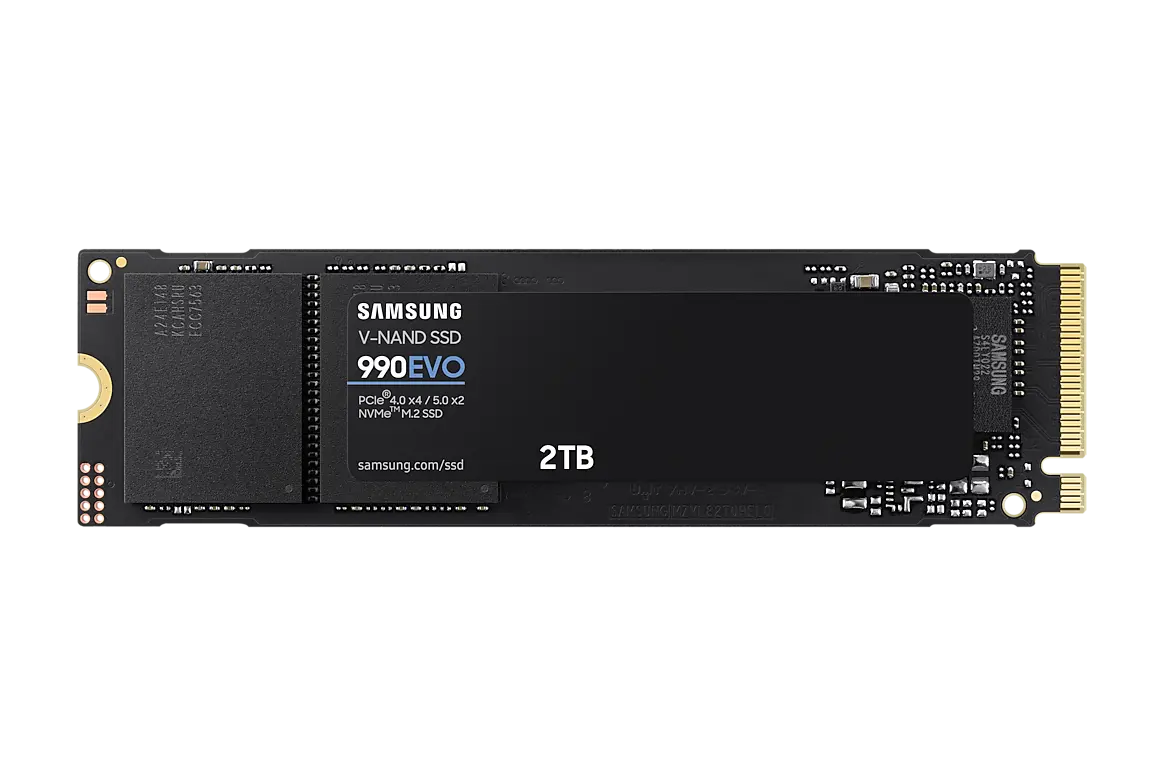
Search links open retailer results, not a matched listing; eBay listings are checked daily. As an Amazon Associate I earn from qualifying purchases. As an eBay Partner, we may be compensated if you make a purchase.
THE DIFFERENCES, MADE VISIBLE
Visual facts
Differences first. Select a topic for its graphic, sources and conditions.
How to read this comparison
Manufacturer facts for the exact models shown. Not a quality rating or a test result.
“Different” means the known values differ, not that one is better.
Missing or conflicting evidence is marked and never counts as a difference. Source chips hold each fact’s sources and conditions.
SPECIFICATIONS SIDE BY SIDE8 topics
SELECTED TOPIC
01 / 08
Interface and version
Check the exact configuration and source conditions for your use.
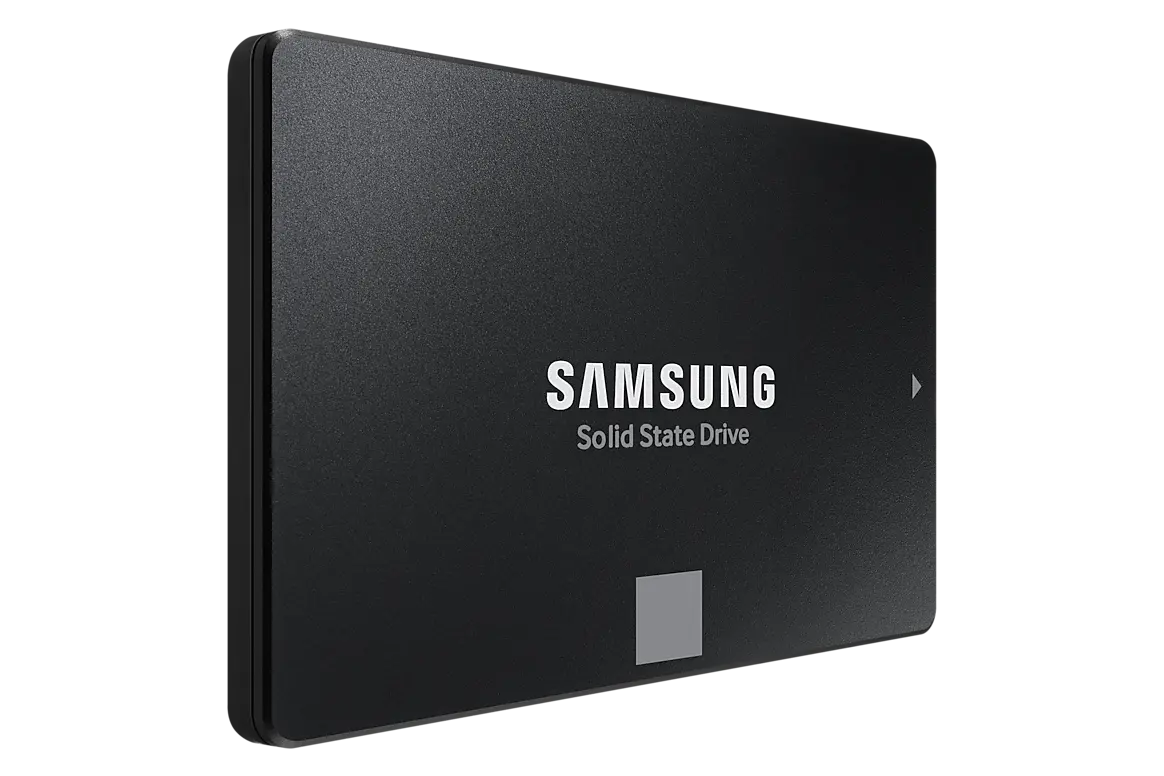
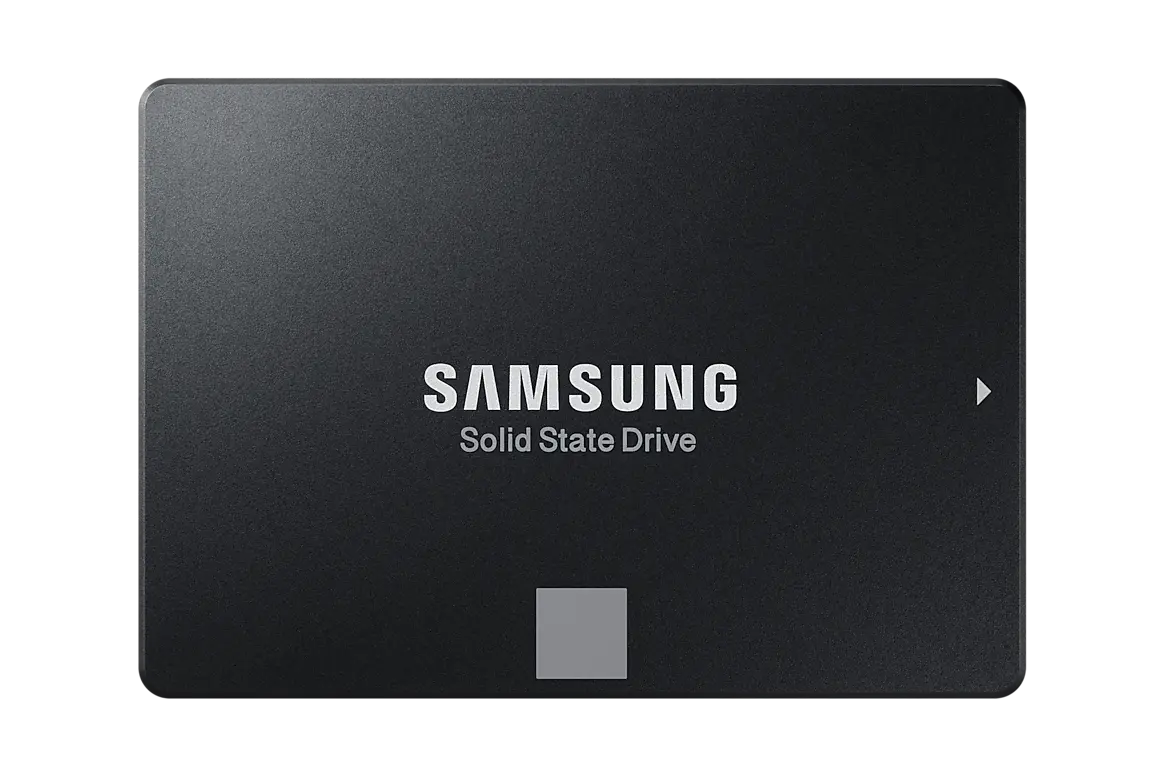
Samsung 870 EVOSATA 6 Gb/s
Backward compatible with SATA 3 Gb/s and 1.5 Gb/s. · Manufacturer specification
Check the connection before the capacity. M.2 NVMe modules and 2.5-inch SATA drives are not interchangeable. Check the host’s protocol, slot or bay, power connection and clearance. Rated speeds use different test systems; we do not turn them into a speed score or overall winner.
Samsung 870 EVOUp to 560 MB/s sequential read; up to 530 MB/s cached sequential write; 530 MB/s after TurboWrite
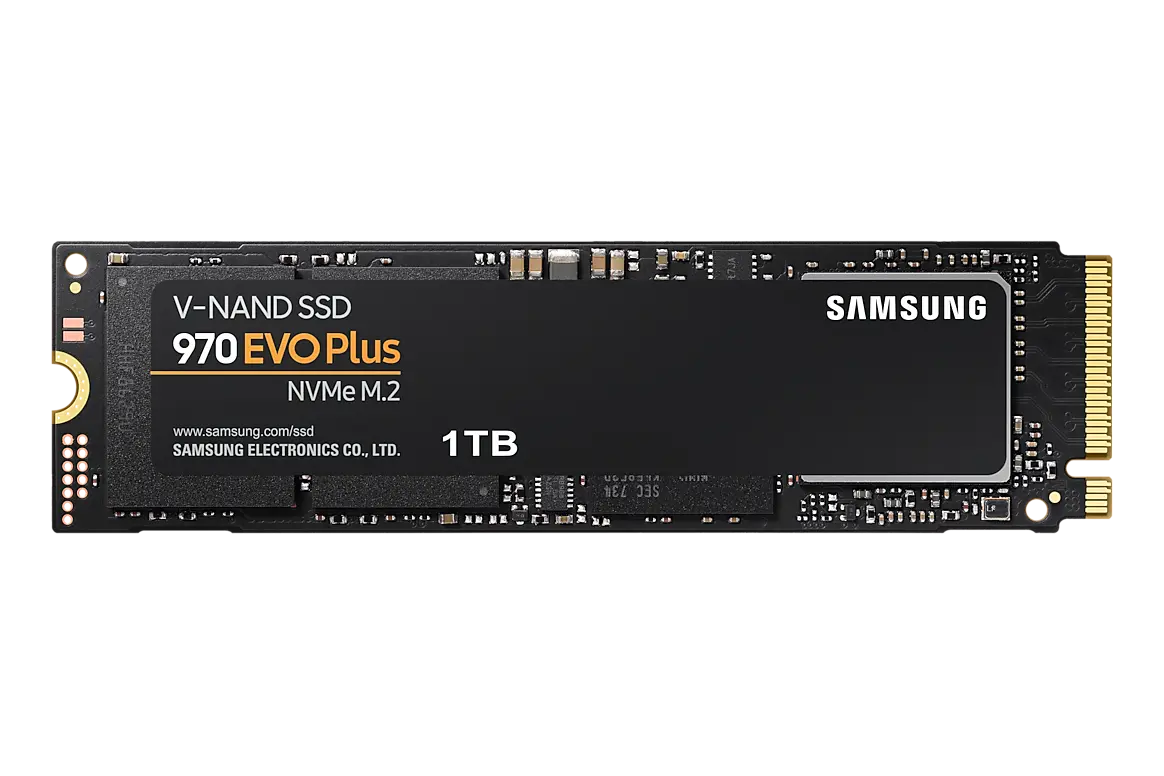
Samsung 970 EVO PlusUp to 3500 MB/s sequential read; up to 3300 MB/s cached sequential write
Sources
Samsung 870 EVO
Manufacturer specification · Samsung Rev2.0 sequential claims use CrystalDiskMark 8.0.4 on an Intel Core i7-4790K, 16 GB DDR3, ASUS Z97 PRO and Windows 10 Pro system. Writes use Intelligent TurboWrite; the 1 TB after-cache claim is also 530 MB/s. Results vary with workload, firmware and system.
Manufacturer peak claims depend on cache state, host and workload. Queue depth and test systems must match before performance can be compared; these figures do not establish a faster everyday drive.
Manufacturer specification · Manufacturer 4 KB QD32 claim using IOmeter 1.1.0, Core i7-4790K / ASUS Z97 PRO / 16 GB DDR3 / Windows 10 Pro. Distinct from sequential CrystalDiskMark; not an independent test.
Manufacturer specification · Up to, 4 KB QD32 / four threads; IOmeter 1.1.0, Core i7-7700K / ASUS Prime Z270-A, 32 GB DDR4, Windows 10 build 10240. Writes require TurboWrite.
Manufacturer peak claims depend on cache state, host and workload. Queue depth and test systems must match before performance can be compared; these figures do not establish a faster everyday drive.
Rated random read, QD1
Samsung 870 EVO13000 IOPS
Samsung 970 EVO Plus19000 IOPS
Sources
Samsung 870 EVO
Manufacturer specification · 4 KB QD1 manufacturer claim using the stated IOmeter host, not observed application latency; TurboWrite conditions apply.
Manufacturer specification · Up-to QD1 / one-thread value for this capacity under the manufacturer performance test setup. Not measured application latency.
Manufacturer peak claims depend on cache state, host and workload. Queue depth and test systems must match before performance can be compared; these figures do not establish a faster everyday drive.
Rated random write, QD1
Samsung 870 EVO36000 IOPS
Samsung 970 EVO Plus60000 IOPS
Sources
Samsung 870 EVO
Manufacturer specification · 4 KB QD1 manufacturer claim using the stated IOmeter host with TurboWrite active.
Manufacturer specification · Up-to QD1 / one-thread result with Intelligent TurboWrite under the stated manufacturer setup. The 2 TB model's 62,000 IOPS figure does not apply to this 1 TB model.
Manufacturer peak claims depend on cache state, host and workload. Queue depth and test systems must match before performance can be compared; these figures do not establish a faster everyday drive.
Published burst power
Samsung 870 EVO4 W
Samsung 970 EVO Plus9 W
Sources
Samsung 870 EVO
Manufacturer specification · UK page maximum burst claim, distinct from average, idle or constant load.
Check the exact configuration and source conditions for your use.
Published power conditions
Samsung 870 EVO2.0 W active read; 2.5 W active write; 30 mW idle; 3 mW device sleep
Samsung 970 EVO Plus5.5 W active read; 6.0 W active write; 30 mW idle; 5 mW L1.2 sleep
Sources
Samsung 870 EVO
Manufacturer specification · 1 TB Rev2.0 column, IOmeter 1.1.0, Ryzen 9 7000-series / ASUS ProArt X670E / 32 GB DDR5 / Windows 11 Pro. CPU model is not further specified. Different from sequential/random host; idle requires DIPM; not a constant load.
Manufacturer specification · 1 TB column, IOmeter 1.1.0 on i7-7700K, 16 GB DDR4-2133, Gigabyte GA-Z270X, Windows 10 Pro K x64. This differs from the 32 GB performance host. Idle requires autonomous power-state operation; not constant household-use loads.
Manufacturer specification · PDF non-operating range; distinct from operation. Samsung lists −45 °C for this model, lower than the −40 °C of most Samsung drives.
Check the exact configuration and source conditions for your use.
Published system-level power
Samsung 870 EVO2.5 W average; 4.0 W maximum in burst mode
Samsung 970 EVO Plus6 W average; 9 W maximum in burst mode
Sources
Samsung 870 EVO
Manufacturer specification · The UK page labels these as system-level average and burst figures and says hardware/configuration affect them. These differ in scope from the datasheet active-read/write states and are not a constant everyday load.
Manufacturer specification · The regional page labels a system-level average and a burst maximum. Hardware/configuration affect consumption. These are distinct from active read/write and idle/sleep states and are not a constant everyday load.
Samsung lists these as maximum dimensions. This version has no factory heatsink. · Manufacturer specification · Manufacturer dimensions; confirm installation clearance.
Evidence is missing or conflicting on at least one side. This is not a verified difference.
Controller
Samsung 870 EVOSamsung MKX
Samsung 970 EVO PlusSamsung in-house controller
Sources
Samsung 870 EVO
Named MKX on Samsung's UK 1 TB page; the current Rev2.0 PDF describes it only as a Samsung in-house controller. · Manufacturer specification · UK 1 TB page names MKX; current Rev2.0 PDF says in-house controller. Samsung does not guarantee the same revision across all production.
Manufacturer specification · Current page and revision 3 PDF identify only an in-house controller. Revision history says the controller name was removed; no fixed commercial codename is assigned.
One source states less detail or a rounded figure. This is not a verified difference; check the exact configuration.
Included cloning software
Samsung 870 EVONot verified
Samsung 970 EVO PlusNot verified
Sources
Samsung 870 EVO
No source recorded for this side.
Samsung 970 EVO Plus
Samsung does not state this for this model. · Manufacturer specification · Samsung does not list a bundled cloning tool for this model. Magician monitoring and firmware updates alone do not confirm migration support.
Evidence is missing or conflicting on at least one side. This is not a verified difference.
Rated write after TurboWrite
Samsung 870 EVO530 MB/s
Samsung 970 EVO PlusNot verified
Sources
Samsung 870 EVO
Manufacturer specification · Current Rev2.0 gives 530 MB/s after TurboWrite for 1 TB; 250/500 GB are 300. Revision history changed the older 500 claim to 530. Not a guarantee for every system.
Evidence is missing or conflicting on at least one side. This is not a verified difference.
Rated steady-state random 4K read
Samsung 870 EVONot verified
Samsung 970 EVO PlusNot verified
Sources
Samsung 870 EVO
The reviewed complete Rev2.0 specification and exact UK product table give up-to 4 KB QD32 IOmeter figures but do not establish a steady-state read rating. The supported generic 98000 IOPS claim is retained separately. Missing steady-state scope does not mean poorer or absent performance. · Manufacturer specification
Evidence is missing or conflicting on at least one side. This is not a verified difference.
Rated steady-state random 4K write
Samsung 870 EVONot verified
Samsung 970 EVO PlusNot verified
Sources
Samsung 870 EVO
The reviewed complete Rev2.0 specification and exact UK product table give up-to 4 KB QD32 IOmeter figures but do not establish a steady-state write rating. The supported generic 88000 IOPS claim is retained separately. Missing steady-state scope does not mean poorer or absent performance. · Manufacturer specification
Its SATA 6 Gb/s interface keeps rated speeds to 560 MB/s read. It needs a 2.5-inch bay with SATA data and power connections, and no cables or mounting kit are included.
Limited to PCIe 3.0 x4, so it cannot use the extra bandwidth of newer PCIe 4.0 or 5.0 slots. Peak write speed relies on the TurboWrite cache, and there is no factory heatsink.
Samsung lists these as maximum dimensions. This version has no factory heatsink. · Manufacturer specification · Manufacturer dimensions; confirm installation clearance.
Manufacturer specification · Samsung Rev2.0 sequential claims use CrystalDiskMark 8.0.4 on an Intel Core i7-4790K, 16 GB DDR3, ASUS Z97 PRO and Windows 10 Pro system. Writes use Intelligent TurboWrite; the 1 TB after-cache claim is also 530 MB/s. Results vary with workload, firmware and system.
Up to 560 MB/s sequential read; up to 530 MB/s cached sequential write; 530 MB/s after TurboWrite
Up to 3500 MB/s sequential read; up to 3300 MB/s cached sequential write
Rated sequential readDifferentSources
Samsung 870 EVO
Manufacturer specification · Samsung Rev2.0 sequential claims use CrystalDiskMark 8.0.4 on an Intel Core i7-4790K, 16 GB DDR3, ASUS Z97 PRO and Windows 10 Pro system. Writes use Intelligent TurboWrite; the 1 TB after-cache claim is also 530 MB/s. Results vary with workload, firmware and system.
Manufacturer specification · Samsung Rev2.0 sequential claims use CrystalDiskMark 8.0.4 on an Intel Core i7-4790K, 16 GB DDR3, ASUS Z97 PRO and Windows 10 Pro system. Writes use Intelligent TurboWrite; the 1 TB after-cache claim is also 530 MB/s. Results vary with workload, firmware and system.
Manufacturer specification · Current Rev2.0 gives 530 MB/s after TurboWrite for 1 TB; 250/500 GB are 300. Revision history changed the older 500 claim to 530. Not a guarantee for every system.
Manufacturer specification · Manufacturer 4 KB QD32 claim using IOmeter 1.1.0, Core i7-4790K / ASUS Z97 PRO / 16 GB DDR3 / Windows 10 Pro. Distinct from sequential CrystalDiskMark; not an independent test.
Manufacturer specification · Up to, 4 KB QD32 / four threads; IOmeter 1.1.0, Core i7-7700K / ASUS Prime Z270-A, 32 GB DDR4, Windows 10 build 10240. Writes require TurboWrite.
Manufacturer specification · Up-to QD1 / one-thread value for this capacity under the manufacturer performance test setup. Not measured application latency.
Manufacturer specification · Up-to QD1 / one-thread result with Intelligent TurboWrite under the stated manufacturer setup. The 2 TB model's 62,000 IOPS figure does not apply to this 1 TB model.
Named MKX on Samsung's UK 1 TB page; the current Rev2.0 PDF describes it only as a Samsung in-house controller. · Manufacturer specification · UK 1 TB page names MKX; current Rev2.0 PDF says in-house controller. Samsung does not guarantee the same revision across all production.
Manufacturer specification · Current page and revision 3 PDF identify only an in-house controller. Revision history says the controller name was removed; no fixed commercial codename is assigned.
Manufacturer specification · Manufacturer feature block lists monitoring and software/firmware updates. OS/version support and feature prerequisites require separate checking.
Manufacturer specification · The UK page lists device sleep as supported. Host and operating-system support are required; Samsung gives no battery-life figure.
Manufacturer specification · The regional page supports device sleep. Host support is required; the separately published L1.2 power state is not measured laptop battery life.
Manufacturer specification · 1 TB Rev2.0 column, IOmeter 1.1.0, Ryzen 9 7000-series / ASUS ProArt X670E / 32 GB DDR5 / Windows 11 Pro. CPU model is not further specified. Different from sequential/random host; idle requires DIPM; not a constant load.
Manufacturer specification · 1 TB column, IOmeter 1.1.0 on i7-7700K, 16 GB DDR4-2133, Gigabyte GA-Z270X, Windows 10 Pro K x64. This differs from the 32 GB performance host. Idle requires autonomous power-state operation; not constant household-use loads.
Manufacturer specification · PDF non-operating range; distinct from operation. Samsung lists −45 °C for this model, lower than the −40 °C of most Samsung drives.
Manufacturer specification · The UK page labels these as system-level average and burst figures and says hardware/configuration affect them. These differ in scope from the datasheet active-read/write states and are not a constant everyday load.
Manufacturer specification · The regional page labels a system-level average and a burst maximum. Hardware/configuration affect consumption. These are distinct from active read/write and idle/sleep states and are not a constant everyday load.
Show unverified (3)Not verified, not provided or conflicting for both products. Kept for completeness; never counted as a difference.
Specifications without verified values for either product
Rated steady-state random 4K readSources
Samsung 870 EVO
The reviewed complete Rev2.0 specification and exact UK product table give up-to 4 KB QD32 IOmeter figures but do not establish a steady-state read rating. The supported generic 98000 IOPS claim is retained separately. Missing steady-state scope does not mean poorer or absent performance. · Manufacturer specification
The reviewed complete Rev2.0 specification and exact UK product table give up-to 4 KB QD32 IOmeter figures but do not establish a steady-state write rating. The supported generic 88000 IOPS claim is retained separately. Missing steady-state scope does not mean poorer or absent performance. · Manufacturer specification
Samsung does not state this for this model. · Manufacturer specification · Samsung does not list a bundled cloning tool for this model. Magician monitoring and firmware updates alone do not confirm migration support.
Each record represents an explicitly checked model and configuration. Original import: 5 Sept 2026; this is not its verification date. This is not a list of current offers or a popularity ranking.