

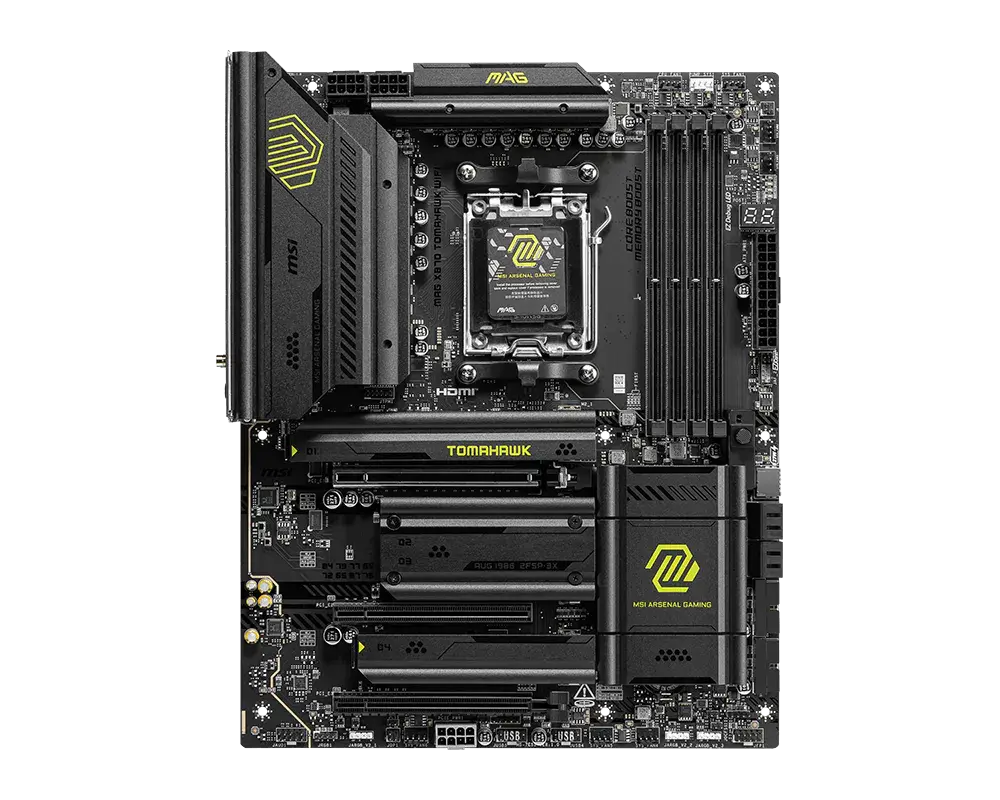
 MSI MAG X870 TOMAHAWK WIFIAM5 · ATX · DDR5 · board-only configuration · MSI global specification
- SATA storage ports
- 4This one: 2

AM5 · ATX · UK specification
An ATX AM5 motherboard with AMD X870: four DDR5 slots with profiles listed up to DDR5-8200+ on Ryzen 9000, a PCIe 5.0 x16 graphics slot, four M.2 slots (two PCIe 5.0 x4), two rear USB4 40 Gb/s ports, Realtek 5 Gb Ethernet and Wi-Fi 7.
As an Amazon Associate I earn from qualifying purchases.
Email me when the ASUS TUF GAMING X870-PRO WIFI7 W NEO gets cheaper on eBay. We check exact-model listings once a day at 12:00 UTC.
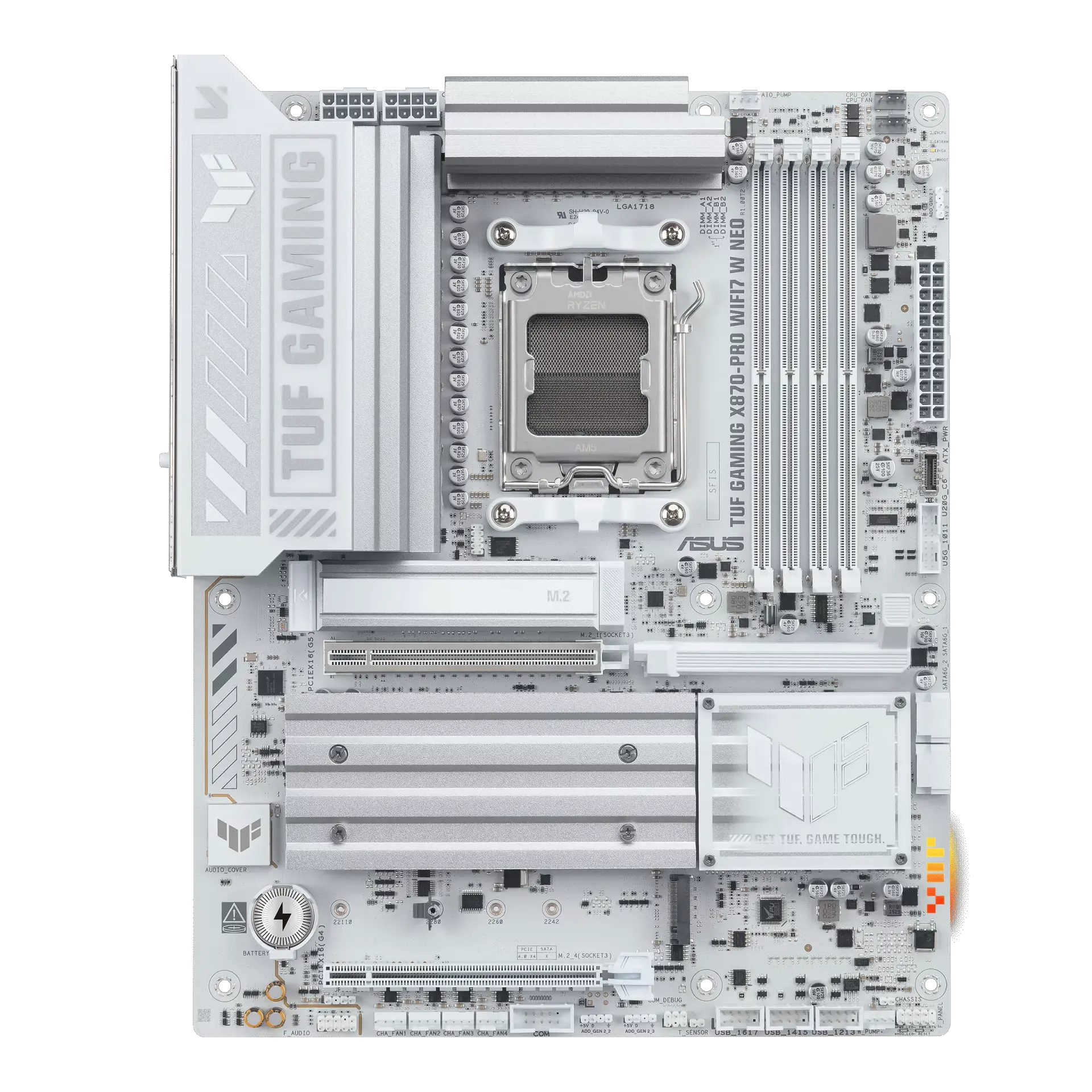
Specifications checked 27 Sept 2026Manufacturer specifications, not a hands-on test.
The nearest checked motherboards by key specifications, with what differs from the ASUS TUF GAMING X870-PRO WIFI7 W NEO. The first matches the Compare button above.
MSI MAG X870 TOMAHAWK WIFIAM5 · ATX · DDR5 · board-only configuration · MSI global specification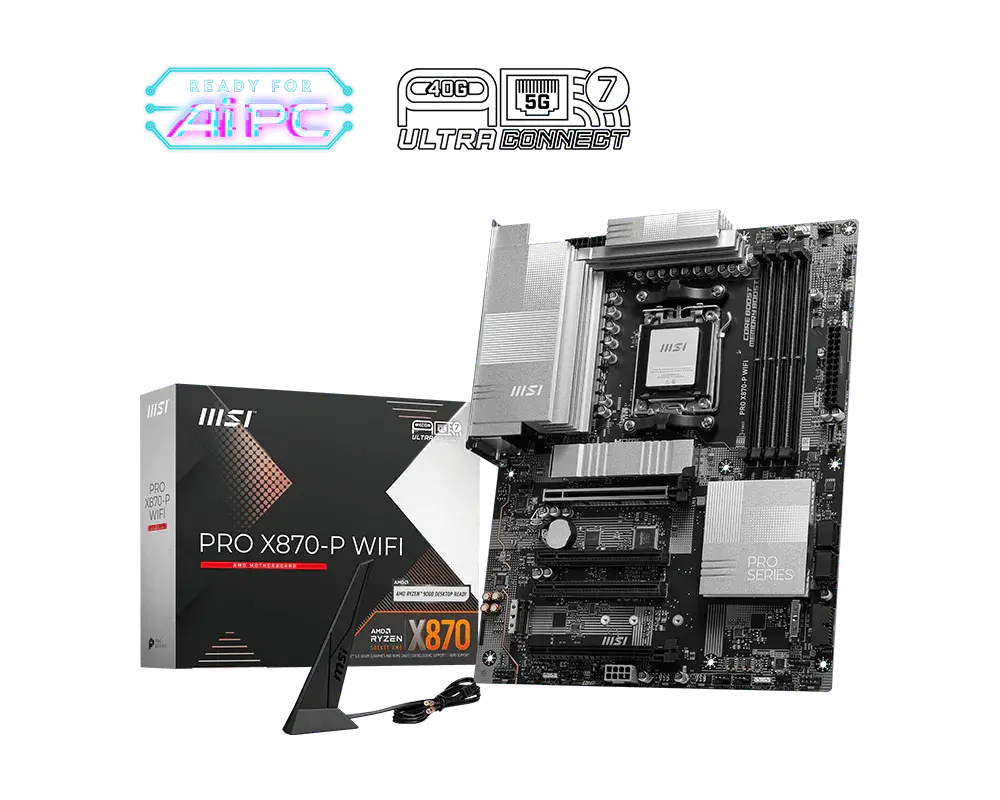 MSI PRO X870-P WIFIAM5 · DDR5 · ATX · MSI global specification
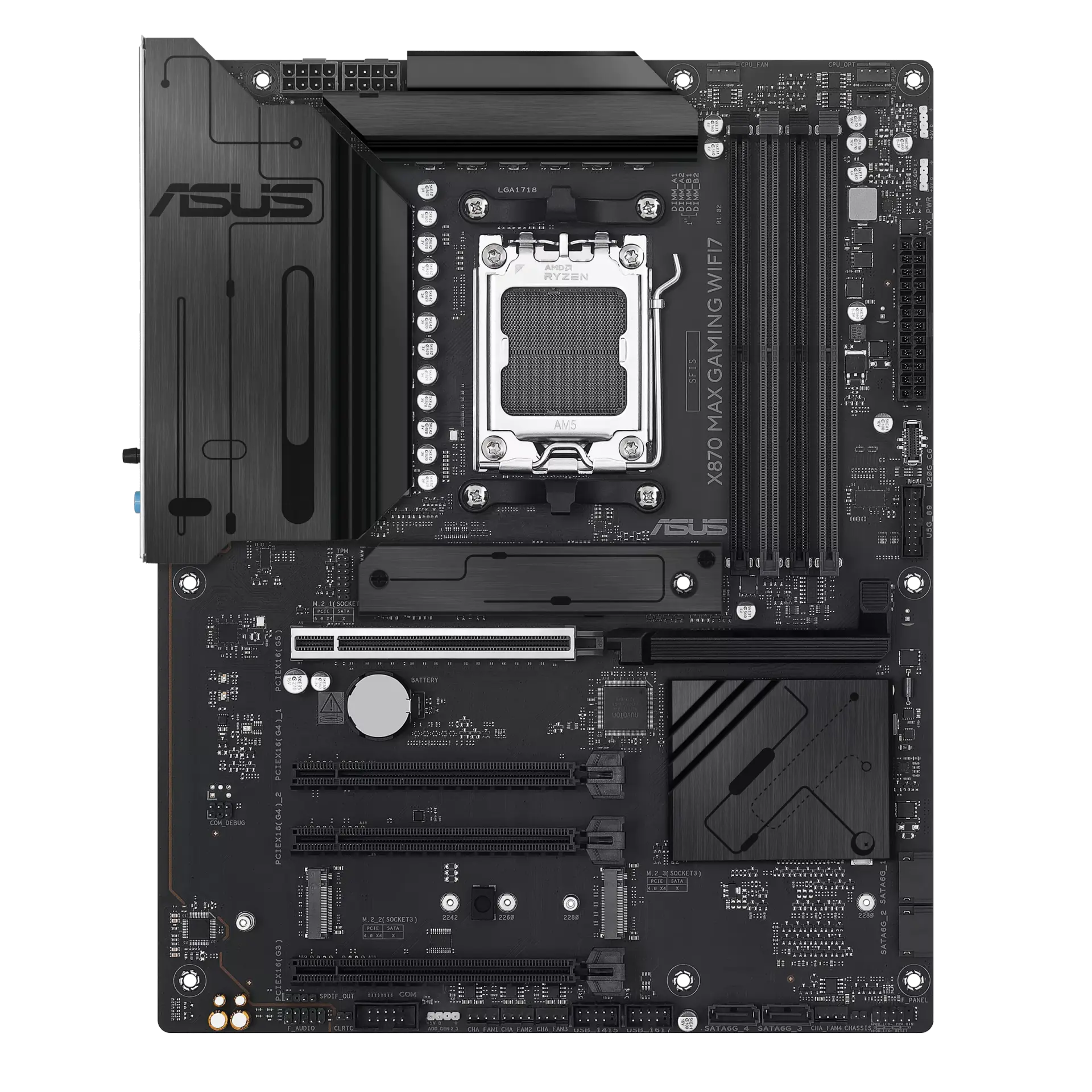 ASUS X870 MAX GAMING WIFI7X870 MAX GAMING WIFI7 · AM5 · ATX · ASUS UK specification
Two rear USB4 40 Gb/s Type-C ports with display output and a front 20 Gb/s USB-C connector rated up to 30 W PD/PPS fast-charge.
Realtek 5 Gb Ethernet, Wi-Fi 7 and Bluetooth 5.4, with rear BIOS FlashBack and Clear CMOS buttons, PCIe Slot Q-Release and a 64 MB BIOS flash.
Memory profiles listed up to 8200+ MT/s with Ryzen 9000 and 9000+ MT/s with Ryzen 8000, with ECC and non-ECC unbuffered DDR5 support.
M.2_2 runs at x2 by default because it shares bandwidth with the USB4 ports (x4 disables USB4), and M.2_4 shares with the chipset x16 slot.
Only two SATA ports, Wi-Fi 7 limited to 160 MHz channels, and no rear DisplayPort.
Products in this catalogue that list the same socket or memory type as the ASUS TUF GAMING X870-PRO WIFI7 W NEO. A shared socket or memory type is necessary but not sufficient: check the exact CPU and memory support lists, and the BIOS version, before buying.
Exact configuration: TUF GAMING X870-PRO WIFI7 W NEO · AM5 · ATX · ASUS UK specification
40 specifications in 9 groups. Values are manufacturer specifications unless a row says “Measured result” or “Calculated from cited specifications”.
Check case mounting positions and connector clearance.
SourceUK and US buying links are searches, not proof of stock, identical regional wireless modules, bundles or warranty. Confirm the exact model and part identifier with the retailer.
SourcePhysical DDR5 module positions; this count is not a guarantee of capacity or profile speed.
SourceManufacturer capacity ceiling; check CPU support, BIOS and the validated DIMM population.
SourceASUS separately lists higher manual-overclocking maxima (8600+ / 9600+ / 8000+ MT/s), described as needing advanced BIOS configuration and potentially specialised hardware. It also lists DIMM Fit / DIMM Fit Pro, NitroPath DRAM Technology and AEMP. · Supported capacity, module population and profile speeds depend on the exact CPU, installed BIOS and validated memory kit. ASUS says profile results can be impacted when four DIMM slots are used. Profile support does not guarantee an overclock.
SourceThese are manufacturer-listed overclocking configurations, not guaranteed stock transfer rates or tested performance. ASUS says four-DIMM population can impact profile results; CPU family and DIMM layout remain material.
SourceThe PCIe 5.0 x16 slot is listed under the Ryzen processor; the x4-mode slot under the X870 chipset. · With Ryzen 8000 the first slot runs PCIe 4.0 x8/x4. PCIEX16(G4) shares bandwidth with M.2_4. See ASUS's PCIe bifurcation table.
SourceASUS PCIe Slot Q-Release. An installation control, not a bandwidth or performance measurement.
SourceM.2_2 shares bandwidth with the USB4 ports (x2 by default; x4 disables USB4), and M.2_4 shares with PCIEX16(G4).
SourceSATA 6 Gb/s; check the source for lane sharing and drive power requirements.
SourceM.2_1 and M.2_2 are listed under the Ryzen processor (2280); M.2_3 (2280) and M.2_4 (2242/2260/2280/22110) under the X870 chipset. · M.2_2 runs at x2 by default because it shares bandwidth with the USB4 ports; switching it to x4 in BIOS disables USB4. M.2_4 shares bandwidth with PCIEX16(G4) (both at x2 when both are used, adjustable in BIOS). With Ryzen 8000, M.2_1 and M.2_2 run PCIe 4.0 x4.
SourceRead the simultaneous-use restrictions rather than assuming USB4 and every slot keep full bandwidth together.
SourceASUS lists AMD RAIDXpert2 RAID 0/1/5/10 for Ryzen 9000, 8000 and 7000 processors without stating which levels apply to SATA versus NVMe devices.
SourceASUS lists AMD RAIDXpert2 RAID 0/1/5/10 for Ryzen 9000, 8000 and 7000 processors without stating which levels apply to NVMe versus SATA devices.
SourceInstallation features only; ASUS does not say which M.2 slots use each one, and they are not a cooling measurement. A screw package for M.2 SSDs is also listed.
SourceManufacturer cooling design, not measured temperatures. ASUS does not say which three M.2 slots the two heatsinks cover.
ASUS M.2 Q-Release: a switch (a lever or button, depending on model) removes the M.2 heatsink without tiny screws. An installation convenience, not a cooling measurement; ASUS does not state which M.2 slots use it.
Connector count and listed modes describe the rear panel. Display output depends on the CPU's integrated graphics. There is no rear DisplayPort; the USB4 ports provide Type-C display output.
SourceInternal headers need compatible case ports or accessories. The 30 W PD/PPS rating applies to the front 20 Gb/s USB-C connector.
SourceAvailable only with processors that have integrated graphics; see AMD CPU specifications. Not measured display performance.
SourceUSB4 shares bandwidth with M.2_2 (see lane sharing). ASUS lists USB Type-C power delivery output of max. 5 V/3 A.
SourceNominal port signalling rate, not measured throughput; the USB4 controller runs at PCIe 4.0 x2 when M.2_2 is in use.
SourceWireless bands and channel widths depend on local rules, the operating system and the installed module. Full Wi-Fi 7 features require Windows 11 24H2 or later; ASUS states Windows 10 supports only Wi-Fi 6. Bluetooth versions may vary by module.
SourceLink-rate capability; real throughput depends on the connected network, cabling and workload. ASUS also lists TUF LANGuard.
Source2x2 Wi-Fi 7 (Realtek RTL8922AE) with up to 160 MHz channels. Full Wi-Fi 7 features need Windows 11 24H2 or later; Windows 10 supports only Wi-Fi 6.
SourceThe manufacturer notes that the Bluetooth version can depend on the installed wireless module.
SourceASUS says 7.1 output needs a chassis HD audio front-panel module and that 32-bit/192 kHz is not supported for 7.1. A codec name is not an independent sound-quality measurement.
SourceCheck the complete connector list and the PSU cable type. Additional graphics-card, front-panel fast-charge and cooling connections can have separate requirements.
SourceHeader counts do not specify electrical current limits.
SourceCheck the manual for connector voltage and LED limits before connecting lighting.
SourceManufacturer power-stage ratings with DIGI+ VRM (SPS); not a measured VRM temperature or overclocking result.
Check ASUS's exact CPU support list and its required BIOS. Family support does not confirm the firmware installed on a retail board.
SourceFlash-ROM capacity does not identify the BIOS version installed on a retail board. ASUS lists integrated Wi-Fi driver support in the UEFI BIOS.
SourceIndividual features and drivers can have newer operating-system requirements, particularly wireless networking.
SourceASUS BIOS FlashBack button. Use the exact model firmware and follow ASUS's BIOS FlashBack instructions.
SourceListed rear-panel control; follow the board manual before resetting firmware settings.
SourceMore of the nearest checked motherboards by key specifications, for a side-by-side comparison.
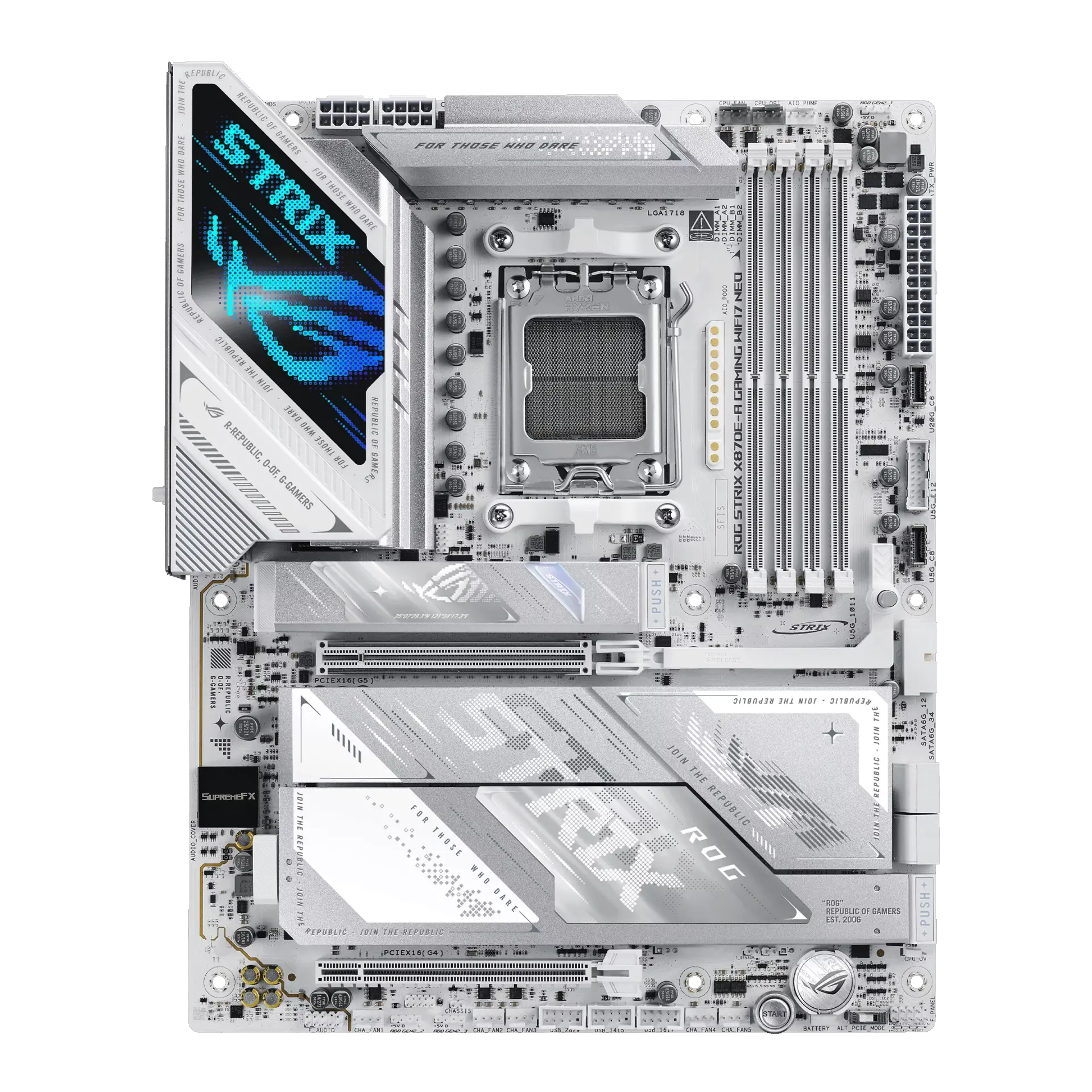
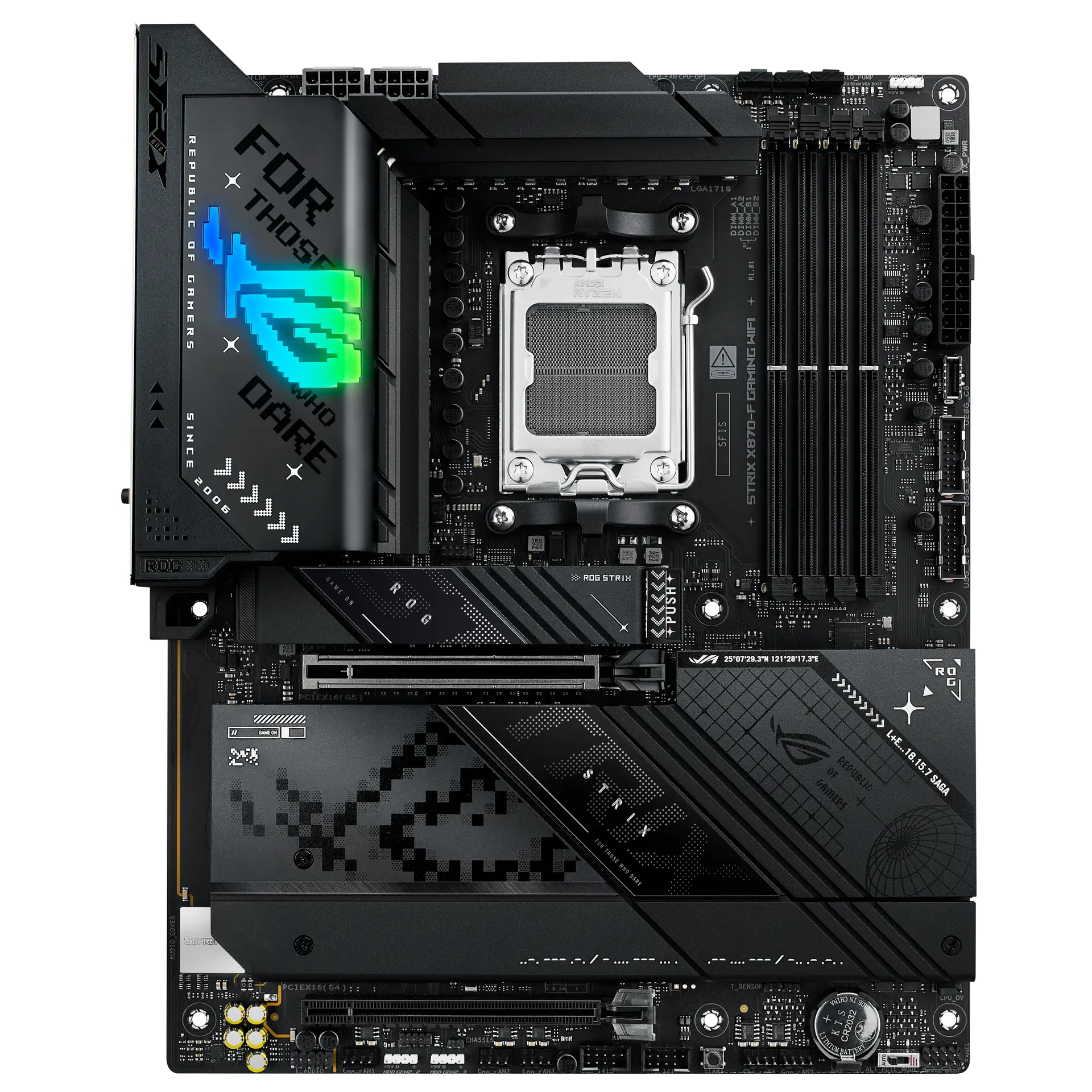 ASUS ROG STRIX X870-F GAMING WIFI90MB1IV0-M0EAY0 · AM5 · ATX · ASUS UK specificationCompare the two
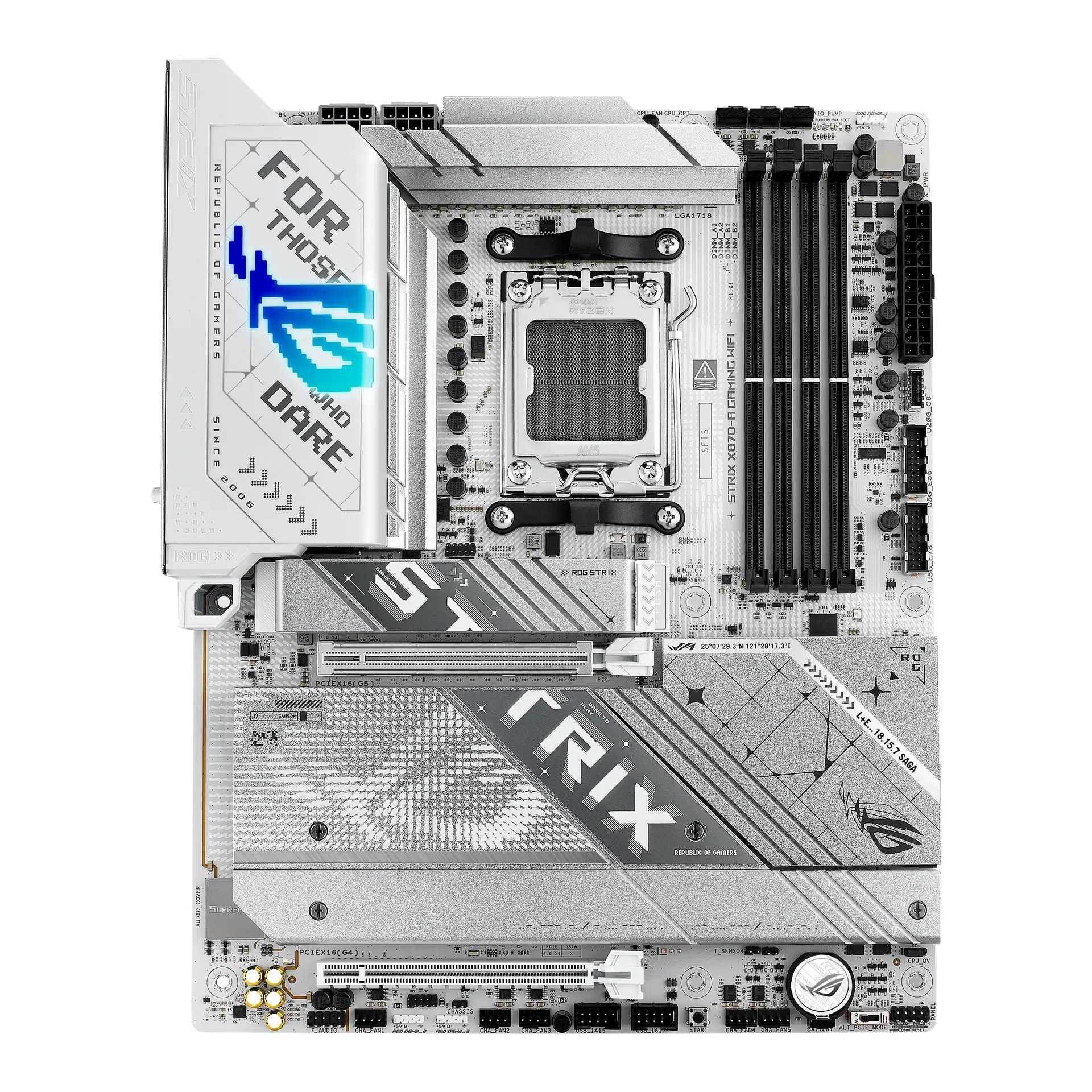 ASUS ROG STRIX X870-A GAMING WIFI90MB1IF0-M0AAY0 · AM5 · ATX · ASUS global specificationCompare the two
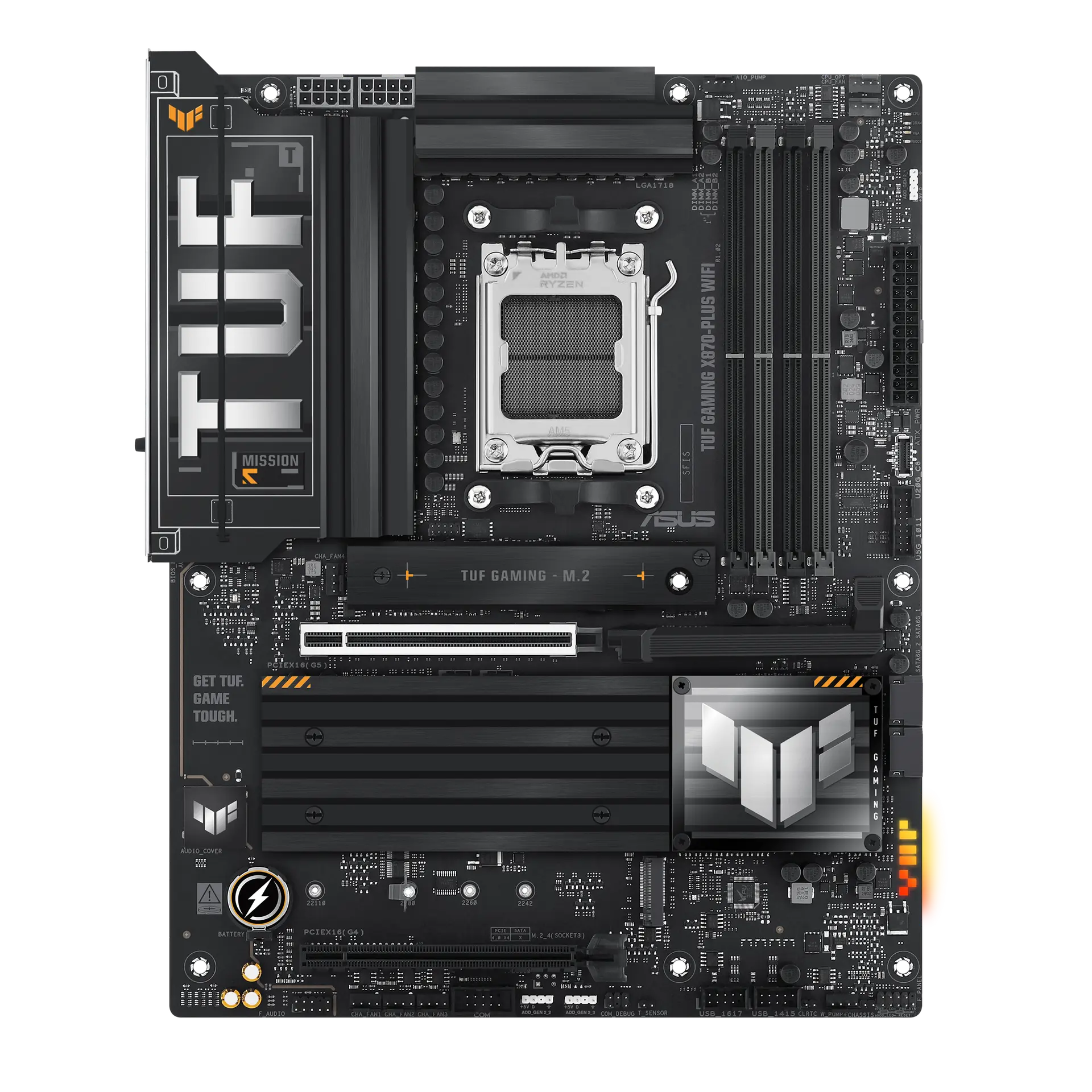 ASUS TUF GAMING X870-PLUS WIFITUF GAMING X870-PLUS WIFI · AM5 · ATX · ASUS UK specificationCompare the two
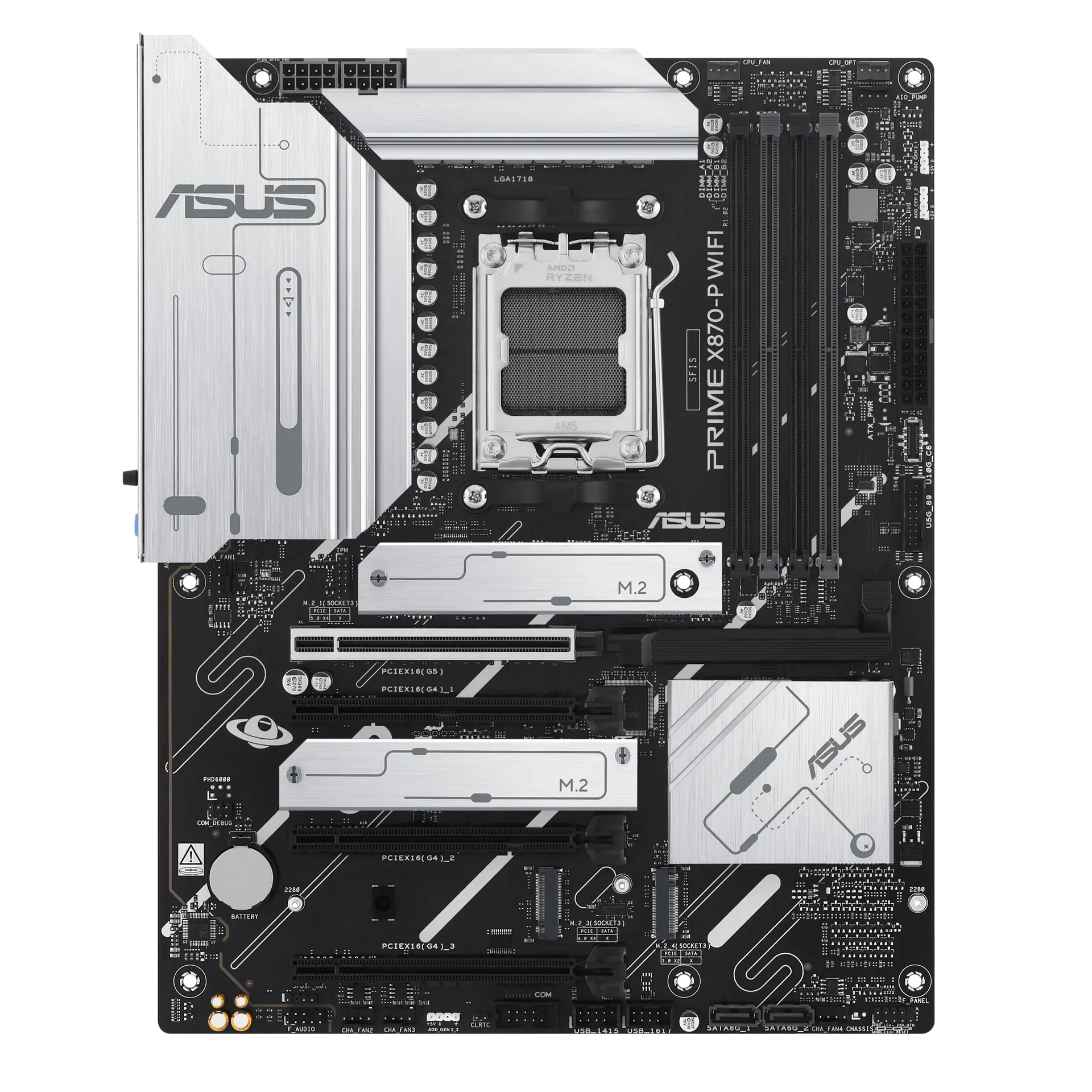 ASUS PRIME X870-P WIFIPRIME X870-P WIFI · AM5 · ATX · ASUS UK specificationCompare the two
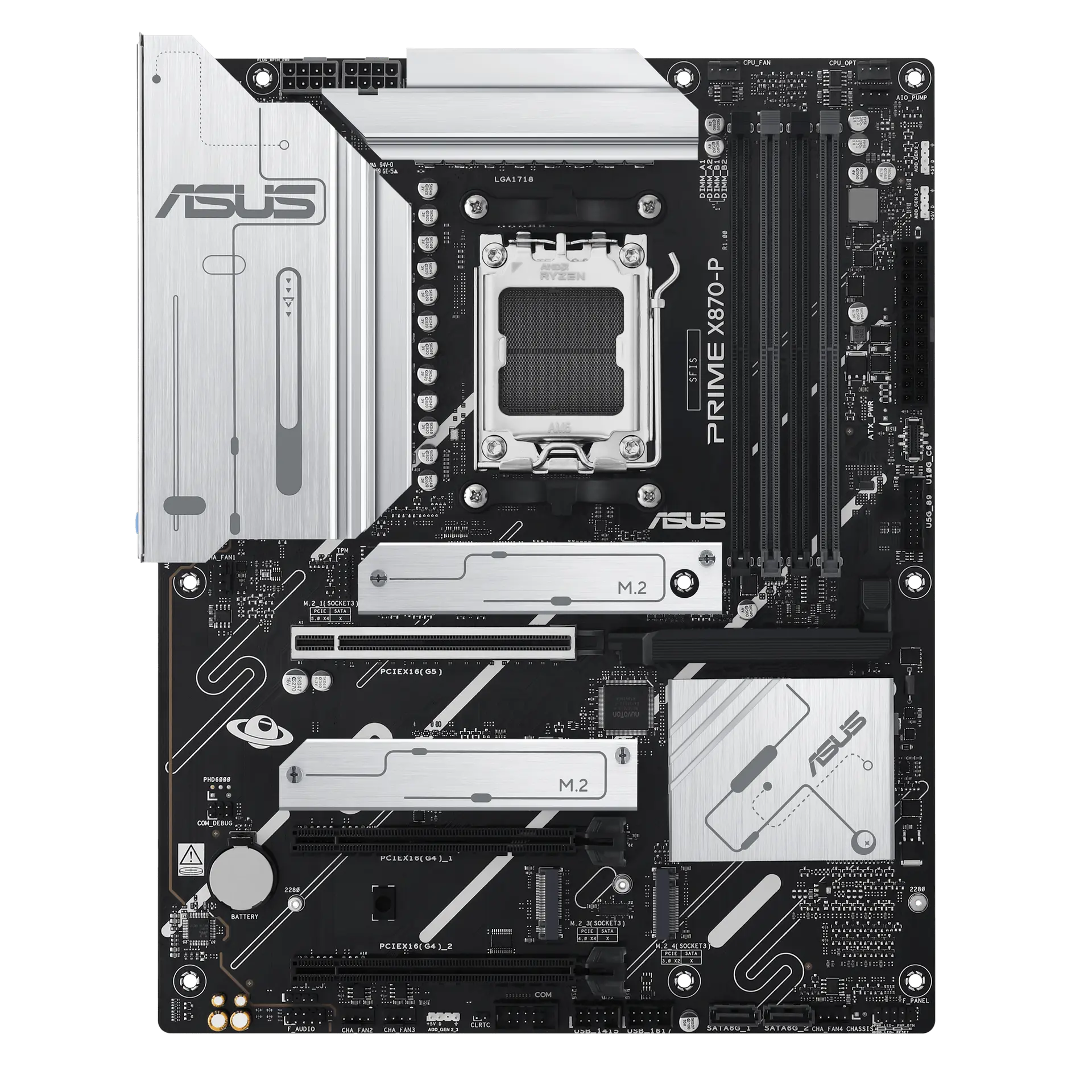 ASUS PRIME X870-PPRIME X870-P · AM5 · ATX · ASUS UK specificationCompare the two
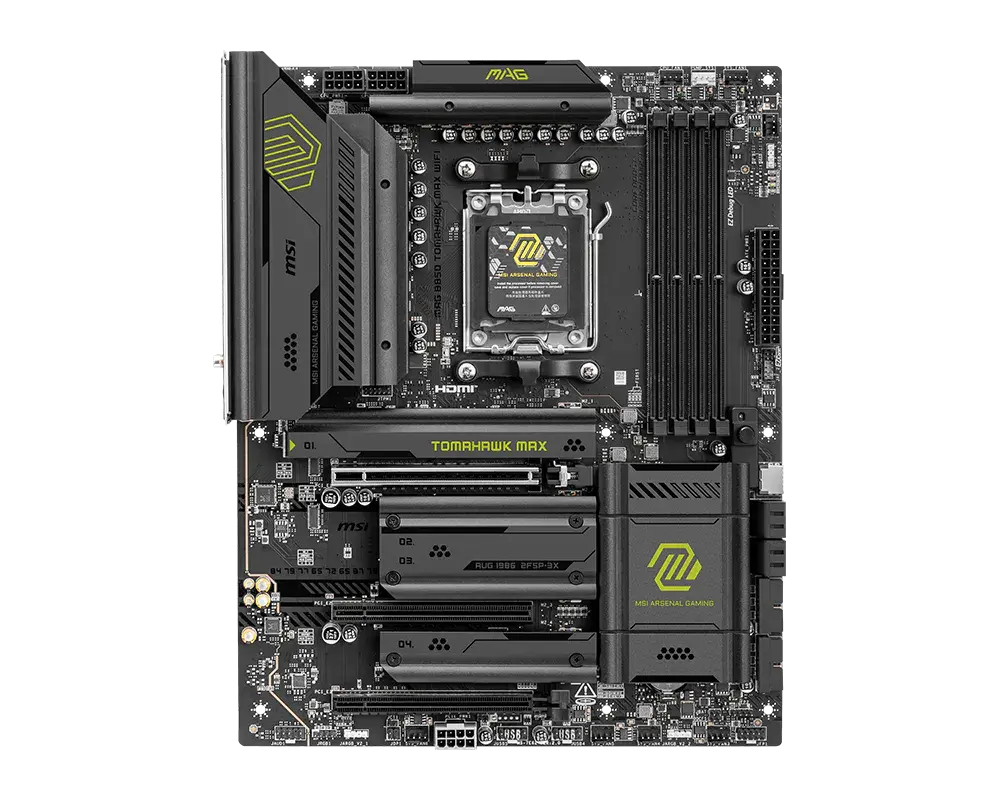 MSI MAG B850 TOMAHAWK MAX WIFIAM5 · ATX · DDR5 · board-only configuration · MSI global specificationCompare the two
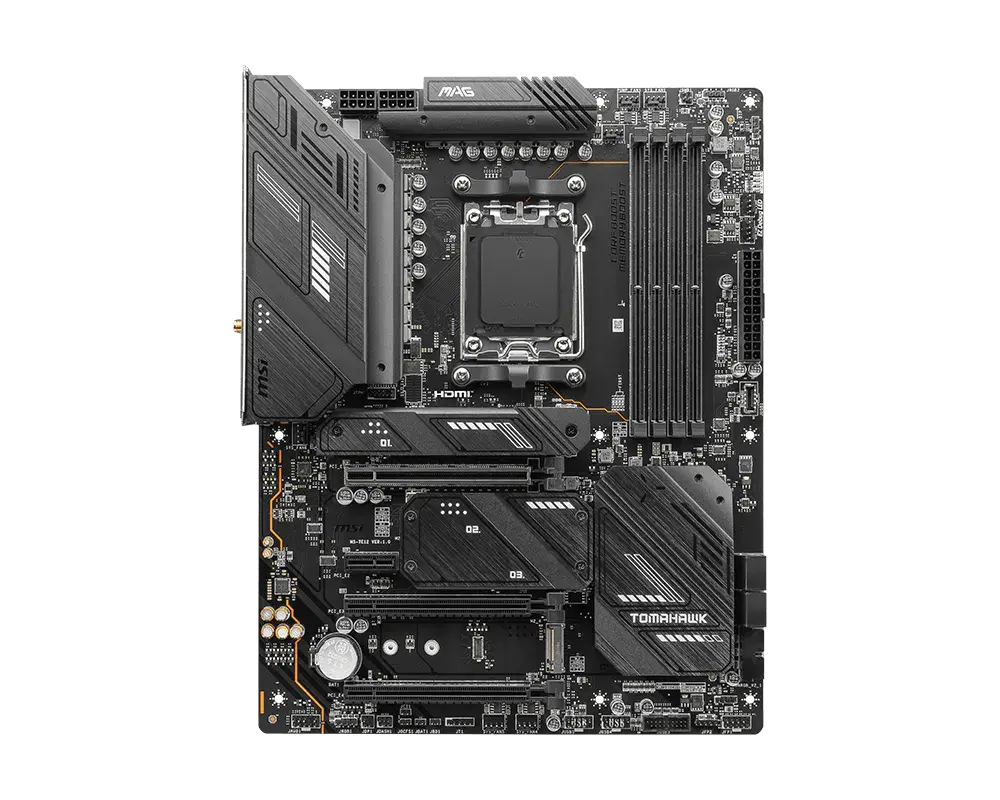 MSI MAG X670E TOMAHAWK WIFIAM5 · ATX · DDR5 · board-only configuration · MSI global specificationCompare the two
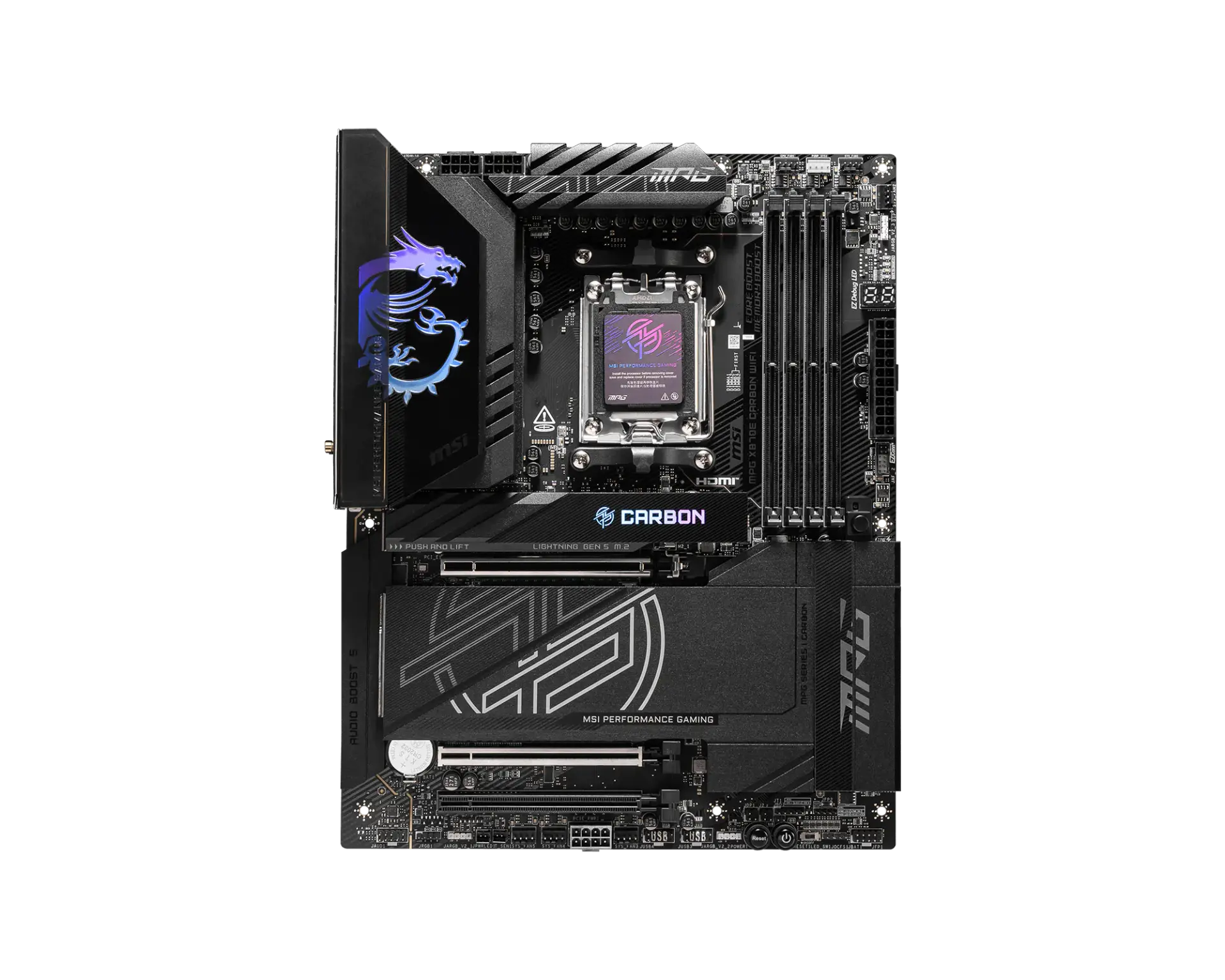 MSI MPG X870E CARBON WIFIAM5 · ATX · DDR5 · board-only configuration · MSI global specificationCompare the two