Skip to comparison
versus.deals
Menu
Browse versus.deals
SPEAKERS · YOUR NEXT FACE-OFF

ADAM Audio T7V vs Yamaha HS8

Real specs. Clear sources.Exact models · UK & US buying links

Compared products

YOUR FIRST CHOICE

ADAM Audio T7V

Black
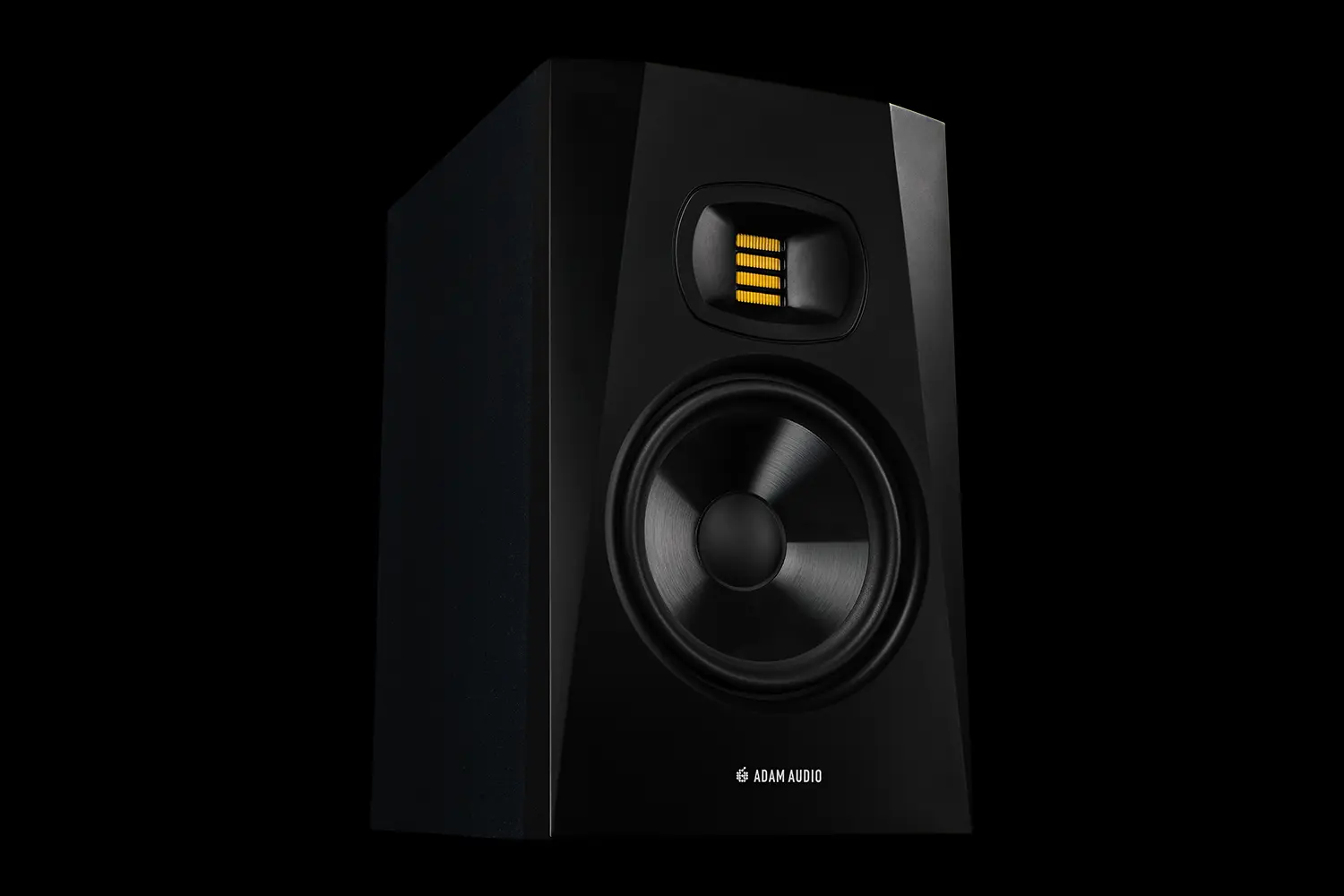
ADAM Audio T7V studio monitor in black, angled front view showing the 7-inch woofer and gold-folded U-ART ribbon tweeter in its waveguide
Exact model & source notes

The T7V is a single active two-way nearfield monitor with a 7-inch polypropylene woofer and ADAM's 1.9-inch U-ART folded-ribbon tweeter, driven by 50 W and 20 W RMS PWM amplifiers. It takes balanced XLR or unbalanced RCA inputs and is sold individually, so a stereo pair means buying two.

Specifications checked 26 Sept 2026.

Amazon links open search results. Check the exact variant, current price and availability with the retailer.

Manufacturer specifications

WHAT DIFFERS
Crossover frequency2.6 kHz2 kHz
132 WPower consumption60 W
1.9 inTweeter size1 in
3 of 14 verified differences, in the order listed below. Not a rating.
See the 14 verified differences
THE CONTENDER

Yamaha HS8

HS8 · black · single monitor · UK and Ireland specification

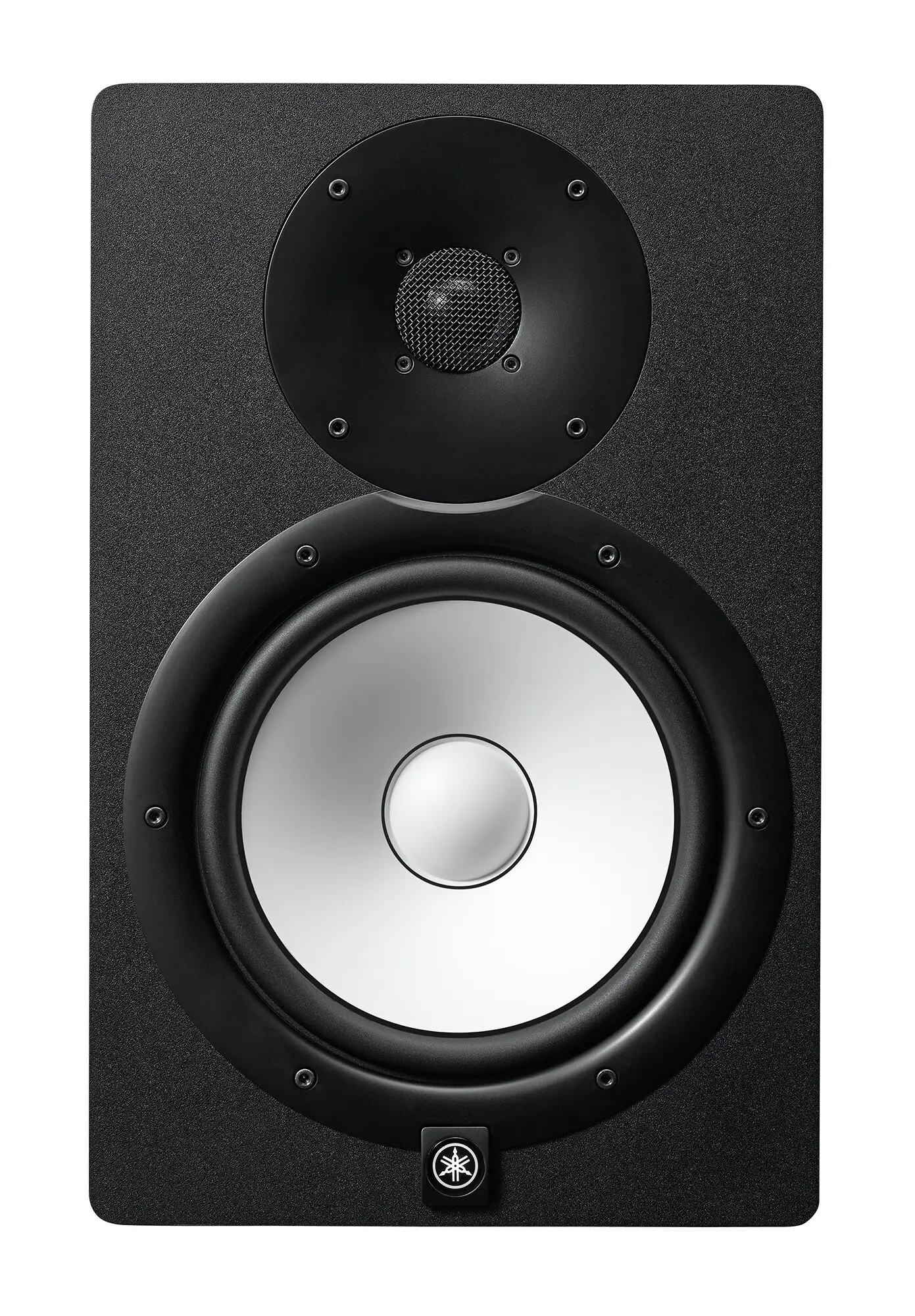
Front view of a black Yamaha HS8 studio monitor with white 8-inch woofer cone and dome tweeter
Exact model & source notes

The HS8 is a single powered two-way studio monitor with a 8-inch cone woofer and 1-inch dome tweeter, bi-amplified at 120 W (dynamic power). It takes balanced XLR or 6.35 mm phone-jack inputs and is sold as one cabinet, so a stereo pair means buying two.

Specifications checked 26 Sept 2026.

Amazon links open search results. Check the exact variant, current price and availability with the retailer.

Manufacturer specifications

ADAM Audio T7V UK & US retailers

UK & US price history: no verified listing yet

Yamaha HS8 UK & US retailers

UK & US price history: no verified listing yet

Search links open retailer results, not a matched listing; eBay listings are checked daily. As an Amazon Associate I earn from qualifying purchases. As an eBay Partner, we may be compensated if you make a purchase.

THE DIFFERENCES, MADE VISIBLE

Visual facts

Differences first. Select a topic for its graphic, sources and conditions.

How to read this comparison
  • Manufacturer facts for the exact models shown. Not a quality rating or a test result.
  • “Different” means the known values differ, not that one is better.
  • Missing or conflicting evidence is marked and never counts as a difference. Source chips hold each fact’s sources and conditions.
SPECIFICATIONS SIDE BY SIDE7 topics
SELECTED TOPIC
01 / 07

Enclosure

Check the exact configuration and source conditions for your use.

ADAM Audio T7VBeveled cabinet with a rear-firing bass-reflex port

Manufacturer specification · The manual advises placing T Series monitors at least 16 inches from any wall, partly to prevent the wall from physically interfering with the rear-firing bass reflex ports; if they must be close to a wall, it suggests the LF switch at −2 dB.

Explore the full specifications

Check the exact configuration. Manufacturer specifications describe the listed variant. Confirm compatibility and the seller’s exact model before buying; no overall winner is inferred from incomplete evidence.

WHAT CHANGES BETWEEN THEM?

Key differences

Full specifications ↓

14 verified differences, most decision-relevant first. 7 are also drawn in Visual facts above. Missing information stays separate.

ADAM Audio T7VBeveled cabinet with a rear-firing bass-reflex port
Yamaha HS8MDF bass-reflex enclosure
Sources
ADAM Audio T7V

Manufacturer specification · The manual advises placing T Series monitors at least 16 inches from any wall, partly to prevent the wall from physically interfering with the rear-firing bass reflex ports; if they must be close to a wall, it suggests the LF switch at −2 dB.

ADAM Audio T7V — product page and technical dataADAM Audio T Series (T5V/T7V) operation manual (English)

Check the exact configuration and source conditions for your use.

Channel configuration

In Visual facts
ADAM Audio T7VSingle active two-way nearfield studio monitor (sold as an individual unit, not a pair)
Yamaha HS8One individually packaged, two-way bi-amplified powered monitor (not a stereo pair)
Sources
ADAM Audio T7V

Manufacturer specification · A stereo setup needs two monitors; the maximum SPL is quoted per pair.

ADAM Audio T7V — product page and technical dataADAM Audio US shop — T7V (power-supply options, sold individually)
Yamaha HS8

Manufacturer specification · Yamaha lists packaging as Single. A stereo setup needs two units; two-way describes the LF/HF driver bands.

Yamaha HS Series (UK and Ireland) — specificationsYamaha HS Series HS8/HS7/HS5/HS8I/HS7I/HS5I/HS8S — owner's manual (English)

Check the exact configuration and source conditions for your use.

Crossover frequency

In Visual facts
ADAM Audio T7V2.6 kHz
Yamaha HS82 kHz
Sources
ADAM Audio T7V

Manufacturer specification · ADAM's T Series manual describes DSP-controlled driver crossovers for the T Series; the US shop says the T7V comes with new DSP technology.

ADAM Audio T7V — product page and technical dataADAM Audio US shop — T7V (power-supply options, sold individually)ADAM Audio T Series (T5V/T7V) operation manual (English)

Check the exact configuration and source conditions for your use.

Included units / accessories

In Visual facts
ADAM Audio T7VOne monitor, power cord and quick start guide
Yamaha HS8One monitor, power cord and owner's manual
Sources
ADAM Audio T7V

Manufacturer specification · Signal cables and a second monitor are not included.

ADAM Audio T7V — product page and technical dataADAM Audio US shop — T7V (power-supply options, sold individually)
Yamaha HS8

Manufacturer specification · Single packaging. Signal cables, stands and a second monitor are not listed. Bracket screws are supplied only with the separate HS5I/HS7I/HS8I models.

Yamaha HS Series (UK and Ireland) — specificationsYamaha HS Series HS8/HS7/HS5/HS8I/HS7I/HS5I/HS8S — owner's manual (English)

Check the exact configuration and source conditions for your use.

Input sensitivity / impedance

In Visual facts
ADAM Audio T7VSwitchable +4 dBu / −10 dBV; input impedance 10 kOhm / 20 kOhm
Yamaha HS8−10 dBu / 10 kΩ
Sources
ADAM Audio T7V

Manufacturer specification · ADAM lists the two input impedances without assigning them to the XLR and RCA inputs. The XLR input takes balanced audio at nominal +4 dBu and the RCA input unbalanced audio at nominal −10 dBV.

ADAM Audio T7V — product page and technical dataADAM Audio T Series (T5V/T7V) operation manual (English)

Check the exact configuration and source conditions for your use.

Audio inputs

In Visual facts
ADAM Audio T7VBalanced XLR and unbalanced RCA analogue inputs (switch-selected; +4 dBu / −10 dBV)
Yamaha HS8Balanced XLR (XLR-3-31) and balanced 6.35 mm phone jack, wired in parallel
Sources
ADAM Audio T7V

Manufacturer specification · Analogue only: no Bluetooth, USB or optical input. A 2-way switch selects which connector receives the signal.

ADAM Audio T7V — product page and technical dataADAM Audio T Series (T5V/T7V) operation manual (English)
Yamaha HS8

Manufacturer specification · Analogue line inputs only; no Bluetooth, USB or optical input is listed. The two inputs are parallel, not a switchable mixer.

Yamaha HS Series (UK and Ireland) — specificationsYamaha HS Series HS8/HS7/HS5/HS8I/HS7I/HS5I/HS8S — owner's manual (English)

Check the exact configuration and source conditions for your use.

Show 8 more verified differences

Rated power and measurement basis

In Visual facts
ADAM Audio T7V70 W RMS total: woofer 50 W RMS + tweeter 20 W RMS (PWM / Class D amplifiers)
Yamaha HS8120 W total (dynamic power): LF 75 W into 4 ohms + HF 45 W into 8 ohms
Sources
ADAM Audio T7V

Manufacturer specification · Manufacturer amplifier ratings per monitor; load not stated. Not a loudness measurement or power consumption (132 W max).

ADAM Audio T7V — product page and technical dataADAM Audio T Series (T5V/T7V) operation manual (English)
Yamaha HS8

Manufacturer specification · Manufacturer amplifier rating per monitor, stated as dynamic power in the owner's manual; not RMS continuous power, measured loudness or mains consumption.

Yamaha HS Series (UK and Ireland) — specificationsYamaha HS Series HS8/HS7/HS5/HS8I/HS7I/HS5I/HS8S — owner's manual (English)

Check the exact configuration and source conditions for your use.

Power consumption

ADAM Audio T7V132 W
Yamaha HS860 W
Sources
Yamaha HS8

Manufacturer specification · Manufacturer's power-consumption rating; idle/average/maximum conditions are not defined.

Yamaha HS Series (UK and Ireland) — specificationsYamaha HS Series HS8/HS7/HS5/HS8I/HS7I/HS5I/HS8S — owner's manual (English)

Check the exact configuration and source conditions for your use.

Power supply

ADAM Audio T7VBuilt-in mains power supply, 100–240 VAC ±10 %, 50/60 Hz auto-sensing, 132 W max; supplied power cord
Yamaha HS8Built-in mains amplifier with AC IN socket and supplied power cord; operating voltage is printed on the unit's name plate
Sources
ADAM Audio T7V

Manufacturer specification · No battery. ADAM's shop offers US, UK/ROW and EU power-supply options, so the supplied cord is regional; the product page notes backplate printing may vary by country.

ADAM Audio T7V — product page and technical dataADAM Audio US shop — T7V (power-supply options, sold individually)ADAM Audio T Series (T5V/T7V) operation manual (English)
Yamaha HS8

Manufacturer specification · Yamaha does not publish one universal voltage in the specification. The manual warns that the supplied cord may not suit another region, so a UK/Ireland unit and a US unit are separate regional packages; do not assume cross-region use.

Yamaha HS Series (UK and Ireland) — specificationsYamaha HS Series HS8/HS7/HS5/HS8I/HS7I/HS5I/HS8S — owner's manual (English)

Check the exact configuration and source conditions for your use.

Acoustic controls

ADAM Audio T7VLevel (gain) knob; +4 dBu / −10 dBV input-sensitivity switch; high shelf > 5 kHz and low shelf < 300 Hz, each −2 / 0 / +2 dB
Yamaha HS8LEVEL control; HIGH TRIM switch ±2 dB at HF; ROOM CONTROL switch 0 / −2 / −4 dB under 500 Hz
Sources
ADAM Audio T7V

Manufacturer specification · Manual switches and knob, not automatic room correction. The Level knob range is not published (the manual says the '0 dB' setting will be optimal in most situations). The manual's technical data list input sensitivity as 'Switchable +4 dBu / -10 dBV': the '+4 dBu' position is for the balanced XLR input and '-10 dBV' for the unbalanced RCA input; the product page lists 'Input Sensitivity: -10 to +4 dB' and 'Gain: Yes'.

ADAM Audio T7V — product page and technical dataADAM Audio T Series (T5V/T7V) operation manual (English)
Yamaha HS8

Manufacturer specification · Manual switches, not automatic room correction.

Yamaha HS Series (UK and Ireland) — specificationsYamaha HS Series HS8/HS7/HS5/HS8I/HS7I/HS5I/HS8S — owner's manual (English)

Check the exact configuration and source conditions for your use.

Tweeter size

ADAM Audio T7V1.9 in
Yamaha HS81 in
Sources
ADAM Audio T7V

Manufacturer specification · U-ART accelerated ribbon tweeter, equivalent diaphragm diameter, with HPS waveguide.

ADAM Audio T7V — product page and technical dataADAM Audio T Series (T5V/T7V) operation manual (English)

Check the exact configuration and source conditions for your use.

Woofer size

ADAM Audio T7V7 in
Yamaha HS88 in
Sources
ADAM Audio T7V

Manufacturer specification · Polypropylene cone; basket diameter.

ADAM Audio T7V — product page and technical dataADAM Audio T Series (T5V/T7V) operation manual (English)

Check the exact configuration and source conditions for your use.

Dimensions of each unit

ADAM Audio T7V347 × 210 × 293 mm (H × W × D)
Yamaha HS8250 × 390 × 334 mm (W × H × D), per monitor
Sources

Weight

ADAM Audio T7V7.1 kg
Yamaha HS810.2 kg
Sources
Yamaha HS8

Manufacturer specification · Net weight of one monitor; the mounting-point I model is heavier.

Yamaha HS Series (UK and Ireland) — specificationsYamaha HS Series HS8/HS7/HS5/HS8I/HS7I/HS5I/HS8S — owner's manual (English)

A size or weight trade-off; it does not establish the better product.

Missing or non-comparable evidence (6)

Distortion

ADAM Audio T7VTHD > 80 Hz: 0.5 %
Yamaha HS8Not verified
Sources
ADAM Audio T7V

Manufacturer specification · Measurement level not stated.

ADAM Audio T7V — product page and technical data
Yamaha HS8

No source recorded for this side.

Evidence is missing or conflicting on at least one side. This is not a verified difference.

Frequency response

ADAM Audio T7V39 Hz – 25 kHz (−6 dB)
Yamaha HS8Not verified
Sources
ADAM Audio T7V

Manufacturer specification

ADAM Audio T7V — product page and technical data
Yamaha HS8

No source recorded for this side.

Evidence is missing or conflicting on at least one side. This is not a verified difference.

Maximum SPL

ADAM Audio T7V≥110 dB per pair at 1 m
Yamaha HS8Not verified
Sources
ADAM Audio T7V

Manufacturer specification

ADAM Audio T7V — product page and technical data
Yamaha HS8

No source recorded for this side.

Evidence is missing or conflicting on at least one side. This is not a verified difference.

Warranty

ADAM Audio T7V5 years (2 years warranty plus 3 years optional with product registration)
Yamaha HS8Not verified
Sources
ADAM Audio T7V

Manufacturer specification

ADAM Audio T7V — product page and technical data
Yamaha HS8

No source recorded for this side.

Evidence is missing or conflicting on at least one side. This is not a verified difference.

0 shared fields have the same recorded value.

WHAT EACH CHOICE ASKS OF YOU

What it brings and what to check

ADAM Audio T7V

What it brings

What to check

Yamaha HS8

What it brings

  • Rated 47 Hz–24 kHz at −3 dB and 38 Hz–30 kHz at −10 dB, with separate amplifiers for the woofer and tweeter.
  • Balanced XLR and phone-jack inputs plus HIGH TRIM and ROOM CONTROL switches let the monitor be matched to studio interfaces and placed nearer walls.

What to check

COMPARE THE DETAILS

Full specifications

How we verify
20 of 20 specifications Sources in each row
Source-backed specifications for ADAM Audio T7V and Yamaha HS8
SpecificationADAM Audio T7VYamaha HS8
Channel configurationDifferent
Sources
ADAM Audio T7V

Manufacturer specification · A stereo setup needs two monitors; the maximum SPL is quoted per pair.

ADAM Audio T7V — product page and technical dataADAM Audio US shop — T7V (power-supply options, sold individually)
Yamaha HS8

Manufacturer specification · Yamaha lists packaging as Single. A stereo setup needs two units; two-way describes the LF/HF driver bands.

Yamaha HS Series (UK and Ireland) — specificationsYamaha HS Series HS8/HS7/HS5/HS8I/HS7I/HS5I/HS8S — owner's manual (English)
Single active two-way nearfield studio monitor (sold as an individual unit, not a pair)One individually packaged, two-way bi-amplified powered monitor (not a stereo pair)
Woofer sizeDifferent
Sources
ADAM Audio T7V

Manufacturer specification · Polypropylene cone; basket diameter.

ADAM Audio T7V — product page and technical dataADAM Audio T Series (T5V/T7V) operation manual (English)
7 in8 in
Tweeter sizeDifferent
Sources
ADAM Audio T7V

Manufacturer specification · U-ART accelerated ribbon tweeter, equivalent diaphragm diameter, with HPS waveguide.

ADAM Audio T7V — product page and technical dataADAM Audio T Series (T5V/T7V) operation manual (English)
1.9 in1 in
Frequency response
Sources
ADAM Audio T7V

Manufacturer specification

ADAM Audio T7V — product page and technical data
Yamaha HS8

No source recorded.

39 Hz – 25 kHz (−6 dB)Not provided
Crossover frequencyDifferent
Sources
ADAM Audio T7V

Manufacturer specification · ADAM's T Series manual describes DSP-controlled driver crossovers for the T Series; the US shop says the T7V comes with new DSP technology.

ADAM Audio T7V — product page and technical dataADAM Audio US shop — T7V (power-supply options, sold individually)ADAM Audio T Series (T5V/T7V) operation manual (English)
2.6 kHz2 kHz
Maximum SPL
Sources
ADAM Audio T7V

Manufacturer specification

ADAM Audio T7V — product page and technical data
Yamaha HS8

No source recorded.

≥110 dB per pair at 1 mNot provided
Distortion
Sources
ADAM Audio T7V

Manufacturer specification · Measurement level not stated.

ADAM Audio T7V — product page and technical data
Yamaha HS8

No source recorded.

THD > 80 Hz: 0.5 %Not provided
Frequency response (−3 dB)
Sources
ADAM Audio T7V

No source recorded.

Yamaha HS8

Manufacturer specification · Manufacturer limits at −3 dB; not interchangeable with the −10 dB range.

Yamaha HS Series (UK and Ireland) — specificationsYamaha HS Series HS8/HS7/HS5/HS8I/HS7I/HS5I/HS8S — owner's manual (English)
Not provided47 Hz–24 kHz
Frequency response (−10 dB)
Sources
ADAM Audio T7V

No source recorded.

Not provided38 Hz–30 kHz
Audio inputsDifferent
Sources
ADAM Audio T7V

Manufacturer specification · Analogue only: no Bluetooth, USB or optical input. A 2-way switch selects which connector receives the signal.

ADAM Audio T7V — product page and technical dataADAM Audio T Series (T5V/T7V) operation manual (English)
Yamaha HS8

Manufacturer specification · Analogue line inputs only; no Bluetooth, USB or optical input is listed. The two inputs are parallel, not a switchable mixer.

Yamaha HS Series (UK and Ireland) — specificationsYamaha HS Series HS8/HS7/HS5/HS8I/HS7I/HS5I/HS8S — owner's manual (English)
Balanced XLR and unbalanced RCA analogue inputs (switch-selected; +4 dBu / −10 dBV)Balanced XLR (XLR-3-31) and balanced 6.35 mm phone jack, wired in parallel
Input sensitivity / impedanceDifferent
Sources
ADAM Audio T7V

Manufacturer specification · ADAM lists the two input impedances without assigning them to the XLR and RCA inputs. The XLR input takes balanced audio at nominal +4 dBu and the RCA input unbalanced audio at nominal −10 dBV.

ADAM Audio T7V — product page and technical dataADAM Audio T Series (T5V/T7V) operation manual (English)
Switchable +4 dBu / −10 dBV; input impedance 10 kOhm / 20 kOhm−10 dBu / 10 kΩ
Rated power and measurement basisDifferent
Sources
ADAM Audio T7V

Manufacturer specification · Manufacturer amplifier ratings per monitor; load not stated. Not a loudness measurement or power consumption (132 W max).

ADAM Audio T7V — product page and technical dataADAM Audio T Series (T5V/T7V) operation manual (English)
Yamaha HS8

Manufacturer specification · Manufacturer amplifier rating per monitor, stated as dynamic power in the owner's manual; not RMS continuous power, measured loudness or mains consumption.

Yamaha HS Series (UK and Ireland) — specificationsYamaha HS Series HS8/HS7/HS5/HS8I/HS7I/HS5I/HS8S — owner's manual (English)
70 W RMS total: woofer 50 W RMS + tweeter 20 W RMS (PWM / Class D amplifiers)120 W total (dynamic power): LF 75 W into 4 ohms + HF 45 W into 8 ohms
Power supplyDifferent
Sources
ADAM Audio T7V

Manufacturer specification · No battery. ADAM's shop offers US, UK/ROW and EU power-supply options, so the supplied cord is regional; the product page notes backplate printing may vary by country.

ADAM Audio T7V — product page and technical dataADAM Audio US shop — T7V (power-supply options, sold individually)ADAM Audio T Series (T5V/T7V) operation manual (English)
Yamaha HS8

Manufacturer specification · Yamaha does not publish one universal voltage in the specification. The manual warns that the supplied cord may not suit another region, so a UK/Ireland unit and a US unit are separate regional packages; do not assume cross-region use.

Yamaha HS Series (UK and Ireland) — specificationsYamaha HS Series HS8/HS7/HS5/HS8I/HS7I/HS5I/HS8S — owner's manual (English)
Built-in mains power supply, 100–240 VAC ±10 %, 50/60 Hz auto-sensing, 132 W max; supplied power cordBuilt-in mains amplifier with AC IN socket and supplied power cord; operating voltage is printed on the unit's name plate
Power consumptionDifferent
Sources
Yamaha HS8

Manufacturer specification · Manufacturer's power-consumption rating; idle/average/maximum conditions are not defined.

Yamaha HS Series (UK and Ireland) — specificationsYamaha HS Series HS8/HS7/HS5/HS8I/HS7I/HS5I/HS8S — owner's manual (English)
132 W60 W
Acoustic controlsDifferent
Sources
ADAM Audio T7V

Manufacturer specification · Manual switches and knob, not automatic room correction. The Level knob range is not published (the manual says the '0 dB' setting will be optimal in most situations). The manual's technical data list input sensitivity as 'Switchable +4 dBu / -10 dBV': the '+4 dBu' position is for the balanced XLR input and '-10 dBV' for the unbalanced RCA input; the product page lists 'Input Sensitivity: -10 to +4 dB' and 'Gain: Yes'.

ADAM Audio T7V — product page and technical dataADAM Audio T Series (T5V/T7V) operation manual (English)
Yamaha HS8

Manufacturer specification · Manual switches, not automatic room correction.

Yamaha HS Series (UK and Ireland) — specificationsYamaha HS Series HS8/HS7/HS5/HS8I/HS7I/HS5I/HS8S — owner's manual (English)
Level (gain) knob; +4 dBu / −10 dBV input-sensitivity switch; high shelf > 5 kHz and low shelf < 300 Hz, each −2 / 0 / +2 dBLEVEL control; HIGH TRIM switch ±2 dB at HF; ROOM CONTROL switch 0 / −2 / −4 dB under 500 Hz
347 × 210 × 293 mm (H × W × D)250 × 390 × 334 mm (W × H × D), per monitor
EnclosureDifferent
Sources
ADAM Audio T7V

Manufacturer specification · The manual advises placing T Series monitors at least 16 inches from any wall, partly to prevent the wall from physically interfering with the rear-firing bass reflex ports; if they must be close to a wall, it suggests the LF switch at −2 dB.

ADAM Audio T7V — product page and technical dataADAM Audio T Series (T5V/T7V) operation manual (English)
Beveled cabinet with a rear-firing bass-reflex portMDF bass-reflex enclosure
WeightDifferent
Sources
Yamaha HS8

Manufacturer specification · Net weight of one monitor; the mounting-point I model is heavier.

Yamaha HS Series (UK and Ireland) — specificationsYamaha HS Series HS8/HS7/HS5/HS8I/HS7I/HS5I/HS8S — owner's manual (English)
7.1 kg10.2 kg
Included units / accessoriesDifferent
Sources
ADAM Audio T7V

Manufacturer specification · Signal cables and a second monitor are not included.

ADAM Audio T7V — product page and technical dataADAM Audio US shop — T7V (power-supply options, sold individually)
Yamaha HS8

Manufacturer specification · Single packaging. Signal cables, stands and a second monitor are not listed. Bracket screws are supplied only with the separate HS5I/HS7I/HS8I models.

Yamaha HS Series (UK and Ireland) — specificationsYamaha HS Series HS8/HS7/HS5/HS8I/HS7I/HS5I/HS8S — owner's manual (English)
One monitor, power cord and quick start guideOne monitor, power cord and owner's manual
Warranty
Sources
ADAM Audio T7V

Manufacturer specification

ADAM Audio T7V — product page and technical data
Yamaha HS8

No source recorded.

5 years (2 years warranty plus 3 years optional with product registration)Not provided
FIND YOUR CONTENDERS

More products

Closest speakers to this pair by shared key specifications. Not a popularity ranking.

See all 162 speakers
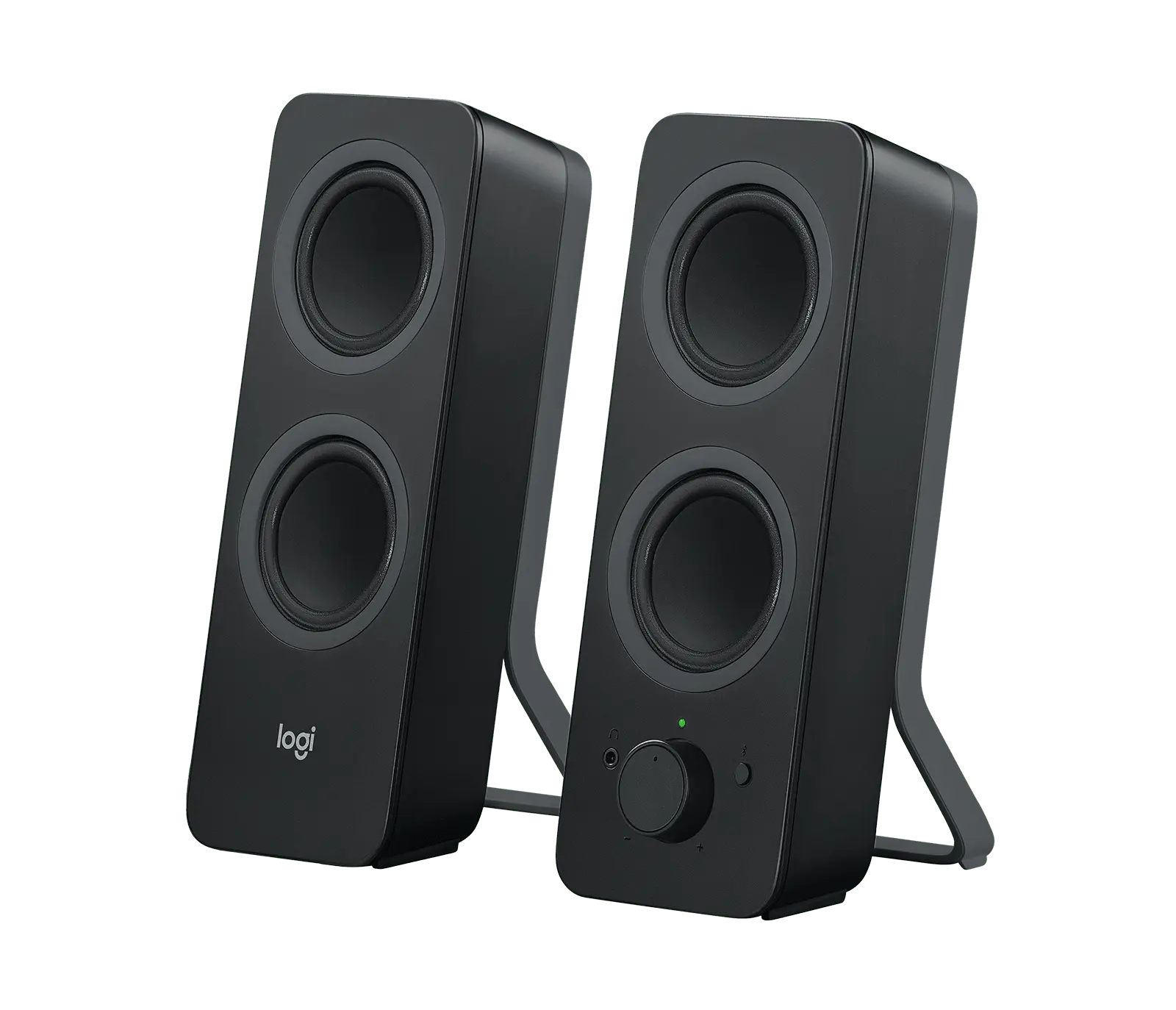
Pair of black Logitech Z207 Bluetooth computer speakers with two circular driver openings each and the volume knob on the right speaker

Logitech Z207

Channel configuration
2.0 stereo pair: two powered speakers, each with a full-range driver and a passive radiator
Rated power and measurement basis
5 W RMS total; 10 W peak total
Audio inputs
Bluetooth (up to two paired source devices, Easy-Switch) and one 3.5 mm analogue auxiliary input on the back of the right speaker
Prices & product profile
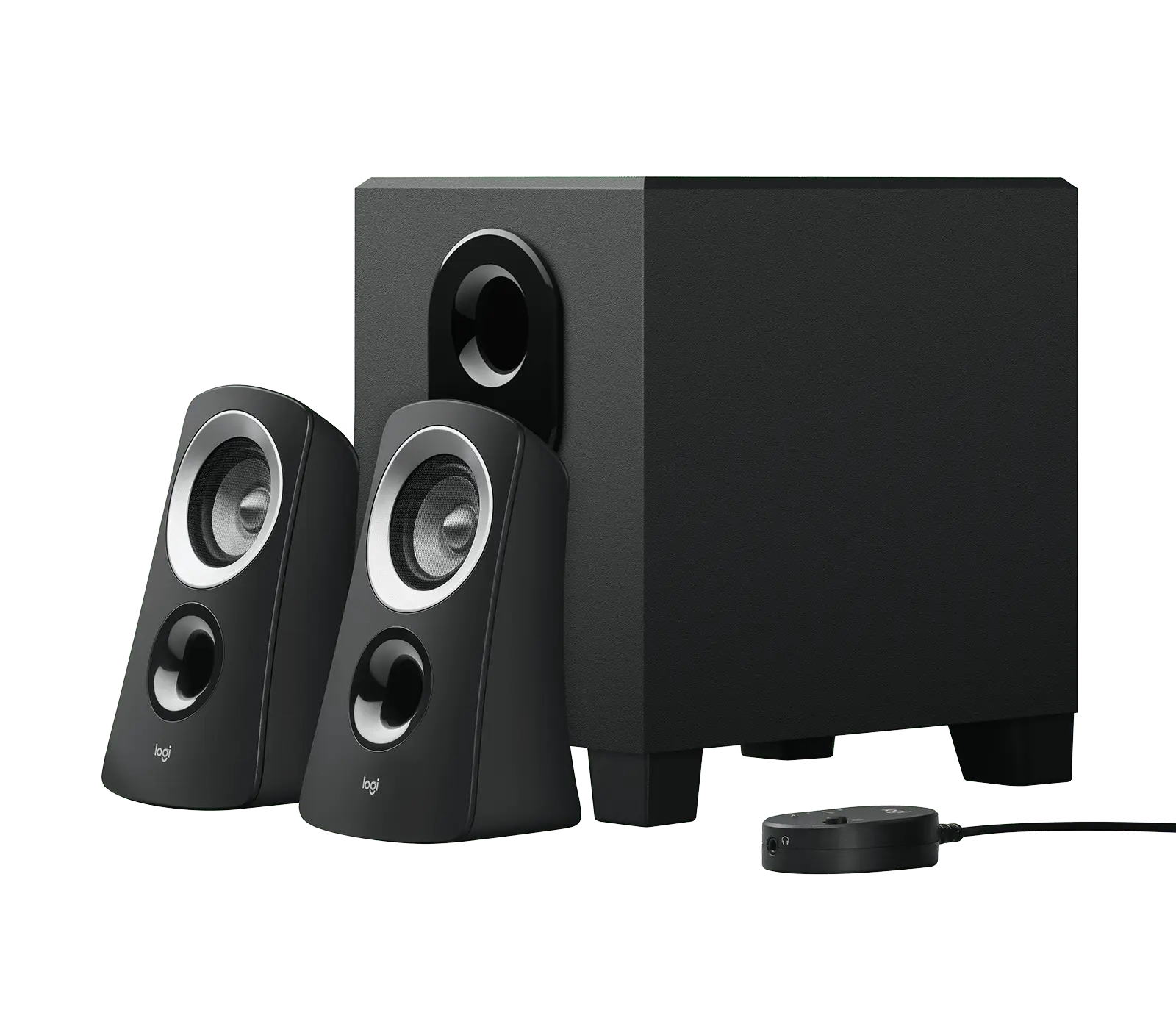
Black Logitech Z313 2.1 system: two angled satellite speakers, a subwoofer box and a round wired control pod

Logitech Z313

Channel configuration
2.1: two satellite speakers and a subwoofer, with a wired control pod
Rated power and measurement basis
25 W RMS total: subwoofer 15 W + satellites 2 × 5 W; 50 W peak
Audio inputs
One wired 3.5 mm analogue connection
Prices & product profile
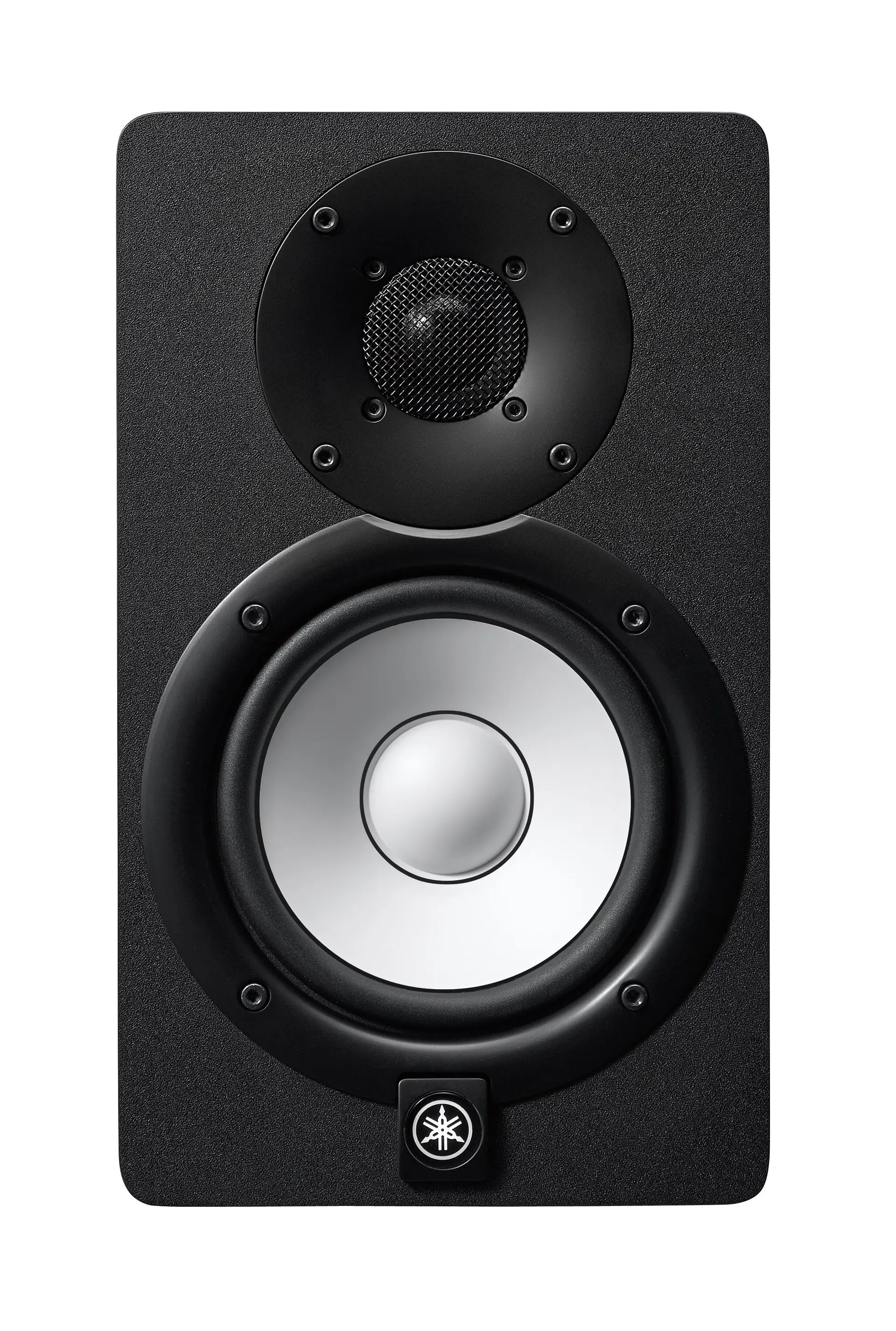
Front view of a black Yamaha HS5 studio monitor with white 5-inch woofer cone and dome tweeter

Yamaha HS5

Channel configuration
One individually packaged, two-way bi-amplified powered monitor (not a stereo pair)
Rated power and measurement basis
70 W total (dynamic power): LF 45 W into 4 ohms + HF 25 W into 8 ohms
Audio inputs
Balanced XLR (XLR-3-31) and balanced 6.35 mm phone jack, wired in parallel
Prices & product profile
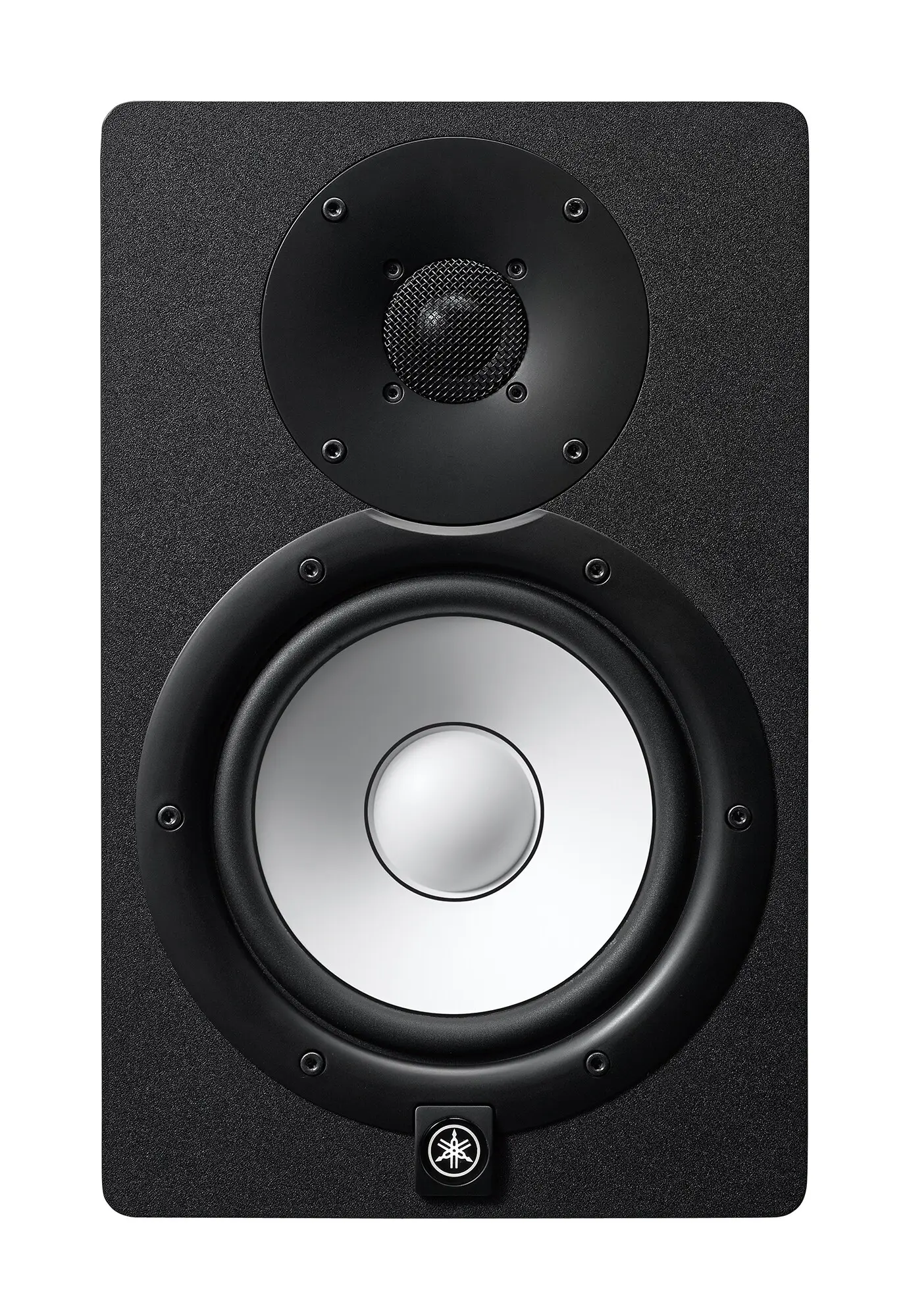
Front view of a black Yamaha HS7 studio monitor with white 6.5-inch woofer cone and dome tweeter

Yamaha HS7

Channel configuration
One individually packaged, two-way bi-amplified powered monitor (not a stereo pair)
Rated power and measurement basis
95 W total (dynamic power): LF 60 W into 4 ohms + HF 35 W into 8 ohms
Audio inputs
Balanced XLR (XLR-3-31) and balanced 6.35 mm phone jack, wired in parallel
Prices & product profile

Each record represents an explicitly checked model and configuration. Original import: 5 Sept 2026; this is not its verification date. This is not a list of current offers or a popularity ranking.