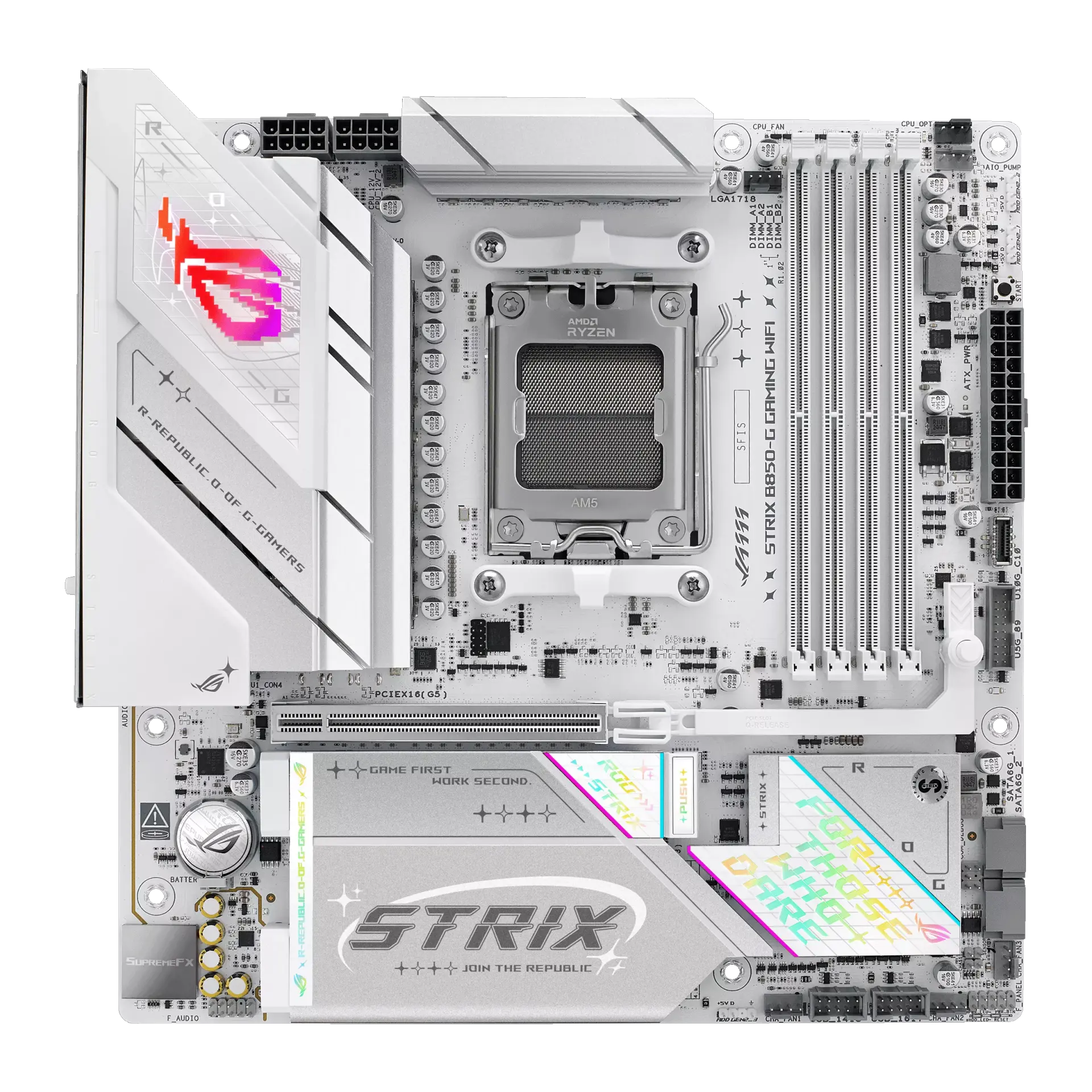


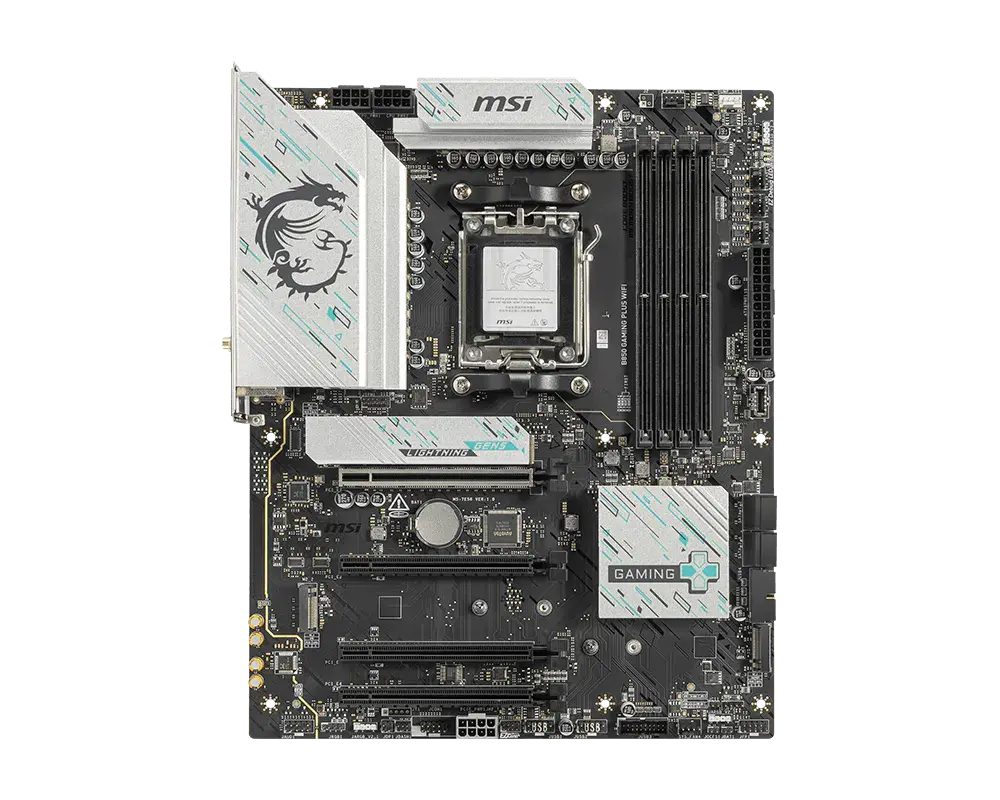
 MSI B850 GAMING PLUS WIFIAM5 · ATX · DDR5 · board-only configuration · MSI global specification
- Form factor
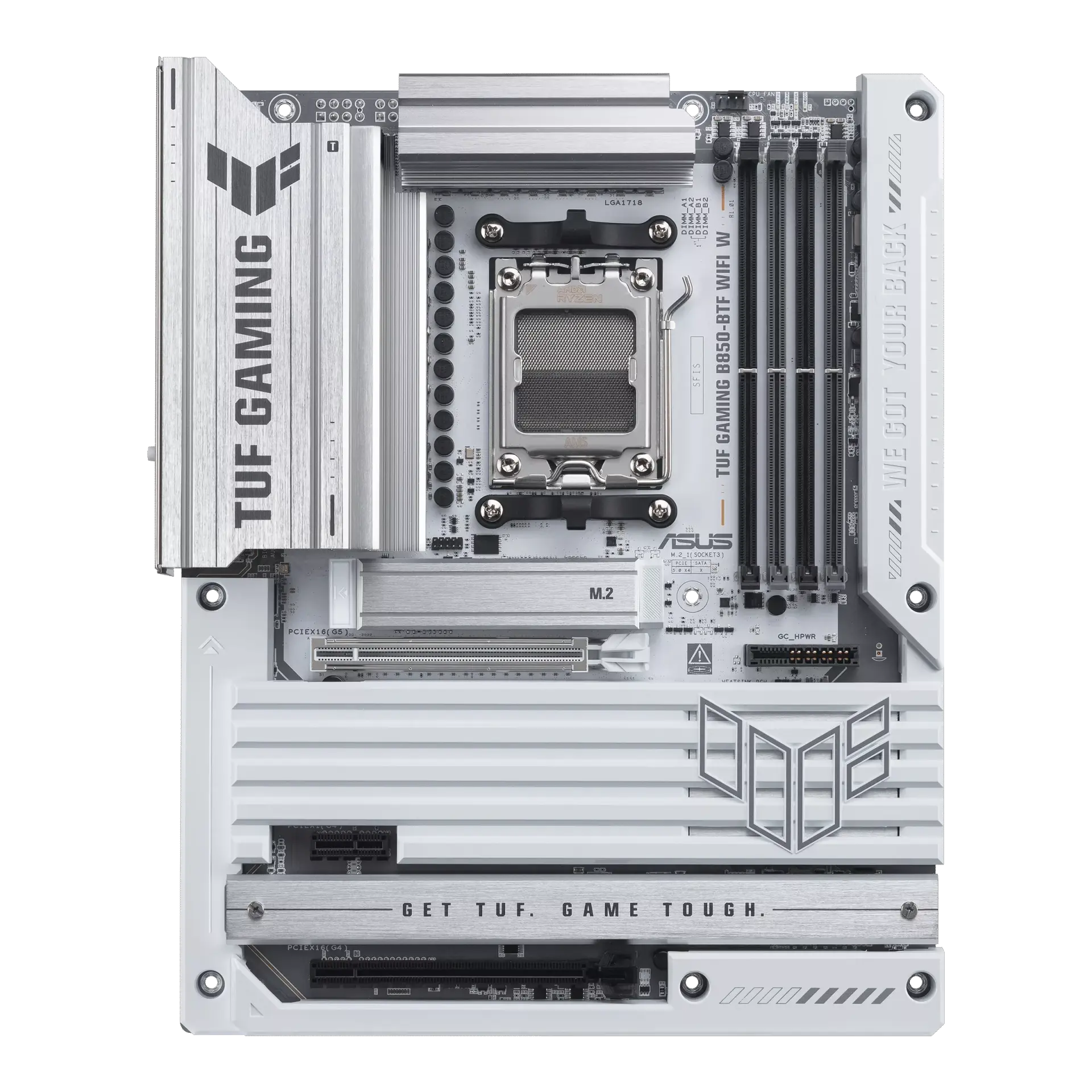
- ATX; 304.8 × 243.84 mmThis one: ATX; 305 × 244 mm; hidden-connector (BTF) design

AM5 · ATX · UK specification
A white ATX AM5 motherboard with AMD B850 and a hidden-connector (BTF) design: four DDR5 slots rated up to DDR5-8000+ (OC), a PCIe 5.0 x16 slot with a graphics-card high-power slot rated up to 600 W, three M.2 slots (one PCIe 5.0 x4), Realtek 2.5 Gb Ethernet and Wi-Fi 7.
As an Amazon Associate I earn from qualifying purchases.
Email me when the ASUS TUF GAMING B850-BTF WIFI W gets cheaper on eBay. We check exact-model listings once a day at 12:00 UTC.
Specifications checked 27 Sept 2026Manufacturer specifications, not a hands-on test.
The nearest checked motherboards by key specifications, with what differs from the ASUS TUF GAMING B850-BTF WIFI W. The first matches the Compare button above.
MSI B850 GAMING PLUS WIFIAM5 · ATX · DDR5 · board-only configuration · MSI global specification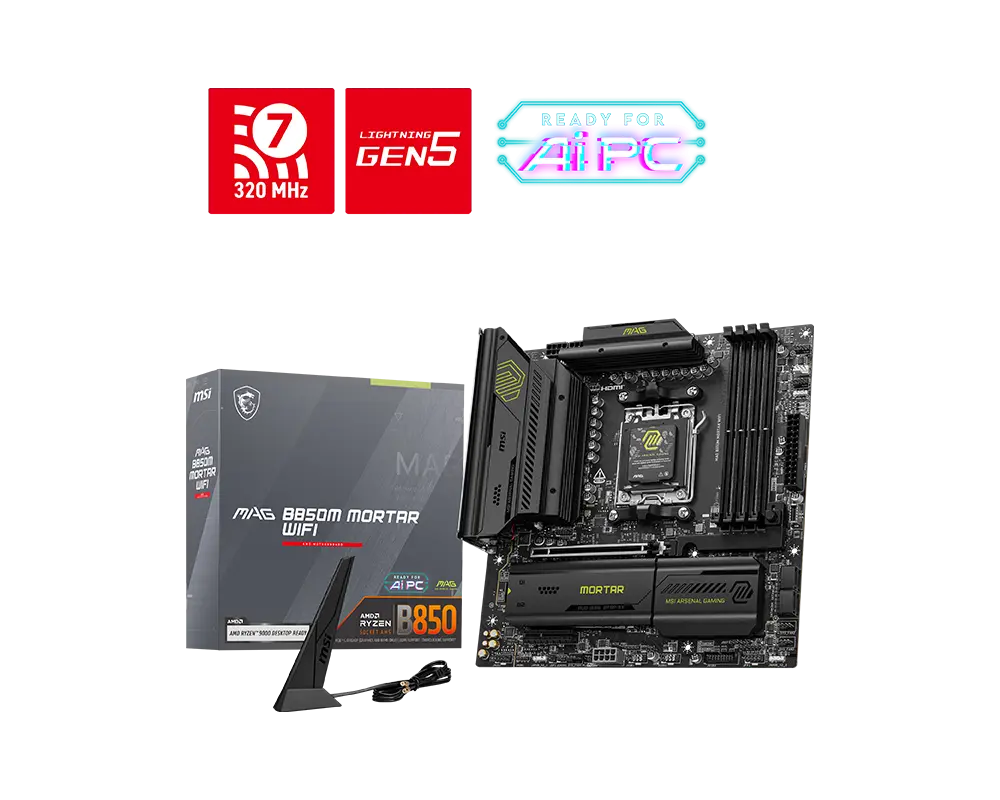 MSI MAG B850M MORTAR WIFIAM5 · DDR5 · Micro-ATX · MSI global specification
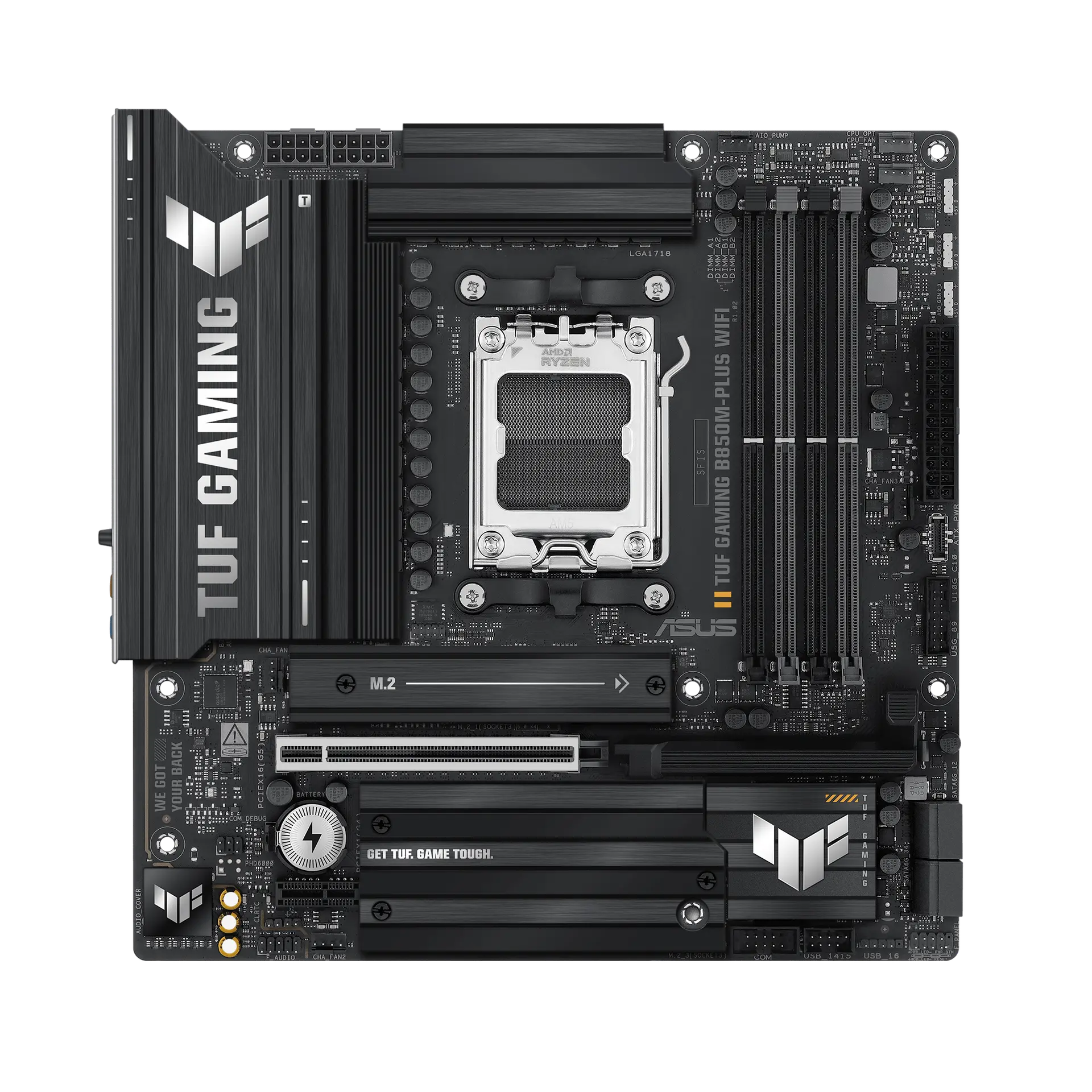 ASUS TUF GAMING B850M-PLUS WIFITUF GAMING B850M-PLUS WIFI · AM5 · Micro-ATX · ASUS UK specification
All connectors sit on the underside, and a graphics-card high-power slot fed by a 12V-2x6 connector can supply up to 600 W to BTF graphics cards.
A PCIe 5.0 x16 slot, a PCIe 5.0 x4 M.2 slot, four SATA ports, rear DisplayPort and HDMI, and a rear 20 Gb/s USB-C port.
Wi-Fi 7 with Bluetooth 5.4, a BIOS FlashBack button, PCIe Slot Q-Release Slim, M.2 Q-Latch/Q-Release and a Thunderbolt (USB4) header.
The hidden-connector layout needs a compatible case, and the 600 W slot only powers BTF graphics cards.
M.2_3 is disabled while the chipset x16 slot is in use; networking is a single 2.5 Gb port and Wi-Fi 7 is limited to 160 MHz channels.
Products in this catalogue that list the same socket or memory type as the ASUS TUF GAMING B850-BTF WIFI W. A shared socket or memory type is necessary but not sufficient: check the exact CPU and memory support lists, and the BIOS version, before buying.
Exact configuration: TUF GAMING B850-BTF WIFI W · AM5 · ATX · ASUS UK specification
40 specifications in 9 groups. Values are manufacturer specifications unless a row says “Measured result” or “Calculated from cited specifications”.
The connectors are on the underside of the board; ASUS says it is compatible with specific case models. Check case support, mounting positions and clearance.
SourceUK and US buying links are searches, not proof of stock, identical regional wireless modules, bundles or warranty. Confirm the exact model and part identifier with the retailer.
SourcePhysical DDR5 module positions; this count is not a guarantee of capacity or profile speed.
SourceManufacturer capacity ceiling; check CPU support, BIOS and the validated DIMM population.
SourceASUS lists up to 8000+ MT/s (OC) with Ryzen 9000, 8000 and 7000 processors and AEMP. · Supported capacity, module population and profile speeds depend on the exact CPU, installed BIOS and validated memory kit. Profile support does not guarantee an overclock.
SourceThese are manufacturer-listed overclocking configurations, not guaranteed stock transfer rates or tested performance. CPU family and DIMM layout remain material.
SourceThe PCIe 5.0 x16 slot is listed under the Ryzen processor; the x4-mode and x1 slots under the B850 chipset. · With Ryzen 8000 the first slot runs PCIe 4.0 x8/x4. Operating PCIEX16(G4) disables M.2_3. See ASUS's PCIe bifurcation table.
SourceOnly for compatible BTF graphics cards and cases; conventional cards still use their own power connectors. A rated delivery limit, not a measured power figure.
SourceASUS PCIe Slot Q-Release Slim (with PCIe SafeSlot). An installation control, not a bandwidth or performance measurement.
SourceM.2_3 is disabled while PCIEX16(G4) is operating. Ryzen 8000 processors change the CPU-attached M.2 links.
SourceSATA 6 Gb/s; check the source for lane sharing and drive power requirements.
SourceM.2_1 (2280, PCIe 5.0 x4) and M.2_2 (2242/2260/2280/22110, PCIe 4.0 x4) are listed under the Ryzen processor; M.2_3 (2280, PCIe 4.0 x4) under the B850 chipset. · M.2_3 is disabled when PCIEX16(G4) is operating. With Ryzen 8000, M.2_1 runs PCIe 4.0 x4 and M.2_2 PCIe 4.0 x4/x2.
SourceRead the simultaneous-use restriction rather than assuming every slot and M.2 position can be used together.
SourceASUS lists AMD RAIDXpert2 levels per CPU family (Ryzen 9000: 0/1/5/10; 8000: 0/1; 7000: 0/1/10) without stating which apply to SATA versus NVMe devices.
SourceASUS lists AMD RAIDXpert2 levels per CPU family (Ryzen 9000: 0/1/5/10; 8000: 0/1; 7000: 0/1/10) without stating which apply to NVMe versus SATA devices.
SourceInstallation features only; ASUS does not say which M.2 slots use each one, and they are not a cooling measurement.
SourceManufacturer cooling design, not measured temperatures. ASUS labels two M.2 heatsinks for the three M.2 slots and says all three slots have dedicated heatsinks; it does not say which slots share a heatsink.
ASUS M.2 Q-Release: a switch (a lever or button, depending on model) removes the M.2 heatsink without tiny screws. An installation convenience, not a cooling measurement; ASUS does not state which M.2 slots use it.
Connector count and listed modes describe the rear panel. Display output depends on the CPU's integrated graphics.
SourceInternal headers need compatible case ports or accessories. ASUS lists USB Type-C power delivery output of max. 5 V/3 A.
SourceRequires a processor with integrated graphics; see AMD CPU specifications. Not measured display performance.
SourceASUS's complete rear USB list (10 ports) has no USB4 port. The board has a Thunderbolt (USB4) header for a compatible add-in card.
SourceA header for a compatible Thunderbolt/USB4 add-in card; no USB4 port is built into the rear panel.
SourceWireless bands and channel widths depend on local rules, the operating system and the installed module. Full Wi-Fi 7 features require Windows 11 24H2 or later; ASUS states Windows 10 supports only Wi-Fi 6. Bluetooth versions may vary by module.
SourceLink-rate capability; real throughput depends on the connected network, cabling and workload. ASUS also lists TUF LANGuard.
Source2x2 Wi-Fi 7 with up to 160 MHz channels (up to 2.9 Gbps). Full Wi-Fi 7 features need Windows 11 24H2 or later; Windows 10 supports only Wi-Fi 6.
SourceThe manufacturer notes that the Bluetooth version can depend on the installed wireless module.
SourceASUS notes 32-bit/192 kHz is not supported for 7.1 output. A codec name is not an independent sound-quality measurement.
SourceCheck the complete connector list and the PSU cable type. The 12V-2x6 auxiliary connector supplies the graphics-card high-power slot.
SourceHeader counts do not specify electrical current limits.
SourceCheck the manual for connector voltage and LED limits before connecting lighting.
SourceManufacturer power-stage ratings with DIGI+ VRM (DrMOS); not a measured VRM temperature or overclocking result.
Check ASUS's exact CPU support list and its required BIOS. Family support does not confirm the firmware installed on a retail board.
SourceFlash-ROM capacity does not identify the BIOS version installed on a retail board.
SourceIndividual features and drivers can have newer operating-system requirements, particularly wireless networking.
SourceASUS BIOS FlashBack button. Use the exact model firmware and follow ASUS's BIOS FlashBack instructions.
SourceASUS's complete back-panel list has no Clear CMOS button; it lists an internal Clear CMOS header instead. Omission is recorded as unconfirmed rather than a sourced absence.
SourceMore of the nearest checked motherboards by key specifications, for a side-by-side comparison.
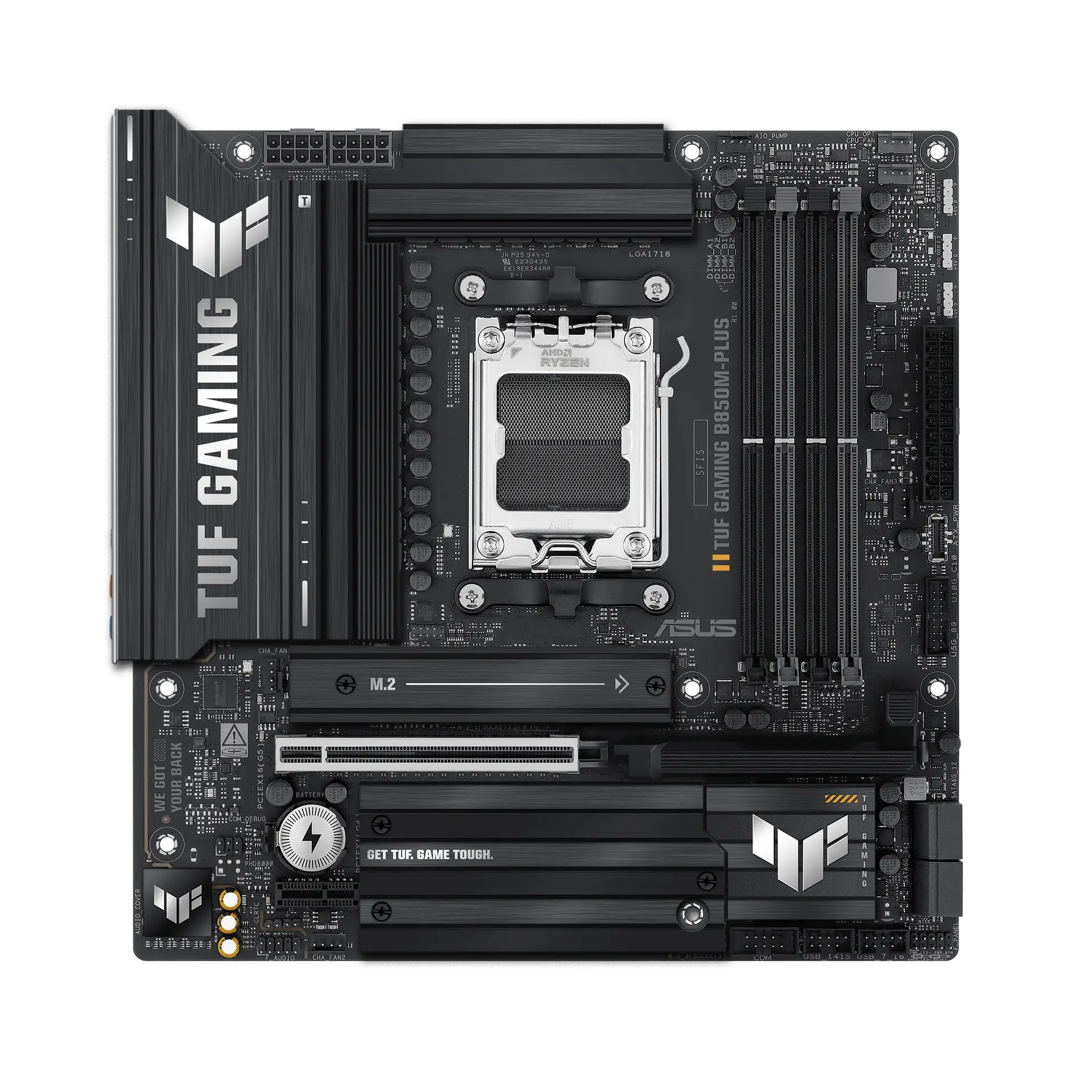 ASUS TUF GAMING B850M-PLUSTUF GAMING B850M-PLUS · AM5 · Micro-ATX · ASUS UK specificationCompare the two
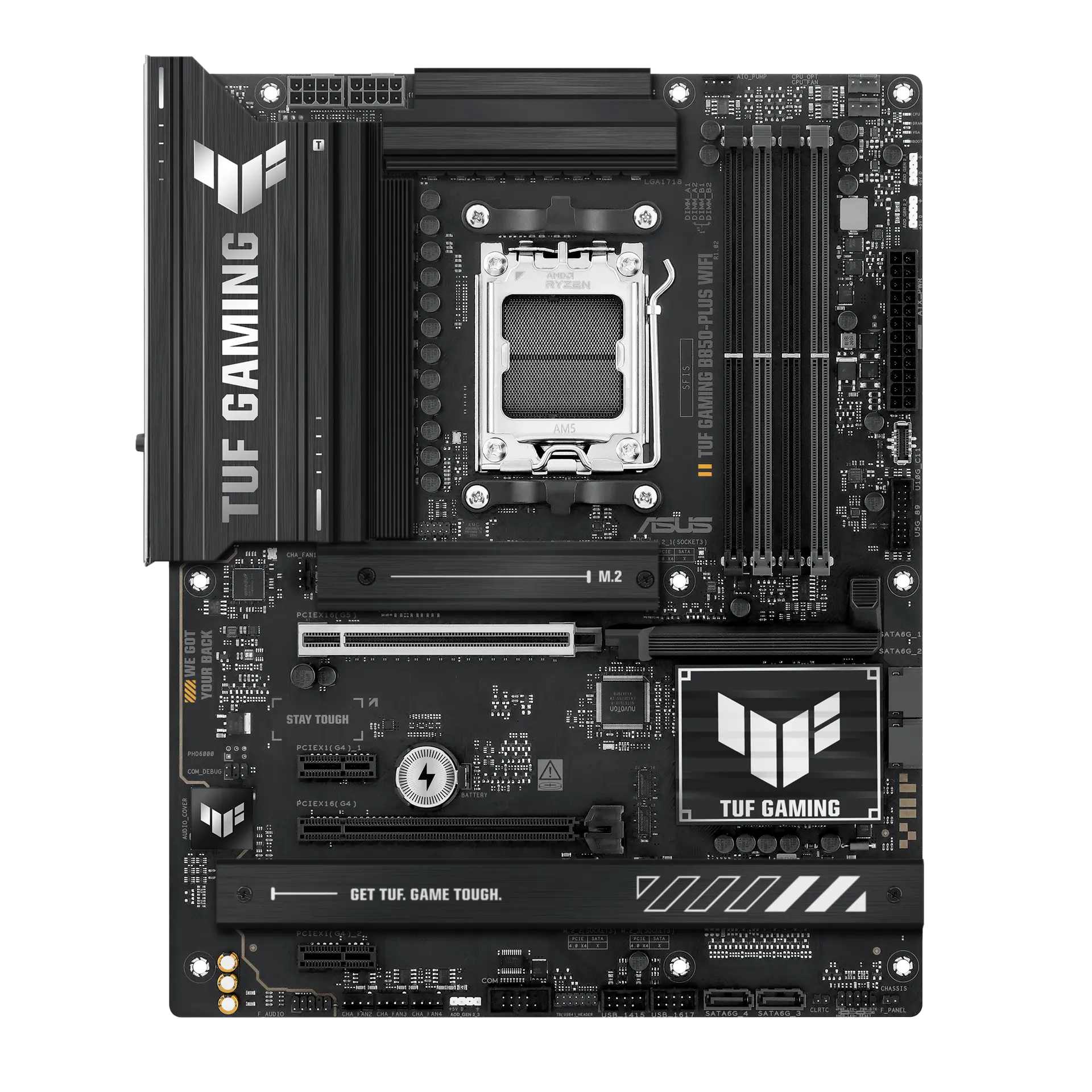 ASUS TUF GAMING B850-PLUS WIFITUF GAMING B850-PLUS WIFI · AM5 · ATX · ASUS UK specificationCompare the two
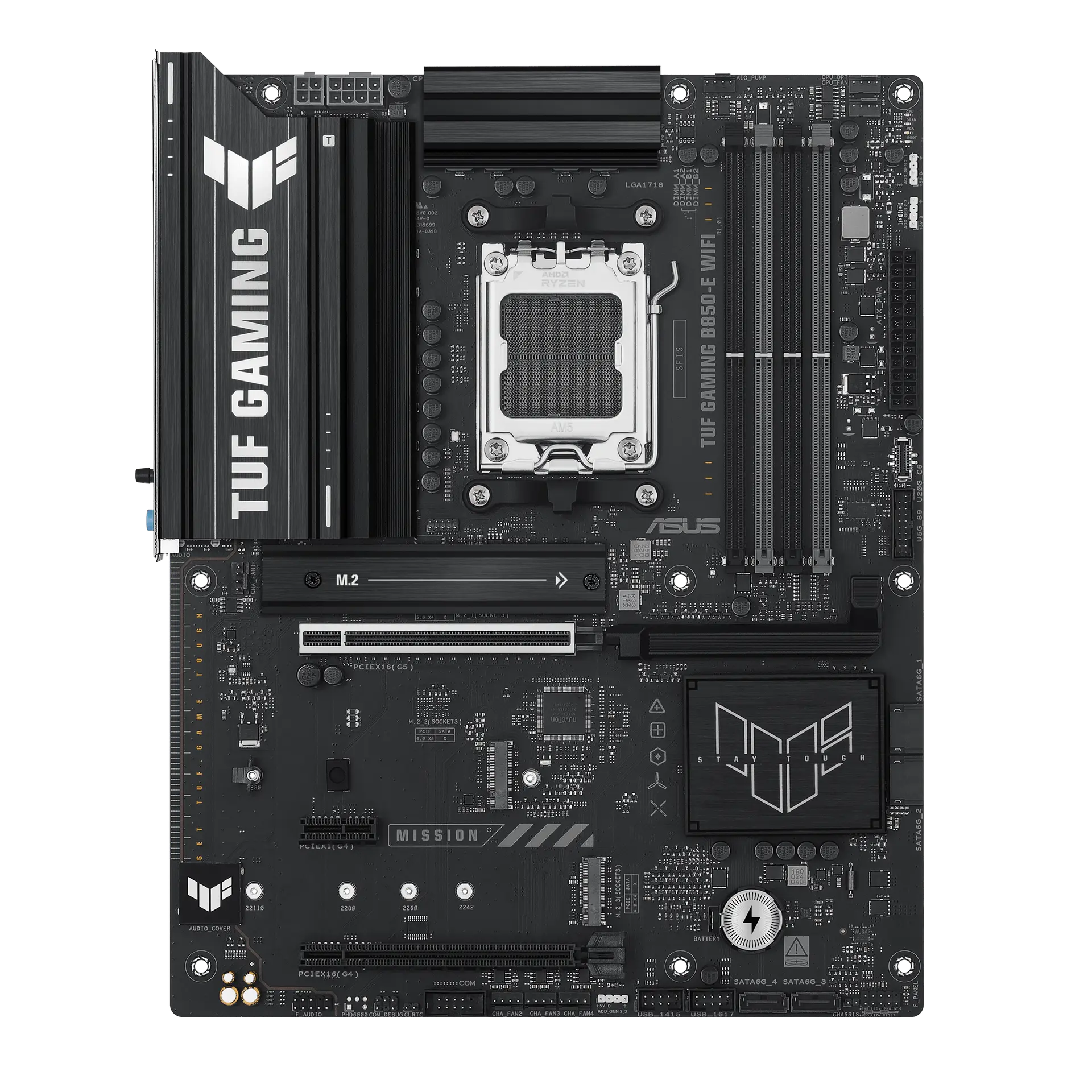 ASUS TUF GAMING B850-E WIFITUF GAMING B850-E WIFI · AM5 · ATX · ASUS UK specificationCompare the two
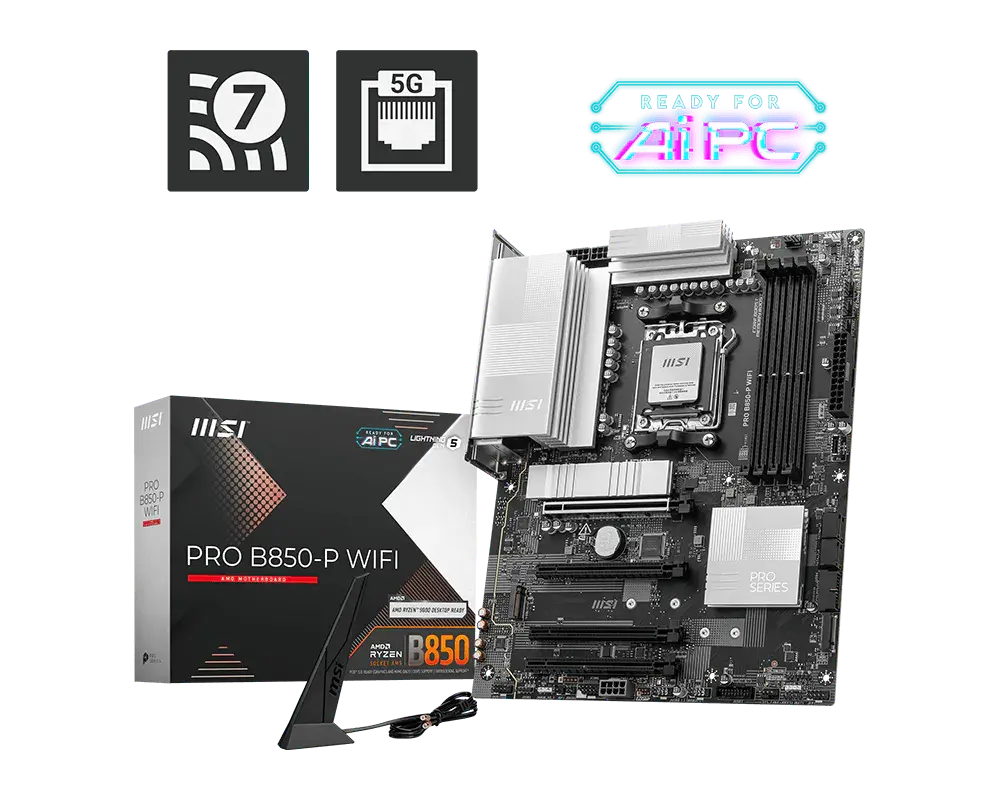 MSI PRO B850-P WIFIAM5 · DDR5 · ATX · Wi-Fi 7 · MSI global specificationCompare the two
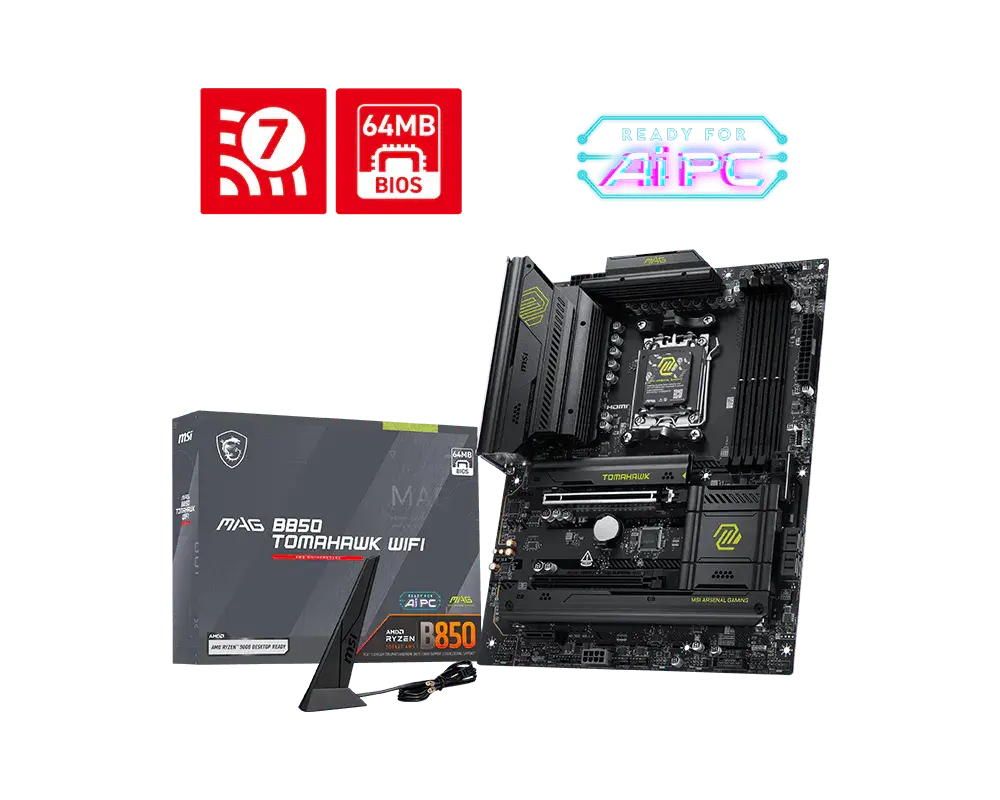 MSI MAG B850 TOMAHAWK WIFIAM5 · DDR5 · ATX · Wi-Fi 7 · MSI global specificationCompare the two
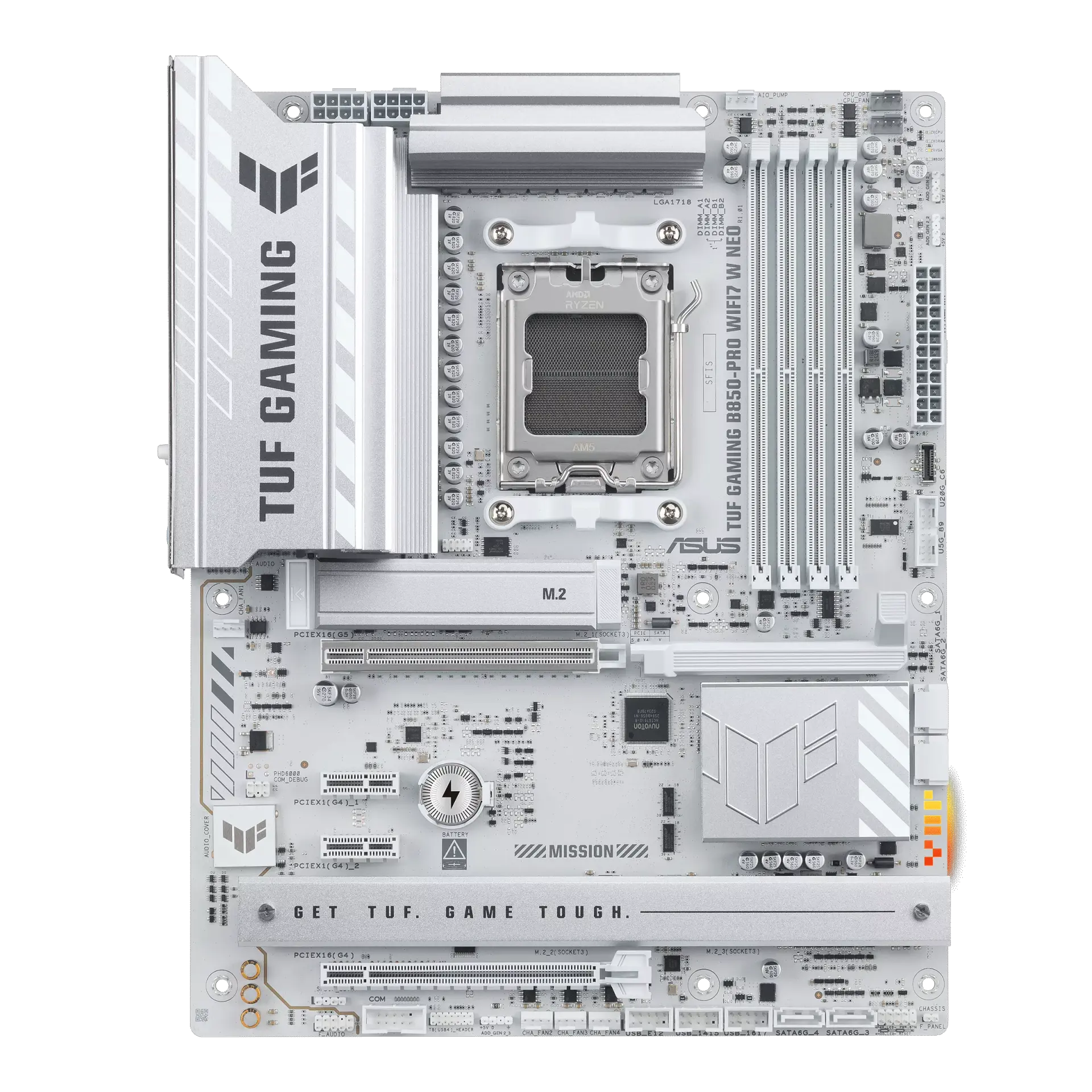 ASUS TUF GAMING B850-PRO WIFI7 W NEOTUF GAMING B850-PRO WIFI7 W NEO · AM5 · ATX · ASUS UK specificationCompare the two
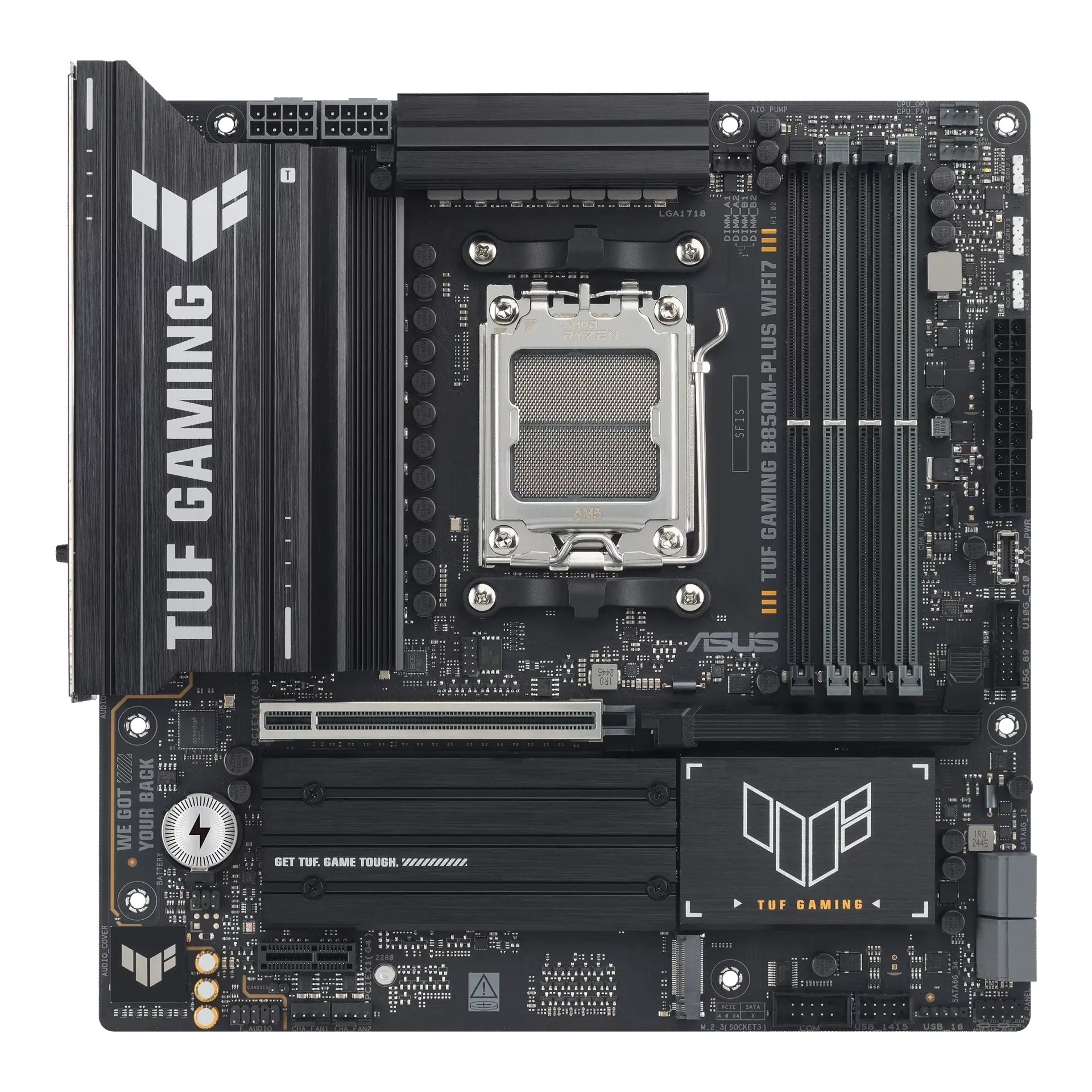 ASUS TUF GAMING B850M-PLUS WIFI7TUF GAMING B850M-PLUS WIFI7 · AM5 · Micro-ATX · ASUS UK specificationCompare the two
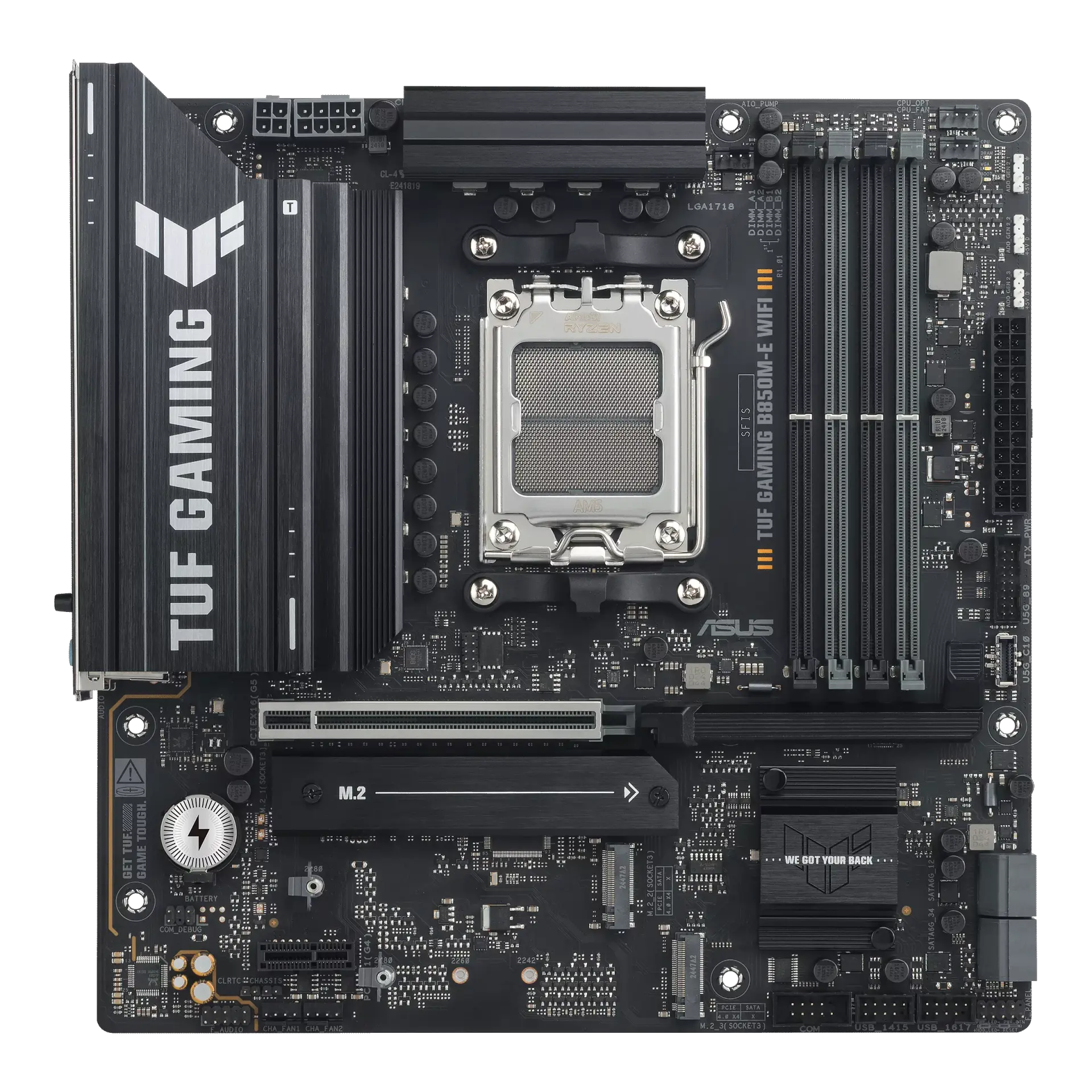 ASUS TUF GAMING B850M-E WIFITUF GAMING B850M-E WIFI · AM5 · Micro-ATX · ASUS UK specificationCompare the two