


 ASUS Prime GeForce RTX 5070 Ti OC Edition 16GB GDDR7PRIME-RTX5070TI-O16G · 16 GB GDDR7 · OC Edition · ASUS global specification
- Boost clock
- 2497 MHzThis one: 2542 MHz

16 GB GDDR7 · Gigabyte part GV-N507TEAGLE OC-16GD
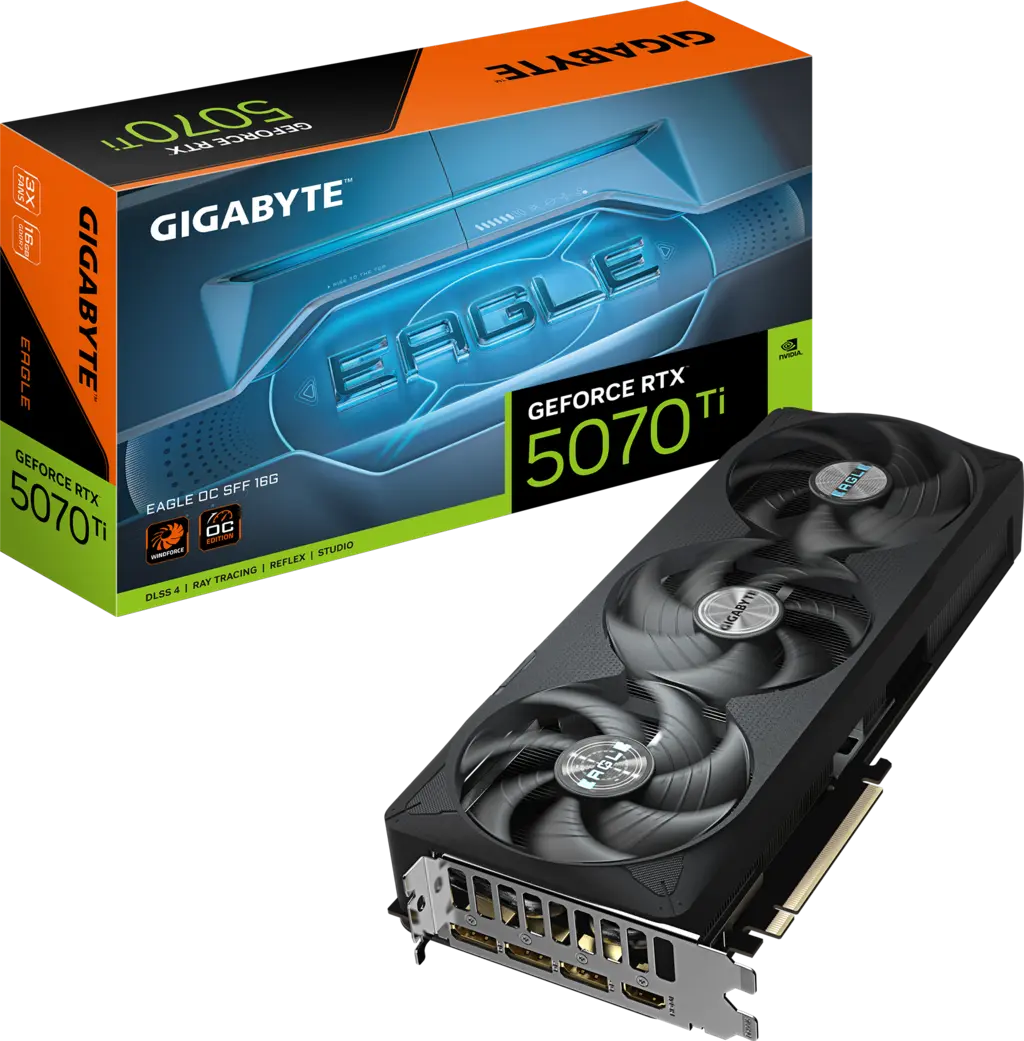
Gigabyte's GeForce RTX 5070 Ti EAGLE OC SFF 16G (GV-N507TEAGLE OC-16GD) pairs the GeForce RTX 5070 Ti with 16 GB of GDDR7 on a 256-bit bus in a 304 mm card, with a 2542 MHz boost clock against the 2452 MHz reference clock GIGABYTE quotes.
As an Amazon Associate I earn from qualifying purchases.
Email me when the Gigabyte GeForce RTX 5070 Ti EAGLE OC SFF 16G gets cheaper on eBay. We check exact-model listings once a day at 12:00 UTC.
Specifications checked 27 Sept 2026Manufacturer specifications, not a hands-on test.
The nearest checked graphics cards by key specifications, with what differs from the Gigabyte GeForce RTX 5070 Ti EAGLE OC SFF 16G. The first matches the Compare button above.
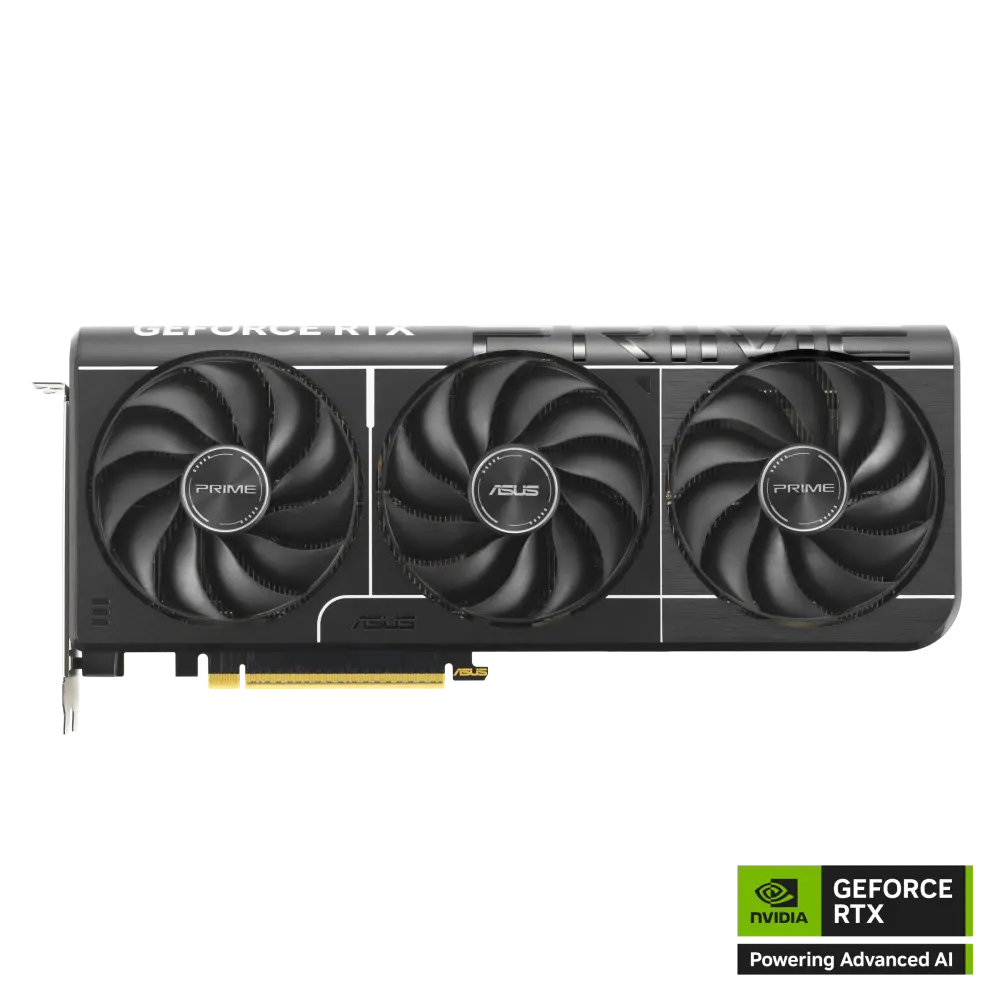
ASUS Prime GeForce RTX 5070 Ti OC Edition 16GB GDDR7PRIME-RTX5070TI-O16G · 16 GB GDDR7 · OC Edition · ASUS global specification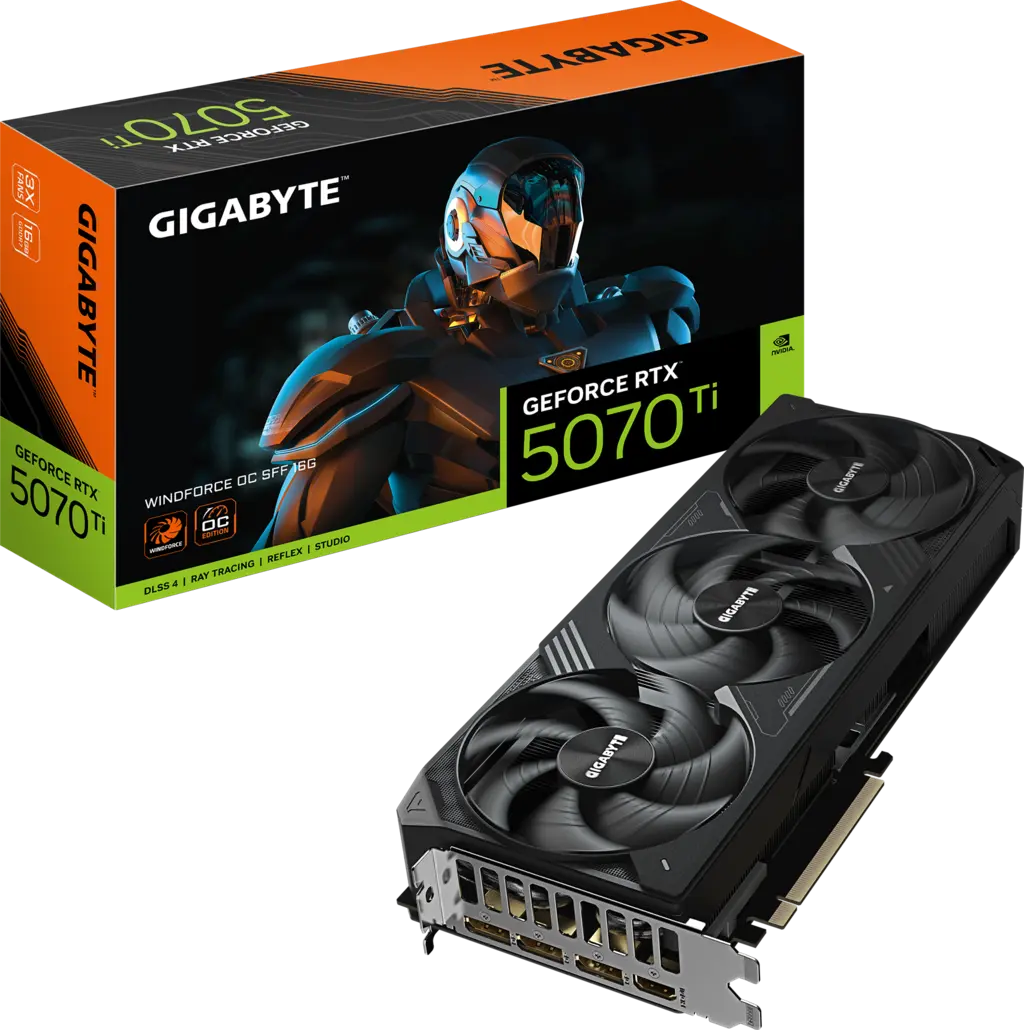 Gigabyte GeForce RTX 5070 Ti WINDFORCE OC SFF 16GGV-N507TWF3OC-16GD · 16 GB GDDR7 · GIGABYTE global specification
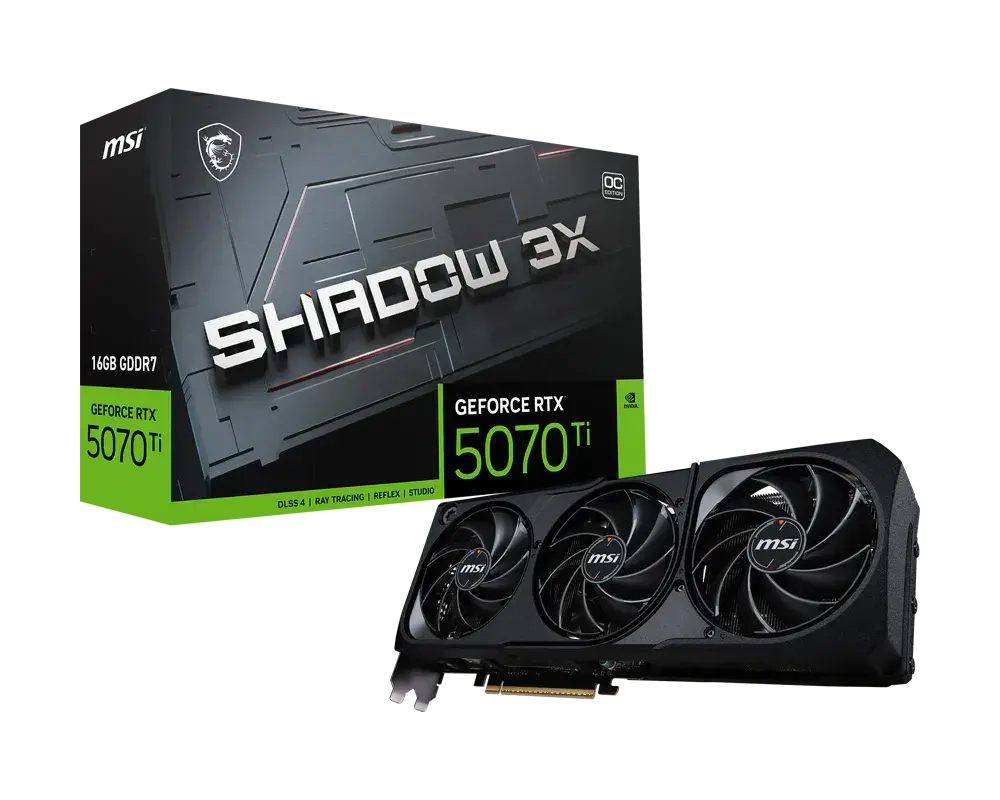 MSI GeForce RTX 5070 Ti 16G SHADOW 3X OC16 GB GDDR7 · Black · exact board configuration · MSI global specification
8,960 CUDA cores, 16 GB GDDR7 at 28 Gbps and a 2542 MHz boost clock (GIGABYTE quotes 2452 MHz for the reference design).
DLSS Multi Frame Generation, fourth-generation ray-tracing cores and AV1 encoding with two ninth-generation NVENC encoders. Outputs: 3 × DisplayPort 2.1b; 1 × HDMI 2.1b, for up to 4 displays.
WINDFORCE cooling with Hawk fans that stay off at low load (3D Active Fan), Dual BIOS (Performance/Silent), RGB lighting and a Versatile VGA holder in the box. GIGABYTE lists it as meeting NVIDIA's small form factor specification. At 304 mm long it is the same 304 mm length as the ASUS PRIME-RTX5070TI-O16G (304 mm).
Plan for 304 × 126 × 50 mm plus cable clearance; GIGABYTE states no slot count. It recommends a 750 W PSU and uses 1 × 16-pin power input, with a 12V-2x6 to PCIe 8-pin adapter in the box.
GIGABYTE publishes no board-power figure for this card; NVIDIA's 300 W total graphics power describes the reference design, not this board. NVIDIA lists Reflex Frame Warp as coming soon.
Exact configuration: GV-N507TEAGLE OC-16GD · 16 GB GDDR7 · GIGABYTE global specification
64 specifications in 11 groups. Values are manufacturer specifications unless a row says “Measured result” or “Calculated from cited specifications”. 1 row repeats a listed fact in the manufacturer’s own wording, kept under “Manufacturer wording”.
GIGABYTE lists 'Core Clock 2542 MHz (Reference: 2452 MHz)'; the reference figure corresponds to NVIDIA's 2.45 GHz GeForce RTX 5070 Ti boost clock. NVIDIA's family table lists GeForce RTX 5070 Ti and GeForce RTX 5070 columns in that order; value from the GeForce RTX 5070 Ti column. Actual clocks vary with workload, temperature and power.
GIGABYTE lists 'PCI-E 5.0'. The motherboard slot determines the negotiated link; GIGABYTE does not state the electrical lane width here.
SourcePer-pin memory speed; GIGABYTE labels it 'Memory Clock'.
SourceThe same facts in the manufacturer’s combined or original wording, each with its source.
GIGABYTE does not publish board power for this card. The 300 W NVIDIA reference figure is not transferred to this board.
GIGABYTE 'Recommended PSU' for the whole system.
SourceNot published on GIGABYTE's specification page for this board. NVIDIA lists 300 W total graphics power for the GeForce RTX 5070 Ti reference specification; GIGABYTE recommends a 750 W system PSU. GIGABYTE does not publish board power for this card. The 300 W NVIDIA reference figure is not transferred to this board. · The 300 W figure describes NVIDIA's Founders Edition/reference design, not this GIGABYTE board, whose power limit may differ.
GIGABYTE lists '16 pin*1'. Its accessories list includes '1x 12V-2x6 to 2x PCIe 8pin adapter'. Fully seat the cable and leave bend clearance at the connector.
SourceGIGABYTE card size 'L'.
SourceGIGABYTE labels this dimension 'H'.
SourceGIGABYTE card size 'L=304 W=126 H=50 mm'. GIGABYTE's specification and overview pages state no slot count. Allow extra room for the power cable, connector bend radius and airflow.
SourceGIGABYTE labels this dimension 'W'.
SourceGIGABYTE's specification and overview pages give the card size but no slot count; no slot width is inferred from the thickness.
SourceGIGABYTE lists the card as complying with NVIDIA's small form factor specification; check your case's clearance.
SourceGIGABYTE's accessories list includes a Versatile VGA holder, described as preventing card sag.
The display and cable must support the chosen resolution and refresh rate.
SourceGIGABYTE 'Multi-view'. Using several displays can limit the resolution and refresh rate available on each.
SourceDisplayPort 2.1b.
SourceHDMI 2.1b.
SourceRefresh rate depends on the output and display.
SourceNVIDIA lists HDCP 2.3 for the GeForce RTX 5070 Ti. NVIDIA's family table lists GeForce RTX 5070 Ti and GeForce RTX 5070 columns in that order; value from the GeForce RTX 5070 Ti column.
SourceListed by GIGABYTE for this board and by NVIDIA for the GPU. Requires compatible drivers and applications.
NVIDIA GeForce RTX 5070 Ti specification: 5th-generation Tensor Cores, 1406 AI TOPS. NVIDIA's family table lists GeForce RTX 5070 Ti and GeForce RTX 5070 columns in that order; value from the GeForce RTX 5070 Ti column.
SourceNVIDIA Tensor Cores (AI) row. Manufacturer peak figure, not a measured result. NVIDIA's family table lists GeForce RTX 5070 Ti and GeForce RTX 5070 columns in that order; value from the GeForce RTX 5070 Ti column.
SourceNVIDIA lists 4th-generation Ray Tracing Cores. NVIDIA's family table lists GeForce RTX 5070 Ti and GeForce RTX 5070 columns in that order; value from the GeForce RTX 5070 Ti column.
SourceNVIDIA lists fourth-generation ray-tracing cores. Games and drivers must support the feature.
SourceNVIDIA lists it under DLSS 4 for this GPU. Works in games and apps that support the feature, with current NVIDIA drivers.
SourceNVIDIA lists it under DLSS 4 for this GPU. Works in games and apps that support the feature, with current NVIDIA drivers.
SourceNVIDIA lists it under DLSS 4 for this GPU. Works in games and apps that support the feature, with current NVIDIA drivers.
SourceNVIDIA lists it under DLSS 4 for this GPU. Works in games and apps that support the feature, with current NVIDIA drivers.
SourceWorks in games that support it, with current NVIDIA drivers.
SourceNVIDIA describes Dynamic Multi Frame Generation on its GeForce RTX 50 Series page; GIGABYTE's overview lists 'NVIDIA DLSS 4.5 with Dynamic Multi Frame Generation'. Works in games that support it, with current NVIDIA drivers.
NVIDIA describes DLSS 5 3D-Guided Neural Rendering for GeForce RTX 50 Series GPUs; developers tune it for each game, so it works only in games that support it.
SourceNVIDIA lists Reflex 2 (Low Latency Mode) for the GeForce RTX 5070 Ti. Requires a supported game.
SourceNVIDIA's GeForce RTX 5070 Ti specification lists Frame Warp as coming soon.
SourceRequires a compatible motherboard, CPU and firmware setting.
SourceRequires a G-SYNC compatible display and connection.
SourceNVIDIA GeForce RTX 5070 Ti specification. Requires compatible drivers, operating system and games.
SourceNVIDIA GeForce RTX 5070 Ti specification. Requires compatible drivers and applications.
SourceNVIDIA lists no NVLink support for the GeForce RTX 5070 Ti.
SourceNVIDIA GeForce RTX 5070 Ti specification. NVIDIA's family table lists GeForce RTX 5070 Ti and GeForce RTX 5070 columns in that order; value from the GeForce RTX 5070 Ti column. Codec, bit-depth and application support apply.
SourceNVIDIA GeForce RTX 5070 Ti specification. NVIDIA's family table lists GeForce RTX 5070 Ti and GeForce RTX 5070 columns in that order; value from the GeForce RTX 5070 Ti column. Codec, bit-depth and application support apply.
SourceNVIDIA GeForce RTX 5070 Ti specification. NVIDIA's family table lists GeForce RTX 5070 Ti and GeForce RTX 5070 columns in that order; value from the GeForce RTX 5070 Ti column. Codec, bit-depth and application support apply.
SourceNVIDIA GeForce RTX 5070 Ti specification. NVIDIA's family table lists GeForce RTX 5070 Ti and GeForce RTX 5070 columns in that order; value from the GeForce RTX 5070 Ti column. Codec, bit-depth and application support apply.
SourceNVIDIA lists AV1 encode for this GPU. Application support applies.
SourceNVIDIA lists AV1 decode for this GPU. Application support applies.
SourceGIGABYTE lists the thermal gel for components such as VRAM and MOSFETs.
SourceGIGABYTE says alternate spinning reduces turbulence between adjacent fans; its airflow figures are manufacturer claims.
SourceGIGABYTE claims the lubricant extends sleeve-bearing fan life by 2.1 times; a manufacturer claim, not a measured result.
SourceGIGABYTE 3D Active Fan: the fans remain off when the GPU is in a low load or low power game.
SourceEffects are selected or synchronised with other devices in GIGABYTE CONTROL CENTER.
SourcePerformance (factory default) and Silent modes.
SourceEach listed 'Yes' in NVIDIA's Technology Support table. Application and OS requirements apply.
SourceGIGABYTE says GCC adjusts clock speed, voltage, fan mode and power target in real time.
SourceGIGABYTE 'Accessories' row, listed as published.
SourceMore of the nearest checked graphics cards by key specifications, for a side-by-side comparison.
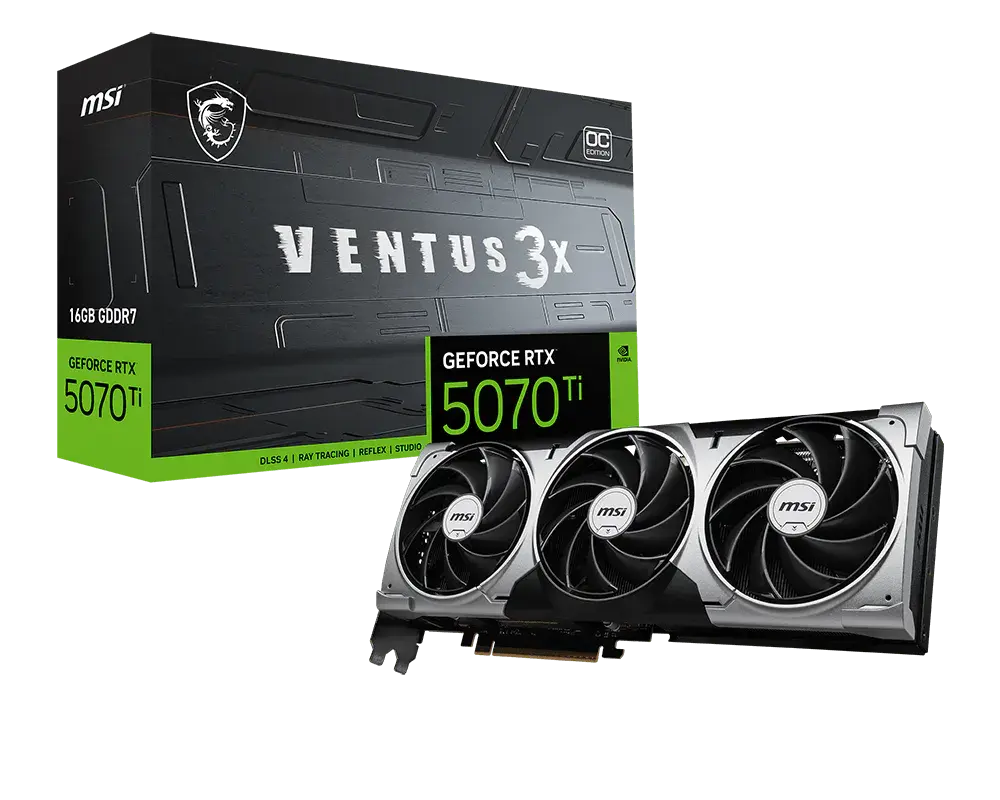 MSI GeForce RTX 5070 Ti 16G VENTUS 3X OC16 GB GDDR7 · Silver / black · exact board configuration · MSI global specificationCompare the two
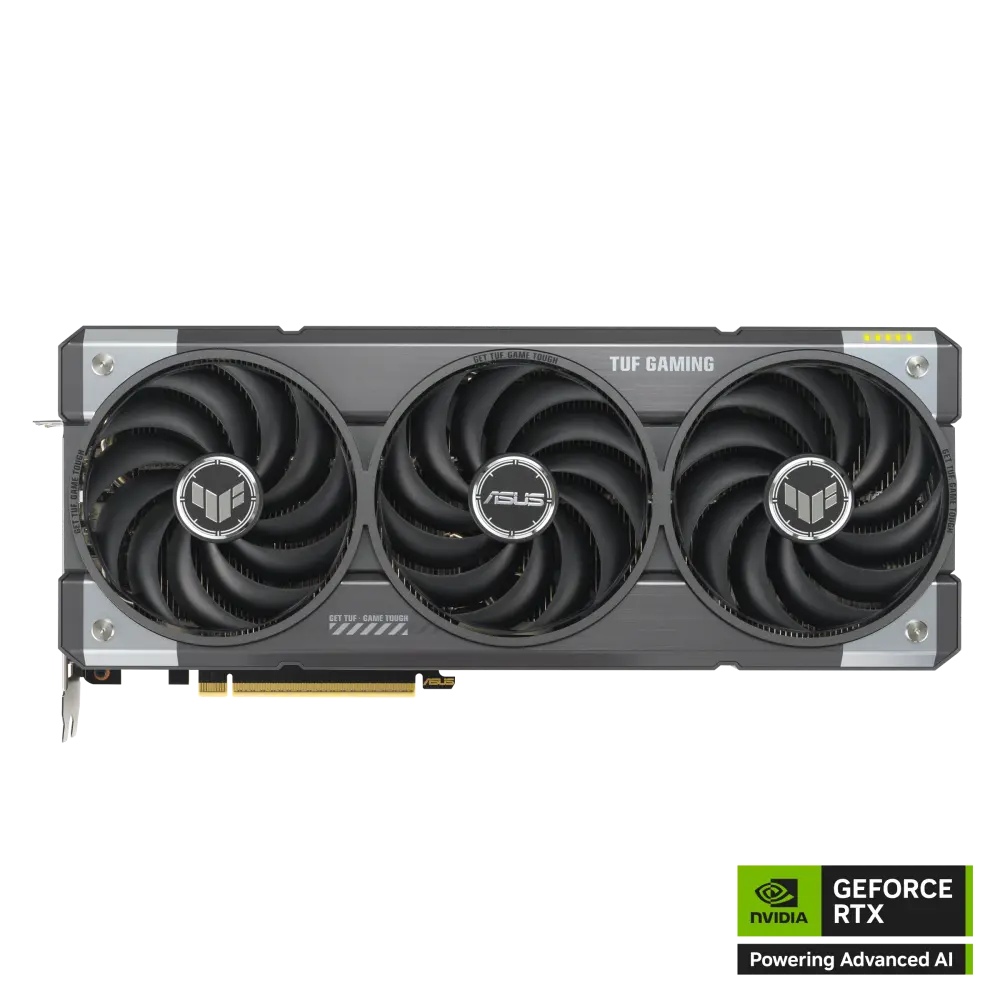 ASUS TUF Gaming GeForce RTX 5070 Ti 16GB GDDR7 OC EditionTUF-RTX5070TI-O16G-GAMING · 16 GB GDDR7 · OC Edition · ASUS global specificationCompare the two
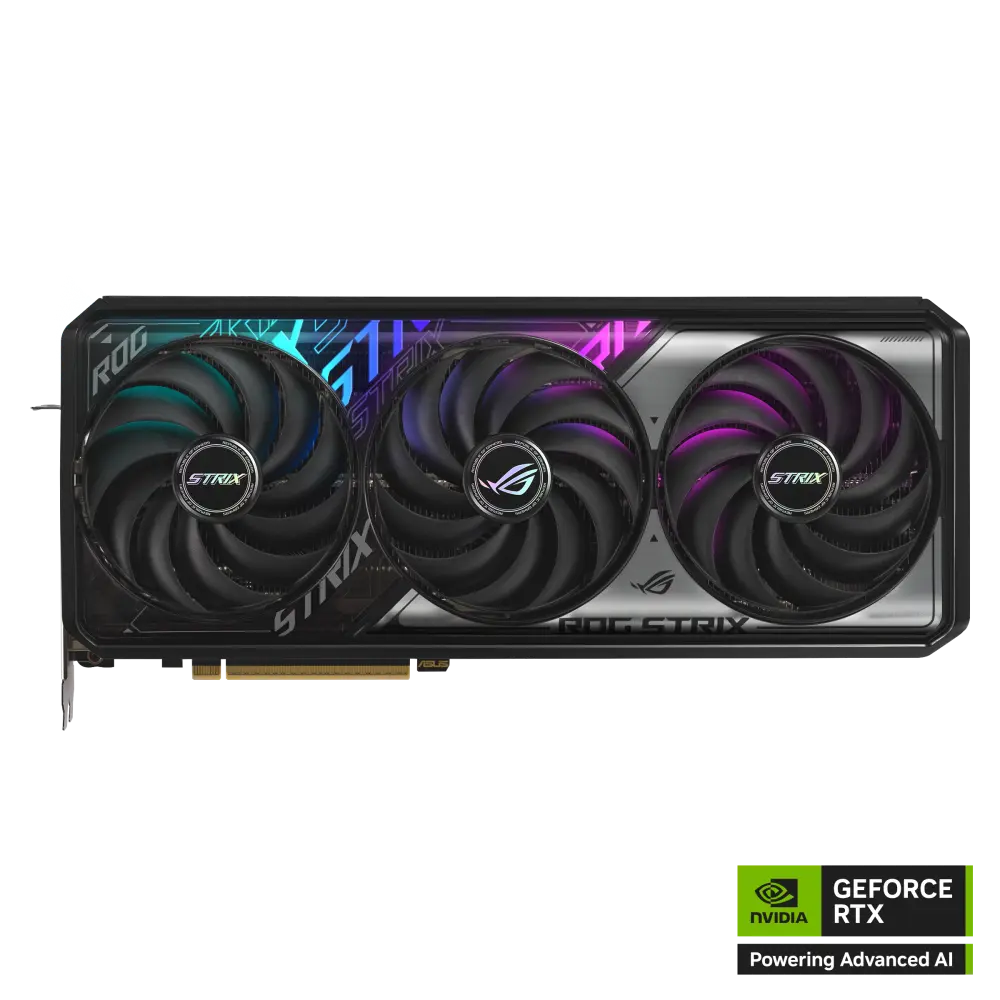 ASUS ROG Strix GeForce RTX 5070 Ti 16GB GDDR7 OC EditionROG-STRIX-RTX5070TI-O16G-GAMING · 16 GB GDDR7 · OC Edition · ASUS global specificationCompare the two
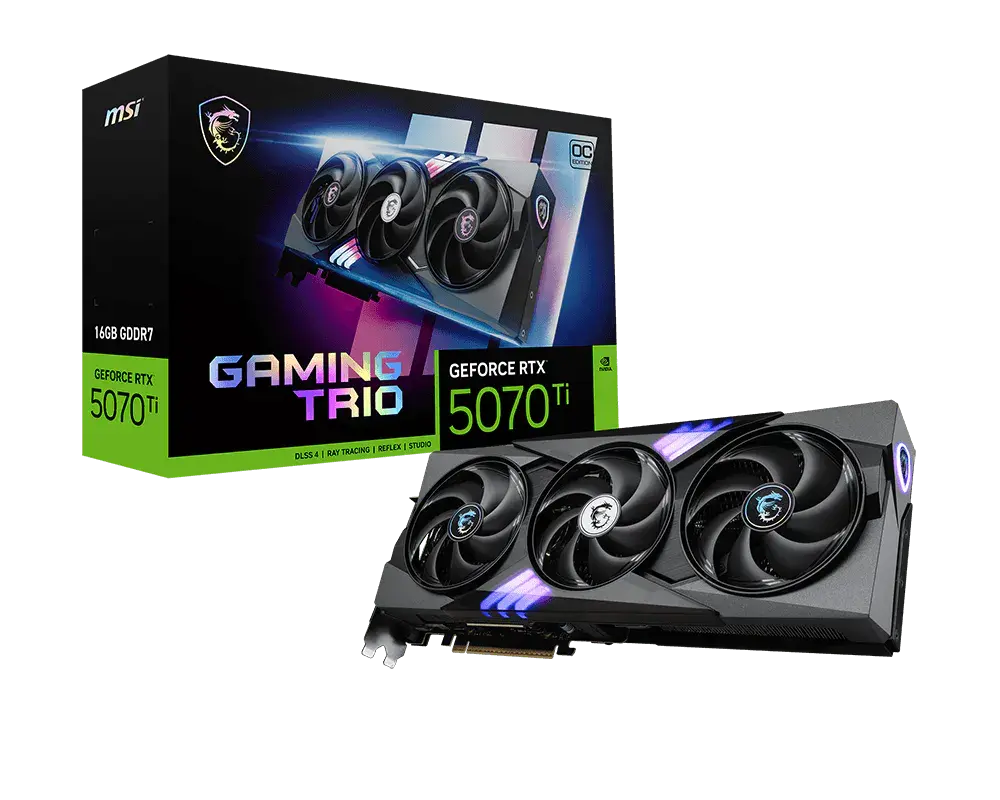 MSI GeForce RTX 5070 Ti 16G GAMING TRIO OC PLUS16 GB GDDR7 · Black · exact board configuration · MSI global specificationCompare the two
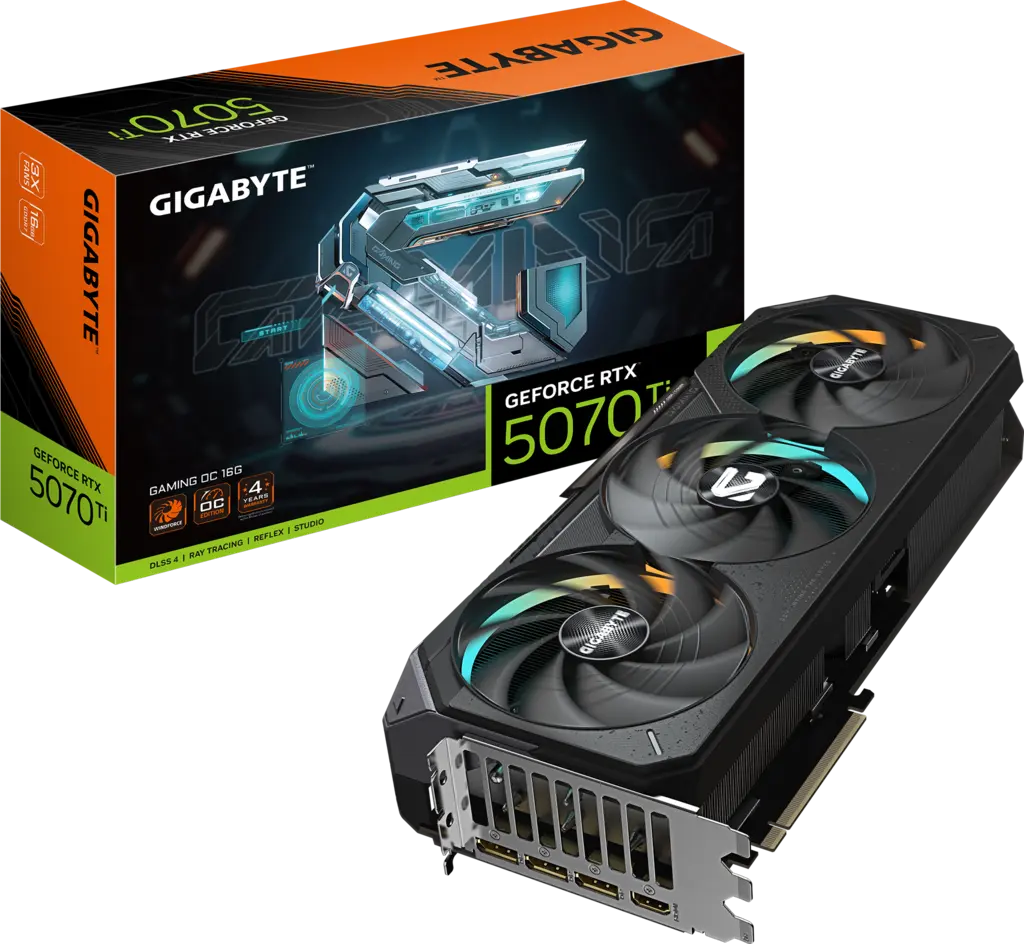 Gigabyte GeForce RTX 5070 Ti GAMING OC 16GGV-N507TGAMING OC-16GD · 16 GB GDDR7 · GIGABYTE global specificationCompare the two
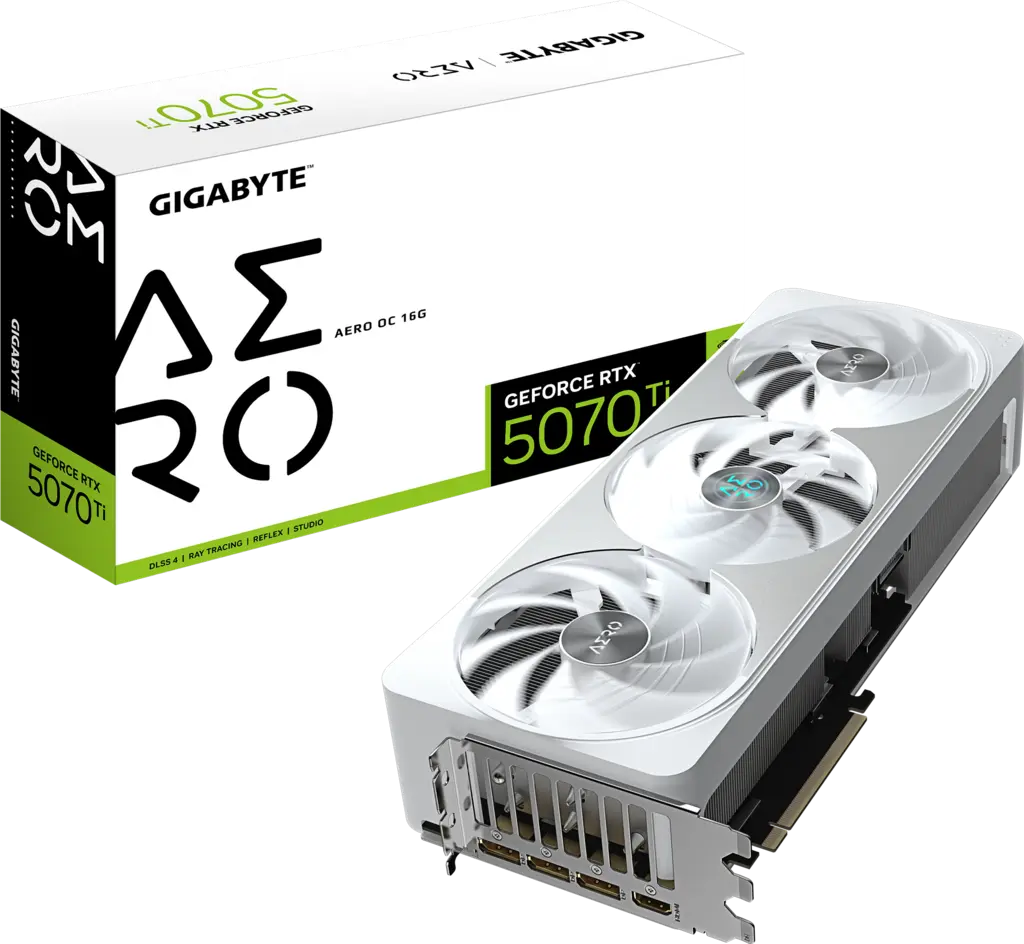 Gigabyte GeForce RTX 5070 Ti AERO OC 16GGV-N507TAERO OC-16GD · 16 GB GDDR7 · GIGABYTE global specificationCompare the two
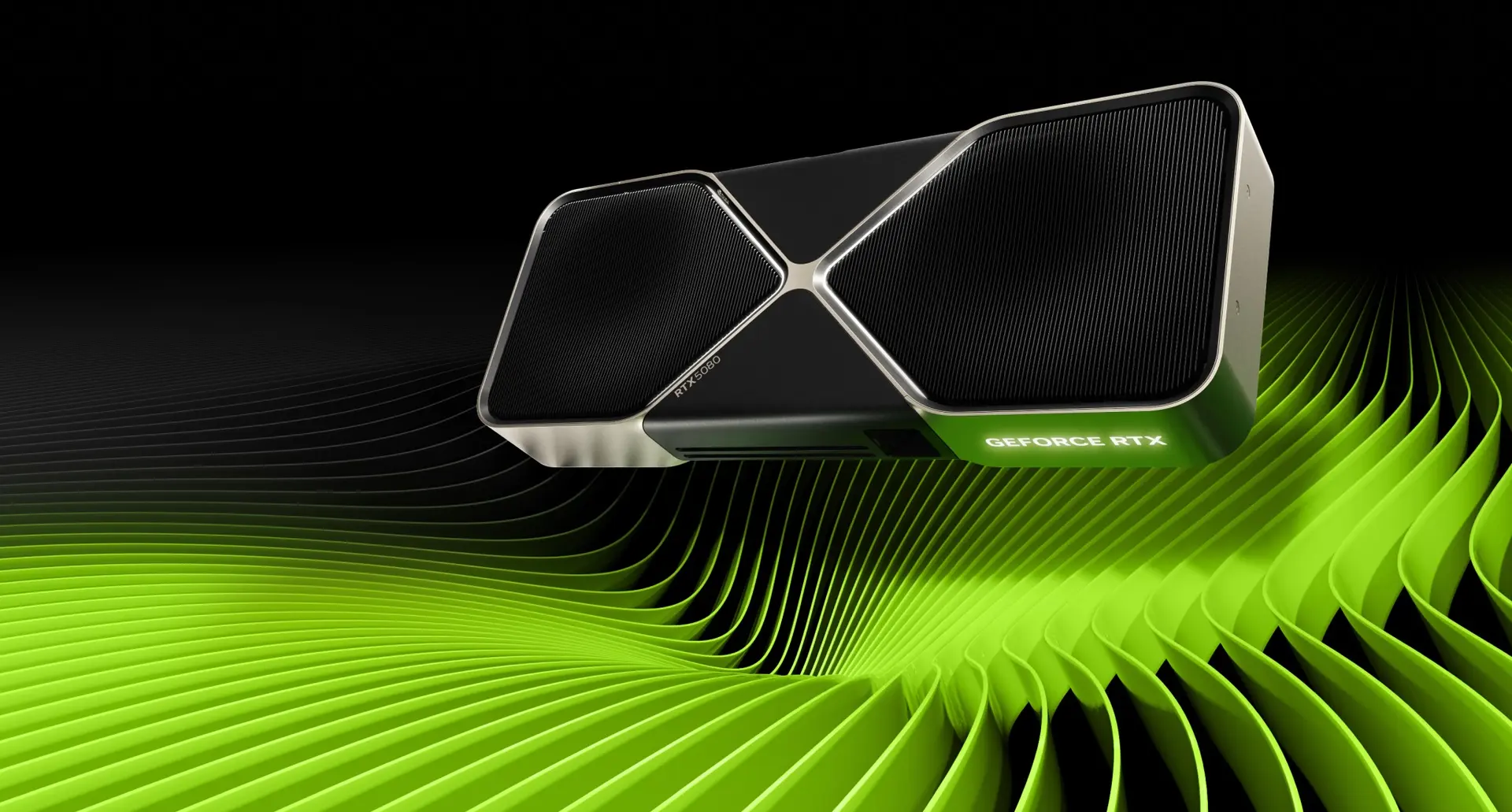 NVIDIA GeForce RTX 5080 Founders Edition16 GB GDDR7 · NVIDIA Founders Edition boardCompare the two
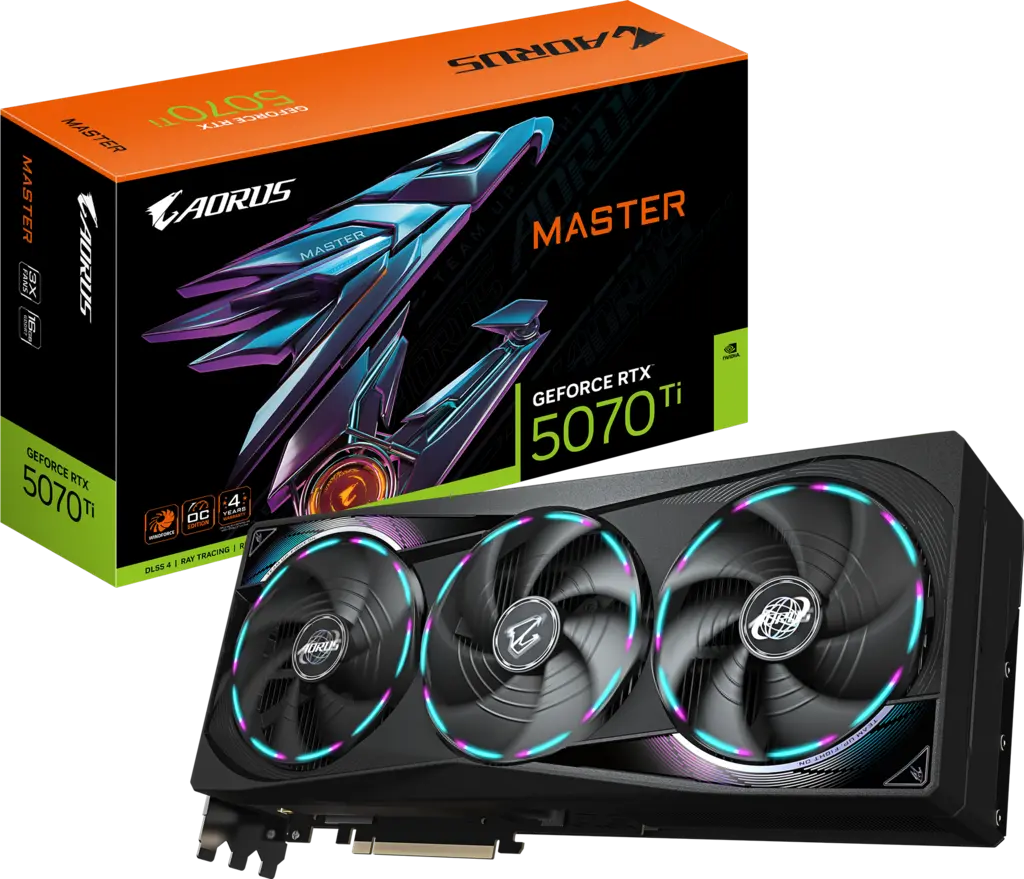 Gigabyte AORUS GeForce RTX 5070 Ti MASTER 16GGV-N507TAORUS M-16GD · 16 GB GDDR7 · GIGABYTE global specificationCompare the two