Search links open retailer results, not a matched listing; eBay listings are checked daily. As an Amazon Associate I earn from qualifying purchases. As an eBay Partner, we may be compensated if you make a purchase.
THE DIFFERENCES, MADE VISIBLE
Visual facts
Differences first. Select a topic for its graphic, sources and conditions.
How to read this comparison
Manufacturer facts for the exact models shown. Not a quality rating or a test result.
“Different” means the known values differ, not that one is better.
Missing or conflicting evidence is marked and never counts as a difference. Source chips hold each fact’s sources and conditions.
SPECIFICATIONS SIDE BY SIDE8 topics
SELECTED TOPIC
01 / 08
Storage capacity
Decimal storage capacity: 1 TB = 1,000 GB. Formatting and system use reduce available space.
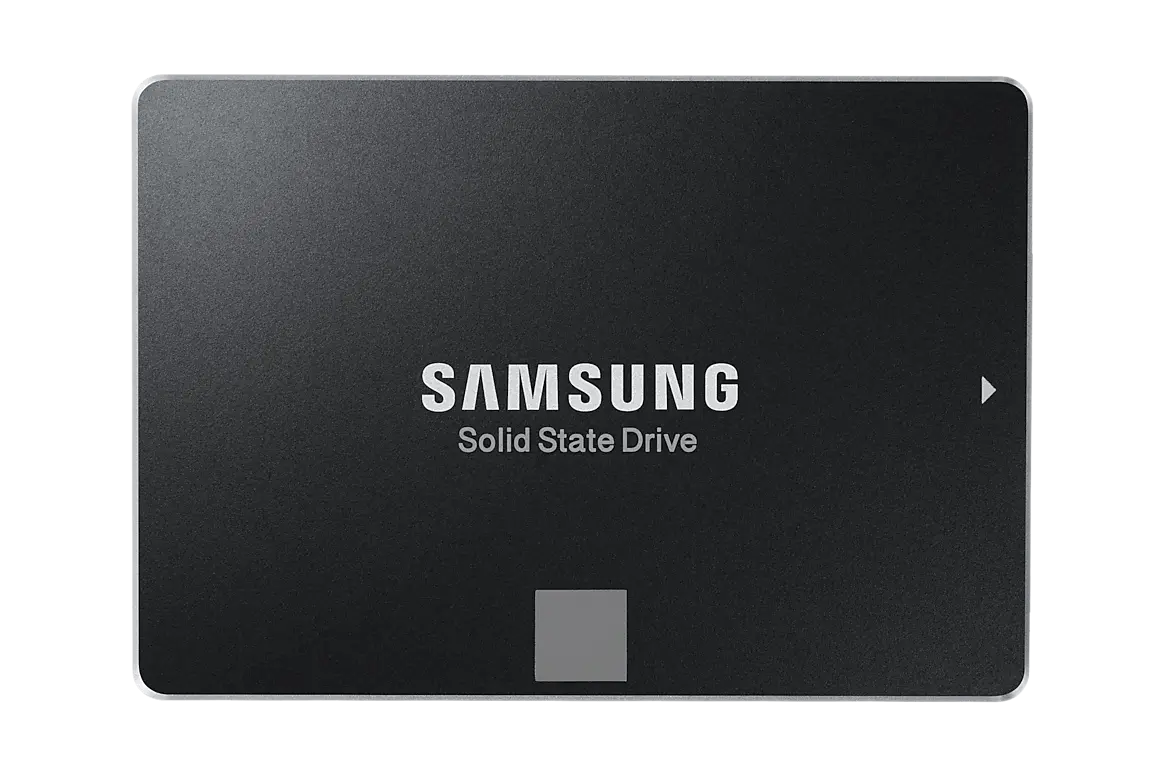
Samsung 850 EVO0.25 TB
Manufacturer specification · Decimal capacity; formatting and system use reduce available space.
Check the connection before the capacity. M.2 NVMe modules and 2.5-inch SATA drives are not interchangeable. Check the host’s protocol, slot or bay, power connection and clearance. Rated speeds use different test systems; we do not turn them into a speed score or overall winner.
Compare the exact DRAM capacity and cache configuration. Onboard DRAM is a separate specification from a write buffer; neither is a measured performance or reliability rating.
Manufacturer specification · SLC-style write-buffer feature named by manufacturer; capacity-specific post-buffer performance is shown separately. Samsung does not give the buffer size or a sustained write guarantee.
Compare the exact capacity and cache state. After-buffer claims differ from cached peaks; workload, free space, host and test method affect results. A write buffer is not onboard DRAM or a guarantee of sustained application speed.
Manufacturer peak claims depend on cache state, host and workload. Queue depth and test systems must match before performance can be compared; these figures do not establish a faster everyday drive.
Manufacturer peak claims depend on cache state, host and workload. Queue depth and test systems must match before performance can be compared; these figures do not establish a faster everyday drive.
Rated write after TurboWrite
Samsung 850 EVO300 MB/s
Samsung 860 EVO500 MB/s
Sources
Samsung 850 EVO
Manufacturer specification · 250 GB after-buffer manufacturer claim is 300 MB/s under CDM3/i7-4790K/Z97PRO/8 GB/Windows 7 SP1 conditions. Peak 520 is cached.
Compare the exact capacity and cache state. After-buffer claims differ from cached peaks; workload, free space, host and test method affect results. A write buffer is not onboard DRAM or a guarantee of sustained application speed.
Manufacturer peak claims depend on cache state, host and workload. Queue depth and test systems must match before performance can be compared; these figures do not establish a faster everyday drive.
Manufacturer peak claims depend on cache state, host and workload. Queue depth and test systems must match before performance can be compared; these figures do not establish a faster everyday drive.
Rated random write, QD1
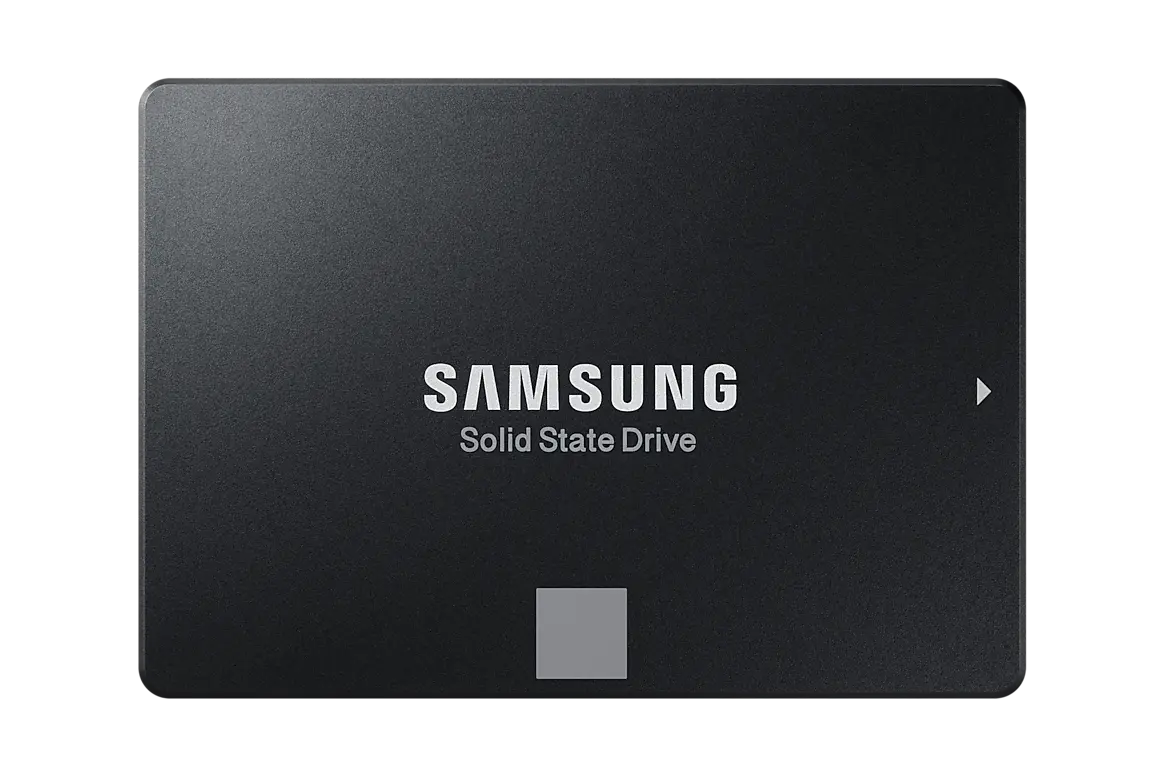
Samsung 850 EVO40000 IOPS
Samsung 860 EVO42000 IOPS
Sources
Samsung 850 EVO
Manufacturer specification · Capacity 4 KB QD1 manufacturer claim under the stated IOmeter/TurboWrite conditions.
Manufacturer peak claims depend on cache state, host and workload. Queue depth and test systems must match before performance can be compared; these figures do not establish a faster everyday drive.
Warranty terms and endurance if applicable
Samsung 850 EVO5 years or 75 TB written, whichever comes first; limited-warranty terms apply
Samsung 860 EVO5 years or 600 TB written, whichever comes first; limited-warranty terms apply
Sources
Samsung 850 EVO
Manufacturer specification · Manufacturer coverage is subject to purchase eligibility and applicable terms. A used drive may have less coverage left.
Check the exact configuration and source conditions for your use.
Published power conditions
Samsung 850 EVO2.2 W average; 2.4 W maximum burst; up to 50 mW idle; 2 mW device sleep
Samsung 860 EVO3.0 W average read/write; 50 mW DIPM idle; 2.6 mW device sleep
Sources
Samsung 850 EVO
Manufacturer specification · Ukrainian 250 GB page supplies average/burst/idle; PDF supplies 250 GB sleep. The PDF's 3.1/3.6 W active and 70 mW idle figures apply to the 4 TB model. Page does not publish its active test host. Not constant household consumption.
Manufacturer specification · 1 TB PDF figures measured with IOmeter 1.1.0, i7-7700K / 16 GB DDR4 / Gigabyte GA-Z270X / Windows 10 PRO K 64. Different host from speed testing. Idle requires DIPM; not a constant load.
Manufacturer specification · AU capacity footnote gives 42 GB for 1 TB; dynamically allocated availability depends on workload and free space, not a permanent DRAM allocation.
Evidence is missing or conflicting on at least one side. This is not a verified difference.
Queued TRIM capability
Samsung 850 EVONot verified
Samsung 860 EVOYes
Sources
Samsung 850 EVO
Samsung does not state this for this model. · Manufacturer specification · Basic TRIM depends on operating-system support; Samsung does not state queued TRIM for this version.
Manufacturer specification · Manufacturer specifically advertises improved queued TRIM and Linux compatibility. This is not certification for every Linux kernel, controller or firmware.
Evidence is missing or conflicting on at least one side. This is not a verified difference.
RAPID host-memory caching
Samsung 850 EVOYes
Samsung 860 EVONot verified
Sources
Samsung 850 EVO
Manufacturer specification · Ukrainian page advertises RAPID using free system memory. This is separate from onboard DRAM and raw SSD rates; Samsung's historical PCMark7 uplift is not a like-for-like drive benchmark. Check current software and operating-system requirements.
Samsung does not state this for this model. · Manufacturer specification · Samsung's 860 EVO page and PDF do not state RAPID mode support in current software.
Evidence is missing or conflicting on at least one side. This is not a verified difference.
Published system-level power
Samsung 850 EVO2.2 W average; 2.4 W maximum in burst mode
Samsung 860 EVONot verified
Sources
Samsung 850 EVO
Manufacturer specification · The Ukrainian page labels 2.2 W as a system-level average and 2.4 W as burst maximum. Hardware and configuration affect consumption.
Writes drop from 520 MB/s to 300 MB/s once the TurboWrite cache fills, and the warranty covers only 75 TB written. It needs a 2.5-inch bay with SATA data and power connections.
Its SATA 6 Gb/s interface keeps rated speeds to 550 MB/s read. It needs a 2.5-inch bay with SATA data and power connections, and no cables or mounting kit are included.
Backward compatible with SATA 3 Gb/s and 1.5 Gb/s. · Manufacturer specification · Requires compatible SATA data and power connections; link rate is not an application-performance result.
Backward compatible with SATA 3 Gb/s and 1.5 Gb/s. · Manufacturer specification · Requires compatible SATA data and power connections; link rate is not an application-performance result.
Manufacturer specification · Ukrainian page advertises RAPID using free system memory. This is separate from onboard DRAM and raw SSD rates; Samsung's historical PCMark7 uplift is not a like-for-like drive benchmark. Check current software and operating-system requirements.
Samsung does not state this for this model. · Manufacturer specification · Samsung's 860 EVO page and PDF do not state RAPID mode support in current software.
Manufacturer specification · Manufacturer calls this three-bit MLC; Samsung glossary identifies three bits per cell as TLC. Samsung does not give the layer count.
Manufacturer specification · Manufacturer calls this three-bit MLC; Samsung glossary identifies three bits per cell as TLC. Samsung does not give the layer count.
Manufacturer specification · SLC-style write-buffer feature named by manufacturer; capacity-specific post-buffer performance is shown separately. Samsung does not give the buffer size or a sustained write guarantee.
Manufacturer specification · AU capacity footnote gives 42 GB for 1 TB; dynamically allocated availability depends on workload and free space, not a permanent DRAM allocation.
Samsung does not state this for this model. · Manufacturer specification · Basic TRIM depends on operating-system support; Samsung does not state queued TRIM for this version.
Manufacturer specification · Manufacturer specifically advertises improved queued TRIM and Linux compatibility. This is not certification for every Linux kernel, controller or firmware.
Manufacturer specification · Manufacturer lists Magician and Data Migration. Check the current software version and its requirements. No latest-version claim.
Manufacturer specification · Manufacturer lists Magician and Data Migration. Check the current software version and its requirements. No latest-version claim.
Manufacturer specification · The regional product page supports device sleep. Host and operating-system support are required; the separately specified sleep-power claim is not measured laptop battery life.
Manufacturer specification · The regional product page supports device sleep. Host and operating-system support are required; the separately specified sleep-power claim is not measured laptop battery life.
Manufacturer specification · Ukrainian 250 GB page supplies average/burst/idle; PDF supplies 250 GB sleep. The PDF's 3.1/3.6 W active and 70 mW idle figures apply to the 4 TB model. Page does not publish its active test host. Not constant household consumption.
Manufacturer specification · 1 TB PDF figures measured with IOmeter 1.1.0, i7-7700K / 16 GB DDR4 / Gigabyte GA-Z270X / Windows 10 PRO K 64. Different host from speed testing. Idle requires DIPM; not a constant load.
Manufacturer specification · The Ukrainian page labels 2.2 W as a system-level average and 2.4 W as burst maximum. Hardware and configuration affect consumption.
Each record represents an explicitly checked model and configuration. Original import: 5 Sept 2026; this is not its verification date. This is not a list of current offers or a popularity ranking.