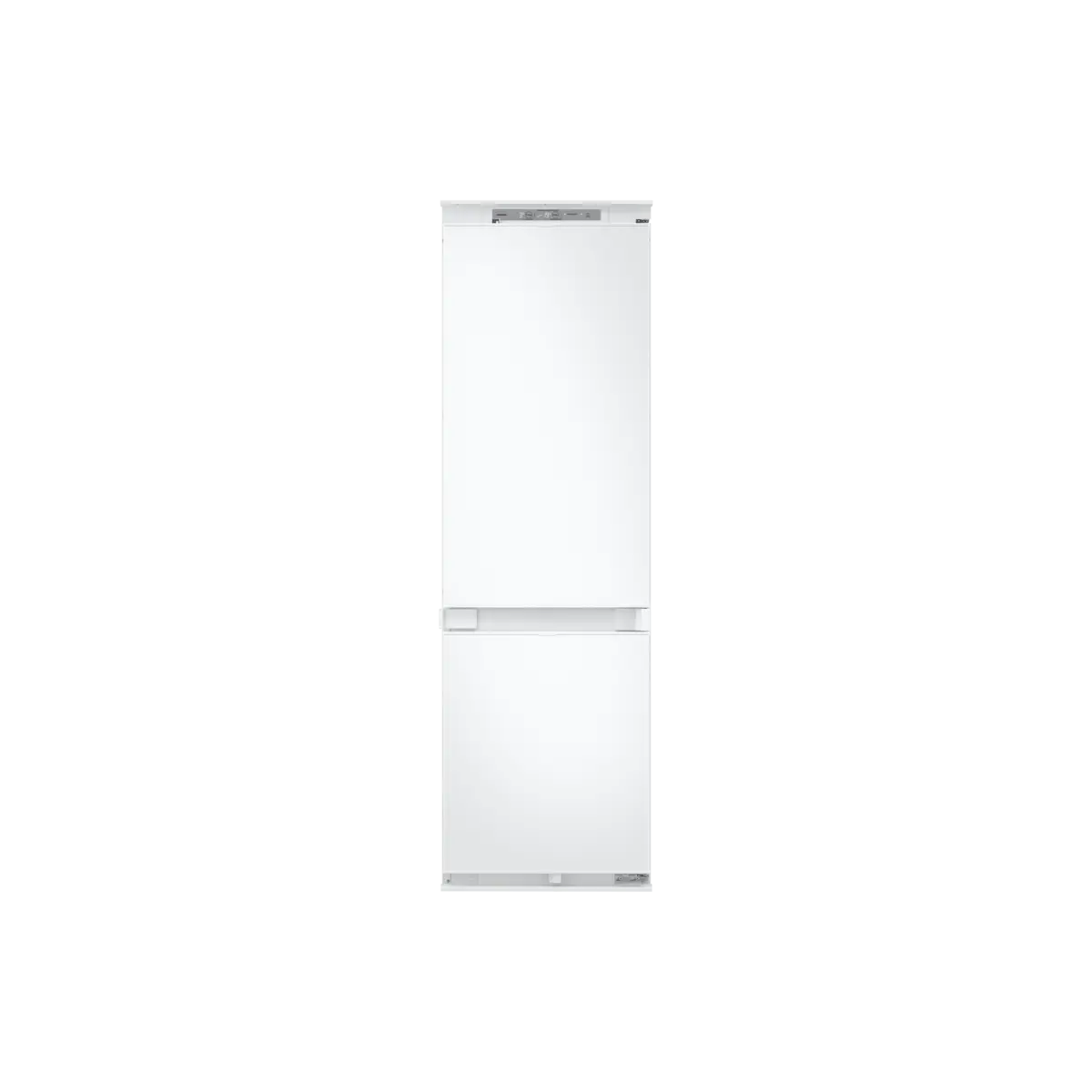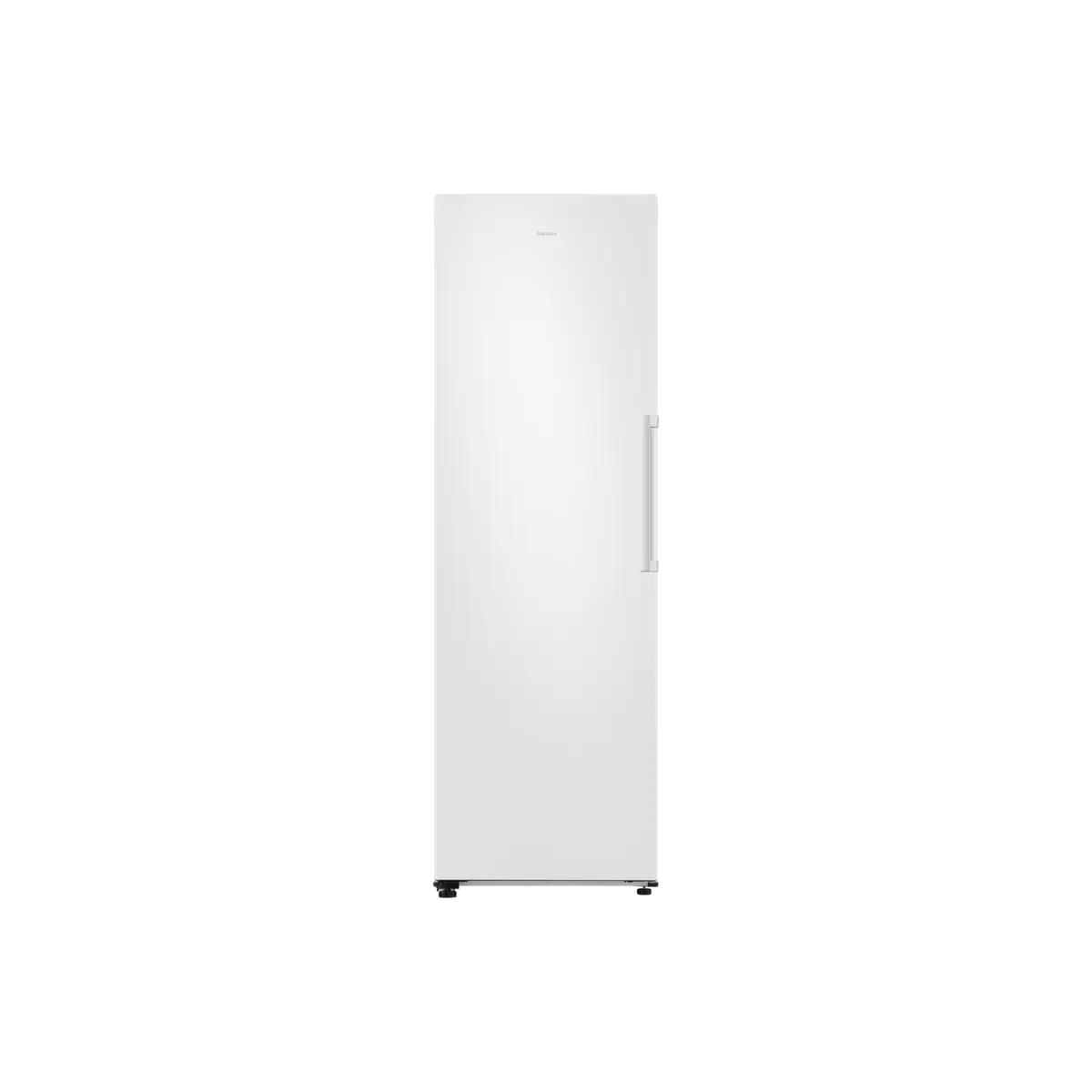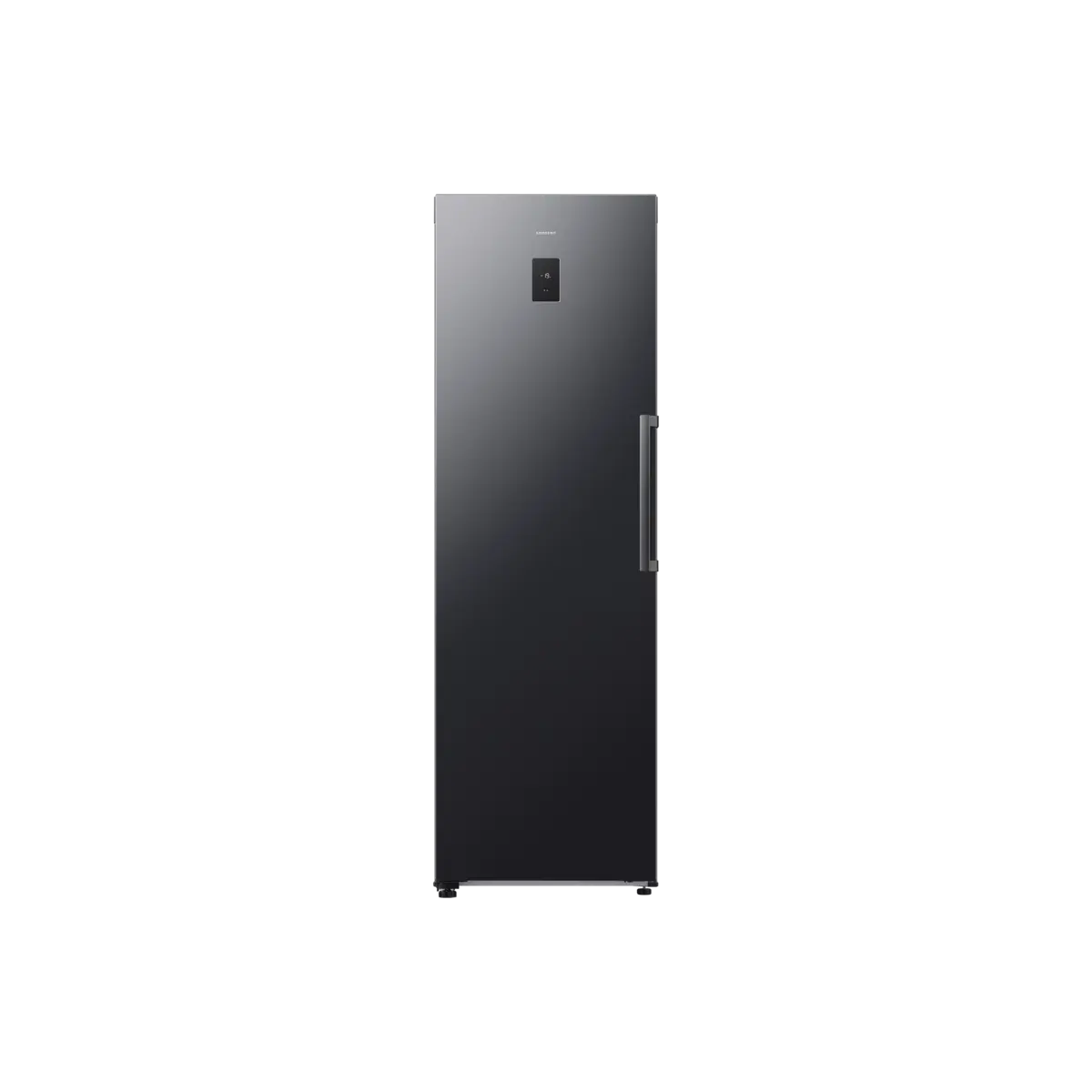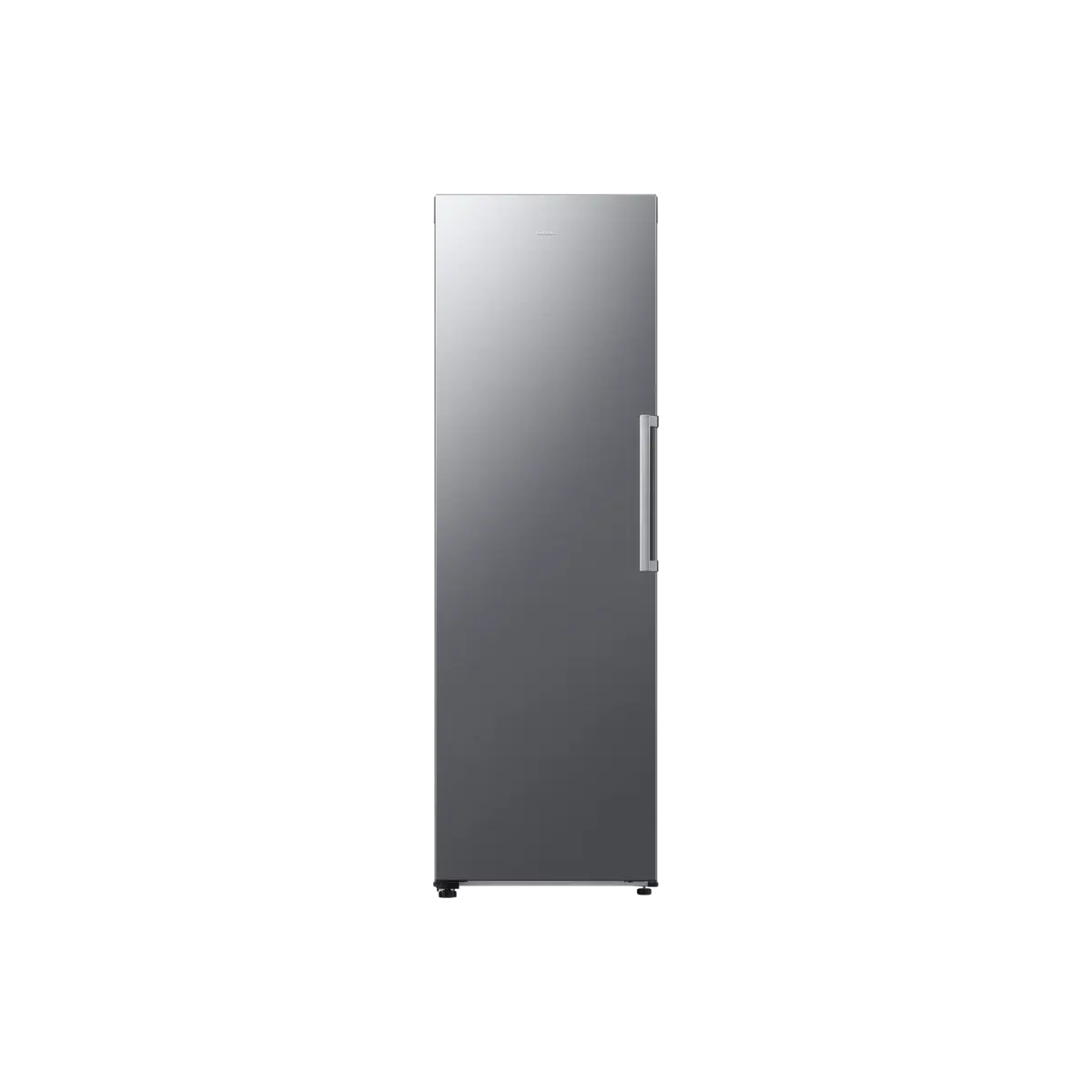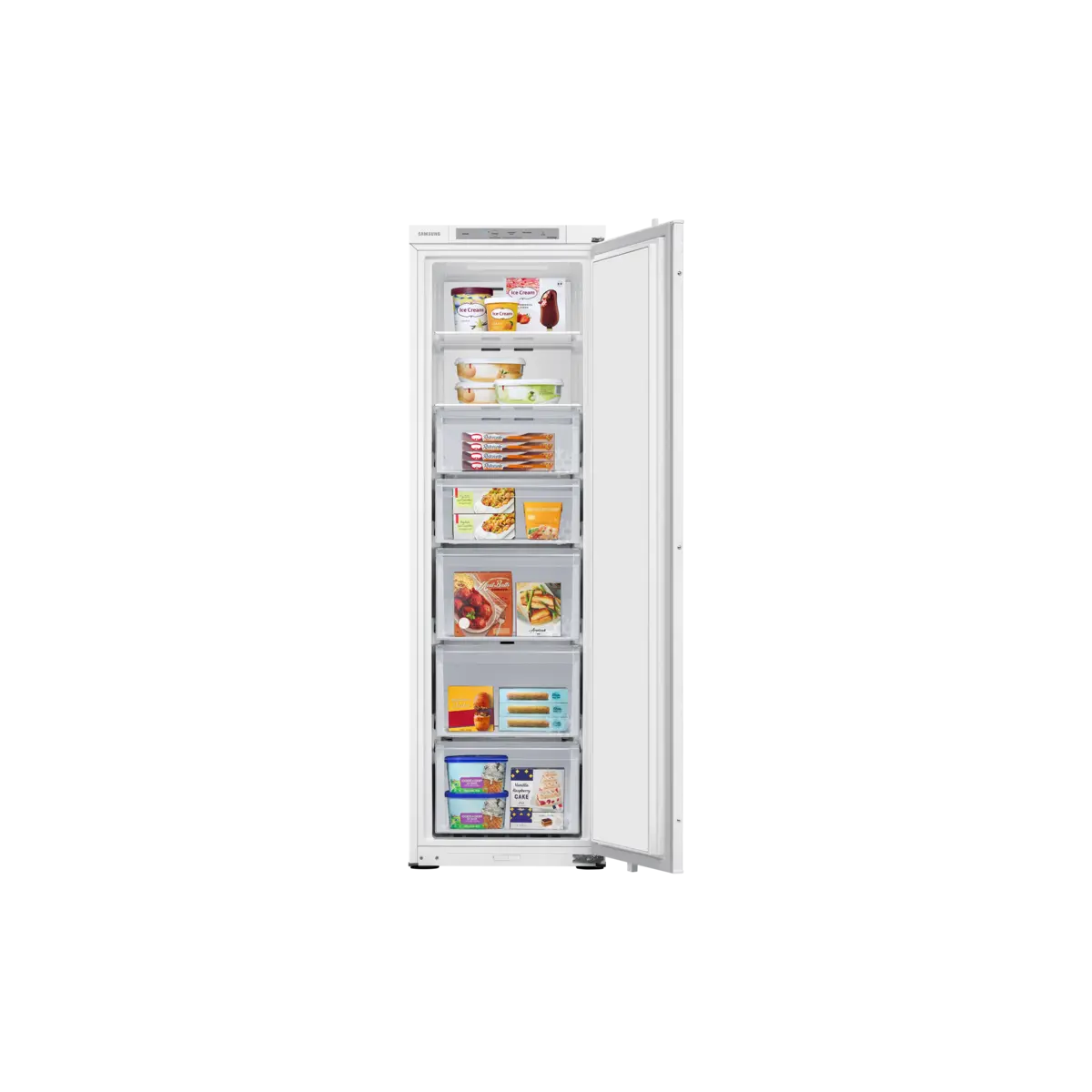
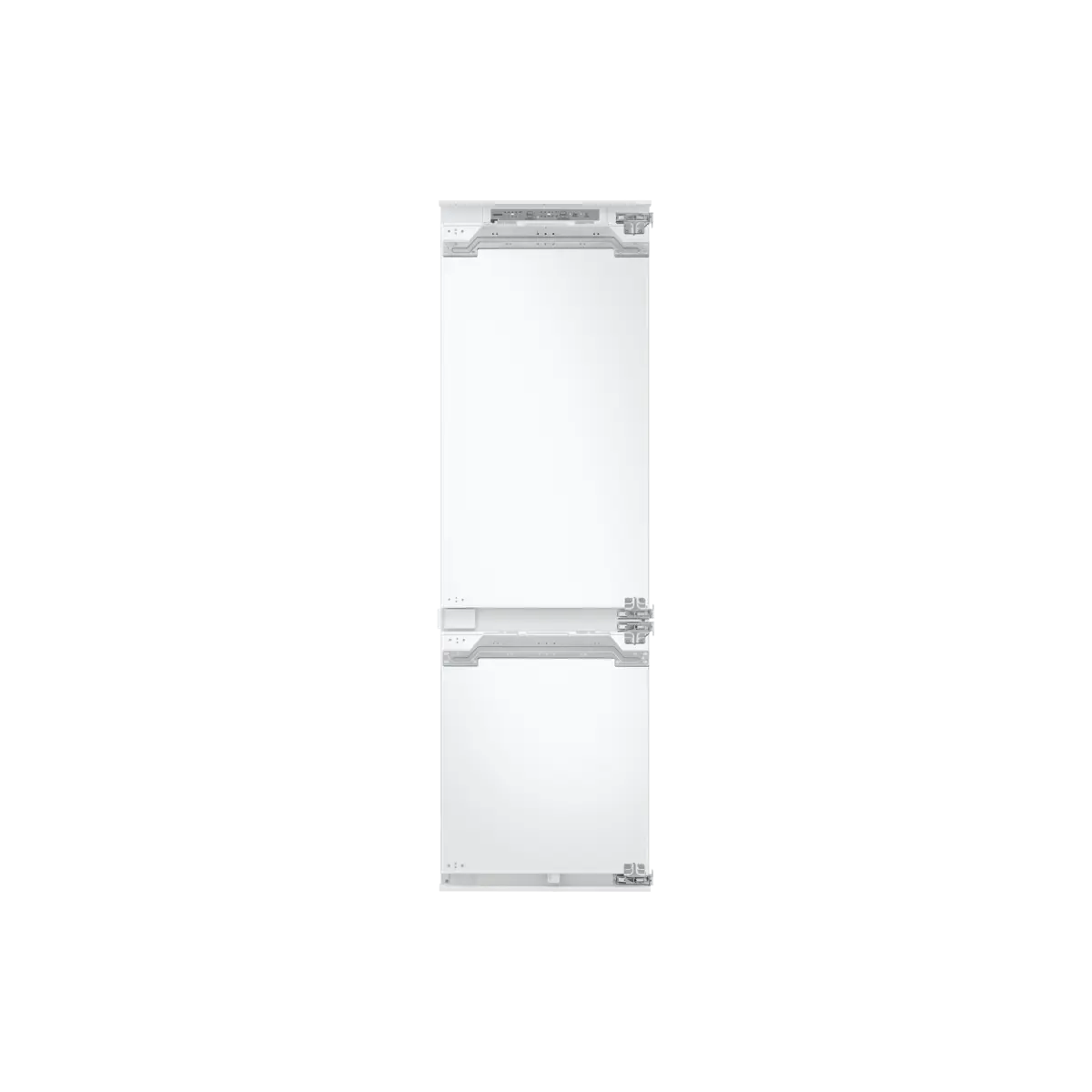
Samsung Integrated Fridge Freezer Series 6 SpaceMax™ 267L · 267 L
Compared with · Samsung Integrated Fridge Freezer SpaceMax™ 218L
- Gross capacity218 L → 267 L
- Cooling systemAll-Around Cooling → Mono Cooling
- ConfigurationIntegrated Fridge Freezer SpaceMax™ 218L → Integrated Fridge Freezer Series 6 SpaceMax™ 267L
- Gross freezer compartment capacity218 L → 74 L
- Climate classSN,N,ST,T → N,ST
- Net capacityNot verified → Not verified
- Stated total capacity (gross/net unlisted)Not verified → Not verified
2 more differences
- Manufacturer annual energy consumption238 kWh/year → 231 kWh/year
- Weight64 kg → 62 kg
Same: Energy rating E · Dimensions 540 × 1775 × 550 mm (width × height with hinge × depth with door handle, net)
Compare side by sideFull comparison vs Samsung Bespoke Integrated Fridge Freezer Series 7 SpaceMax™ 264L
More details & evidence
Exact model: UK BRB70F26CEF0EU · White · 267 L
Sources: 57 of 57 specifications cited.
Evidence · 100% source coverage
57/57 listed facts sourced. Checked date unavailable. This describes source coverage, not product quality or independent testing.
- Manufacturer facts
- 57
- Calculated from sources
- 0
- Independent measurements
- Not available
- Owner evidence
- Not available
- Conflicting facts
- None recorded
UK exact model
Market details
UK specification. UK availability not verified.
The specification region comes from this product’s reviewed variant record. It does not confirm local stock, warranty or delivery.
Check the manufacturer sourceWe have no current verified retailer listing for this exact variant in United Kingdom. A price you enter does not establish retailer availability.
Before you choose
- Published performance and battery figures are manufacturer claims. Actual results depend on configuration, settings and use; an unlisted feature or condition remains unknown.Samsung UK — exact BRB70F26CEF0EU manufacturer specifications
Key specification sources
Evidence & conditions
Manufacturer specification
Exact manufacturer Capacity / Gross Total(Litre): 267 ℓ. Gross capacity is kept separate from net/usable storage volume; no usable capacity is inferred.
Samsung UK — exact BRB70F26CEF0EU manufacturer specificationsEvidence & conditions
Manufacturer specification
Samsung UK — exact BRB70F26CEF0EU manufacturer specificationsEvidence & conditions
Manufacturer specification
Exact UK manufacturer listing. Energy label generation and test scale must be checked before comparing classes; no ordinal efficiency score is inferred.
Samsung UK — exact BRB70F26CEF0EU manufacturer specificationsEvidence & conditions
Manufacturer specification
Each dimension keeps its exact source axes and hinge/door/handle basis. Installation clearances and an omitted overall dimension are not inferred from a door-free or packing dimension. Manufacturer claim in the exact BRB70F26CEF0EU specification. Source wording, unit and scope retained; unlisted conditions remain unknown. Manufacturer section: Physical specification. Source field: Net Dimension (WxHxD)(mm). Manufacturer claim in the exact BRB70F26CEF0EU specification. Source wording, unit and scope retained; unlisted conditions remain unknown. Manufacturer section: Physical specification. Source field: Net Width(mm). Manufacturer claim in the exact BRB70F26CEF0EU specification. Source wording, unit and scope retained; unlisted conditions remain unknown. Manufacturer section: Physical specification. Source field: Net Case Height with Hinge(mm). Manufacturer claim in the exact BRB70F26CEF0EU specification. Source wording, unit and scope retained; unlisted conditions remain unknown. Manufacturer section: Physical specification. Source field: Net Depth with Door Handle(mm). Manufacturer claim in the exact BRB70F26CEF0EU specification. Source wording, unit and scope retained; unlisted conditions remain unknown. Manufacturer section: Physical specification. Source field: Net Depth without Door(mm).
Samsung UK — exact BRB70F26CEF0EU manufacturer specificationsEnter a price you found
Your total including delivery and taxes, for this exact variant in new condition. This remains your assumption.